About Perideridia americana (Nutt. ex DC.) Rchb.
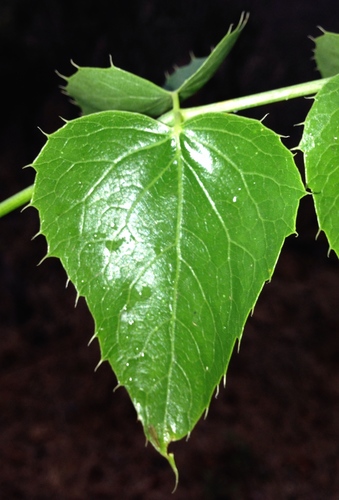
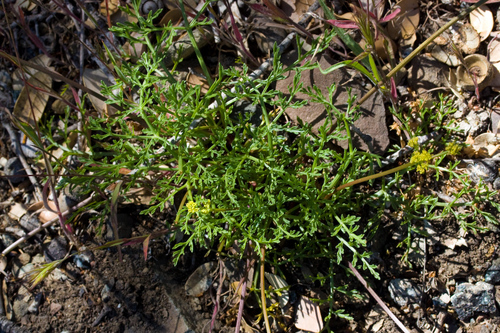
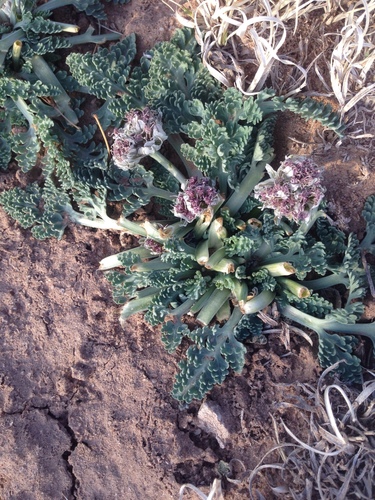
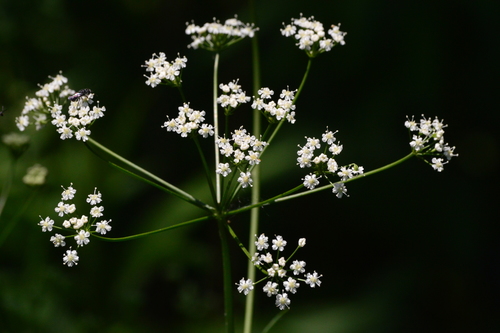
Perideridia americana is a species of flowering plant in the family Apiaceae, commonly known as eastern yampah and wild dill. It has been recorded in 12 Midwestern U.S. states, and is listed as threatened or endangered in at least 3 of these states. In Missouri, it is classified as a conservation species of concern. Wild dill grows in calcareous soils across multiple habitat types, including glades, upland prairies, and forests. It is a perennial herb that produces upright stems measuring 50 to 120 cm (20 to 47 inches) tall. It has sparse, alternate, doubly pinnate leaves that end in long, tapering leaflets. Its inflorescence is a compound umbel made up of many spherical clusters of small white flowers. Its fruits are 3–5 mm (1⁄8–3⁄16 inch) long, with five slender ribs. After producing fruit, the plant enters dormancy until the following spring. Its root system produces tubers, usually two per plant, that grow 5–10 cm (2–4 inches) underground. The life cycle of this species was described in a 1993 paper.