About Peridea anceps (Goeze, 1781)
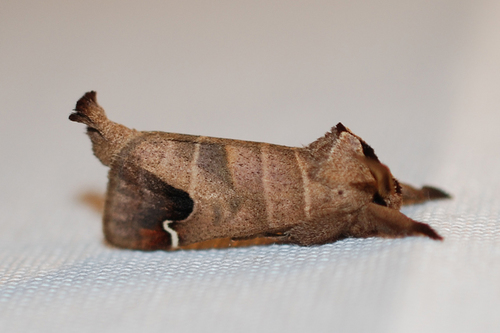
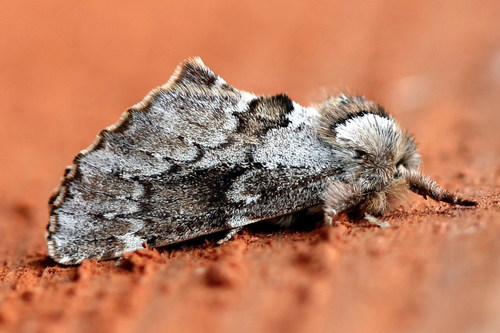
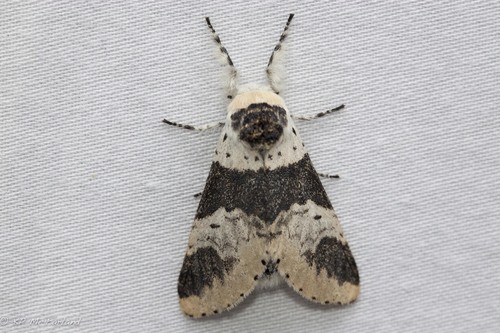
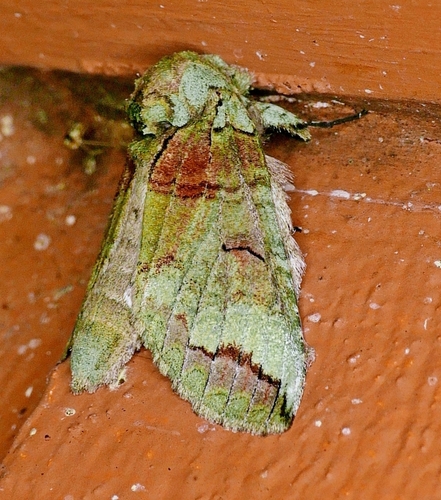
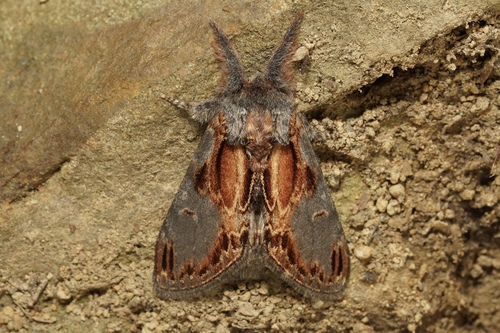
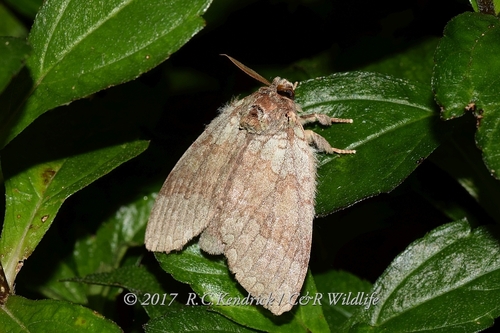
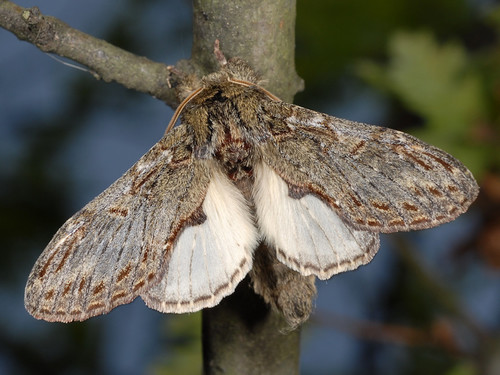
Peridea anceps, commonly known as the great prominent, is a moth species belonging to the family Notodontidae. It was first officially described by Johann August Ephraim Goeze in 1781. This species is found in central and southern Europe, as well as North Africa. Its wingspan measures 50 to 65 millimeters. The antennae of Peridea anceps reach almost half the length of the forewing. Males have narrowly feathered antennae, while females have wire-shaped antennae. The moth’s body is cylindrical, and covered in dark brownish hairs. The thorax can have slightly varied patterning, though its middle section is a slightly darker, warmer brown than the rest of the thorax. The forewing is oblong, narrow, and almost oval in shape. It has a wide "tooth" of backward-pointing hairs located roughly in the middle of its back edge. The forewing is yellowish grey, marked with four more or less distinct narrow transverse bands: the two innermost bands are dark, and the two outermost bands are light. The hindwing is yellowish-white, and darker along its front edge and at its base. The larva is hairless, with no body outgrowths. It is green, with short, bright oblique stripes on the side of each body segment, and some partially broken lighter longitudinal stripes along its back. The larva’s head capsule is green with four light stripes. Adult moths fly from April to July, with the timing varying based on location. The larvae feed on oak. When disturbed, the larva bends its front and hind ends upward until the front of its body is suspended over open space. It then makes a cracking motion with its legs while shaking its front body. This surprising behavior is often enough to scare off potential predators.