About Pericrocotus flammeus (J.R.Forster, 1781)
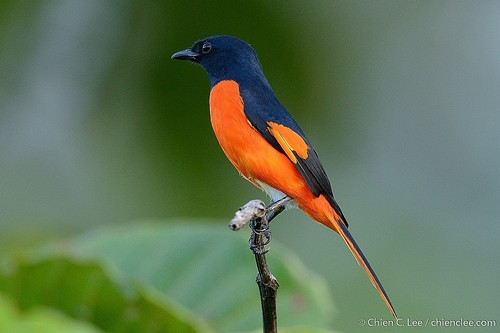
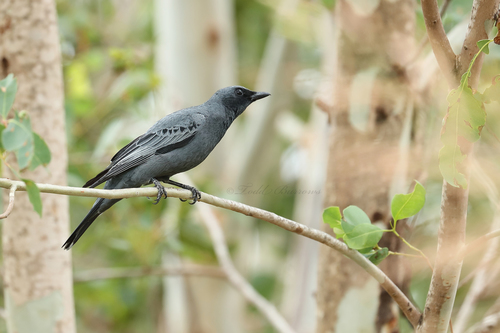
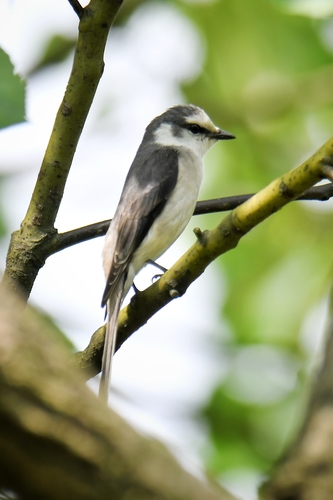
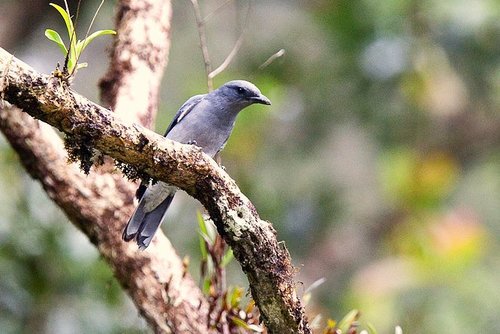
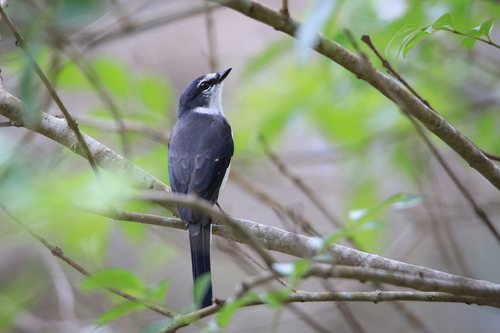
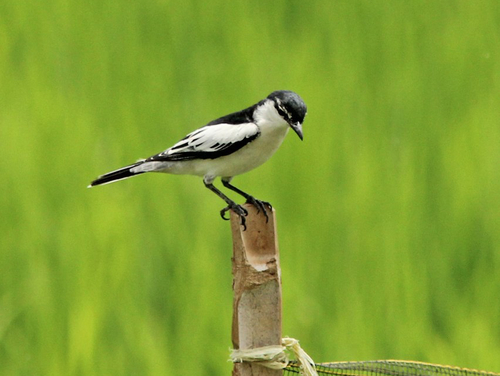
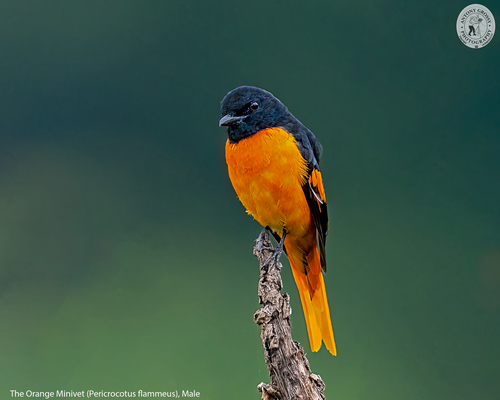
This species, the orange minivet, has the scientific name Pericrocotus flammeus (J.R.Forster, 1781). Adults measure around 17–22 cm in length and weigh 19–24.5 g. There is strong sexual dimorphism in plumage: males are bright orange and black, while females are mostly yellow with a grey upper body. Males have a glossy black head, chin, throat, mantle, and upper back; their lower back, rump, and uppertail-coverts are orange-red, and their underparts are largely bright orange-red, which helps them stand out in their environment. They can be told apart from other Pericrocotus species by isolated red markings near the tips of their tertials and inner secondaries. For females, red areas present on males are replaced by yellow; females additionally have a yellow forehead, an ashy-grey lower back, a yellow chin, and an almost entirely bright yellow underside. Juveniles resemble adult females, with some individual variation. Orange minivets are gregarious, and are most often seen foraging in small groups of more than two individuals along the tops of trees in forests. They frequently perform bouncing flights over forest canopies. They are primarily insectivorous, and forage by perching to scan their surroundings, then flying and hovering at plant surfaces to pick insects; this foraging behaviour is called sally-gleaning. They regularly join mixed-species foraging parties with other canopy-dwelling bird species. Their call consists of sweeping whistles made up of multiple repeated "weep-sweep" notes, and they will call both when in flight and when they are stationary.