About Pericrocotus erythropygius (Jerdon, 1840)
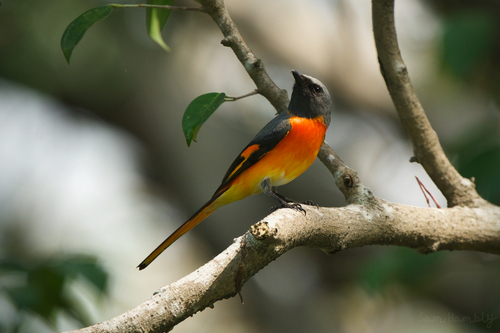
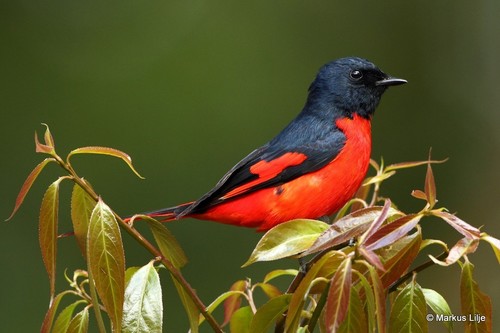
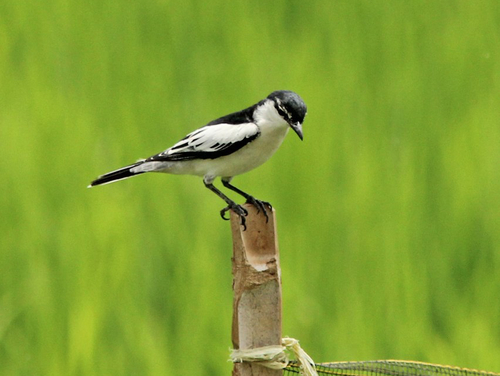
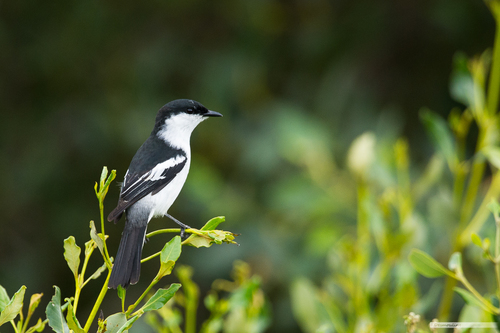
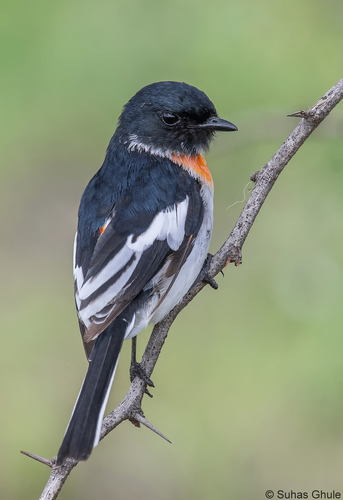
The white-bellied minivet, scientific name Pericrocotus erythropygius (Jerdon, 1840), shows distinct physical differences between males and females. Males have shiny black coloring on the head, neck, tail, and mantle, plus a white collar, an orange throat, and white remaining underparts. Their rump is orange, and their wings bear white markings. Females are duller overall, with dark gray upperparts, black wings, a white collar, a black tail, and shiny black lores. They have the same white wing markings as males, and also have an orange rump. The full body length of this species ranges from 18.5 to 20 cm. This bird is native to Nepal and India, where it occurs primarily in dry deciduous forests. It also lives in open savanna with sparse acacia shoots, dry grasslands, and artificial terrestrial areas such as agricultural land. Its total area of occurrence is extremely large, covering more than 20,000 km². White-bellied minivets usually move in small groups, and will sometimes join mixed-species groups with other bird species. They feed mainly on insects, which they catch either while in flight or while perching in tree canopies. Their call is a pleasant whistle. For reproduction, this species builds its nest high in the tops of trees. The nest is cup-shaped, woven from small twigs and spider webs that add structural strength. Females usually lay four eggs per clutch, which are incubated for 17 to 18 days. Incubation is primarily performed by the female, but both adult birds help care for and raise the offspring after hatching.