About Periclimenes soror Nobili, 1904
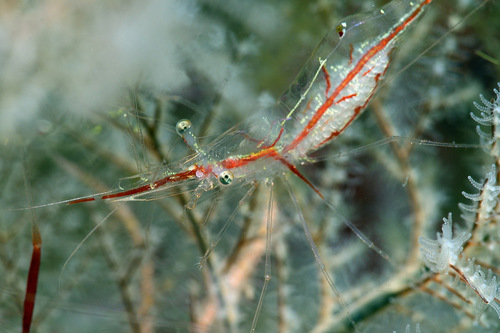
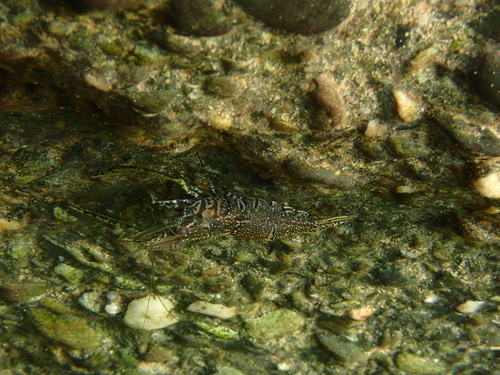
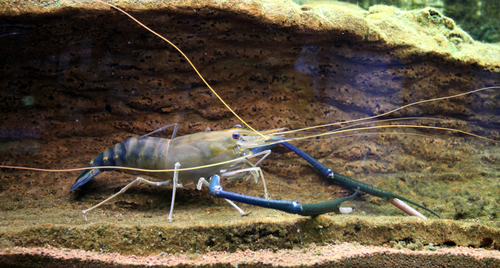
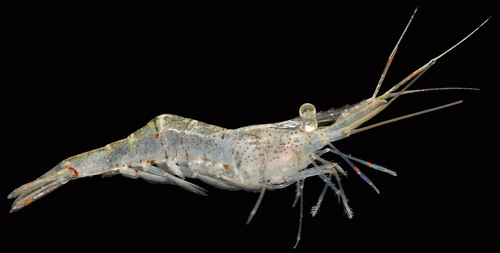
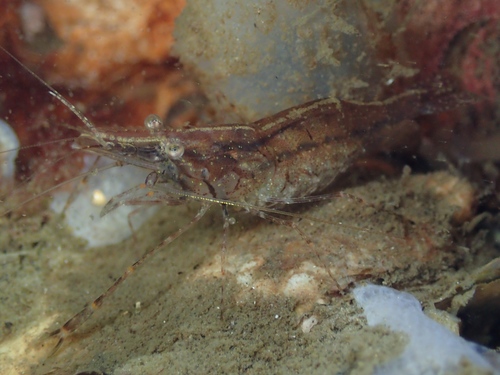
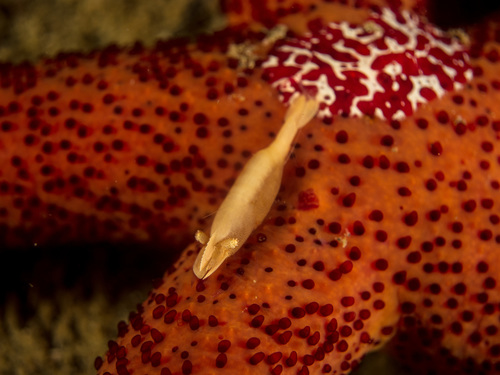
Zenopontonia soror (previously known as Periclimenes soror Nobili, 1904) is a medium-sized shrimp that grows to approximately 1.5 cm (0.6 in) long. It has a short, broad rostrum that curves downward, with ten or eleven teeth on its dorsal surface. Its body is covered extensively with small white spots, and its base color mimics the color of its host starfish: when hosted by Linckia laevigata, the shrimp is blue; when hosted by Acanthaster, it is two-toned bright red with a pale dorsal streak; when hosted by Culcita, it has a clearer, less speckled color, sometimes with a transparent dorsal streak that can be blue, maroon, white, yellow or pale green. This species can be confused with the imperial shrimp Zenopontonia rex, but Z. rex hosts on sea cucumbers or large molluscs instead of starfish. Zenopontonia soror is distributed in shallow tropical areas of the Indo-Pacific, with its range extending from the Red Sea to New Caledonia, French Polynesia, Mayotte and Reunion. It inhabits coral reefs at depths up to around 30 m (100 ft). Zenopontonia soror is always found living in association with starfish, and most often resides on the undersurface of its host. Acanthaster appears to be its preferred host, but it has also been found on Culcita, Choriaster, Protoreaster, Echinaster, Halityle and Linckia, and it may associate with other starfish species as well. The shrimp detects potential hosts by sensing chemical cues in the surrounding water. It does not always stay on a single starfish permanently, and if it becomes separated from its host, it will search for another starfish of the same species. Up to around fifty individual shrimp have been recorded living on a single host starfish. The shrimp feed on mucus secreted by the starfish, and gain protection from predation from their carnivorous host.