About Perforatus perforatus (Bruguière, 1789)
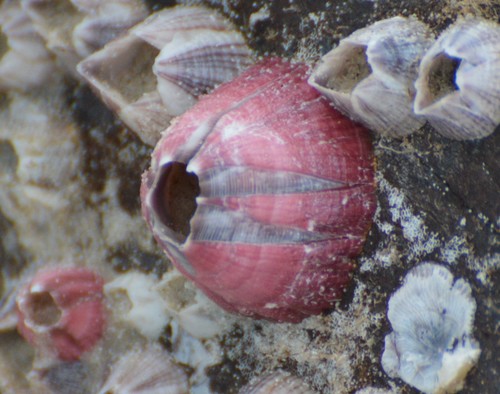
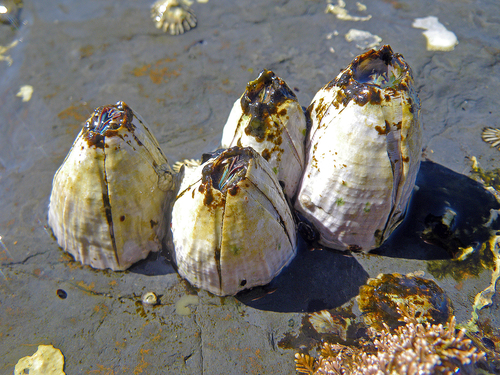
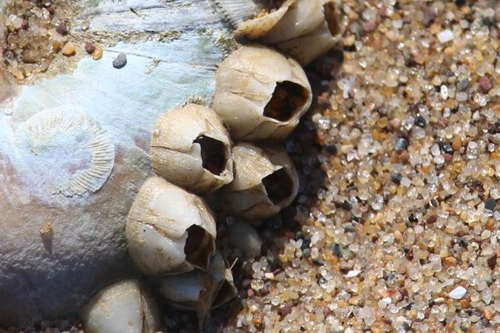
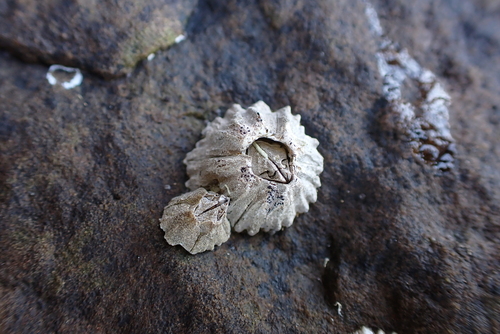
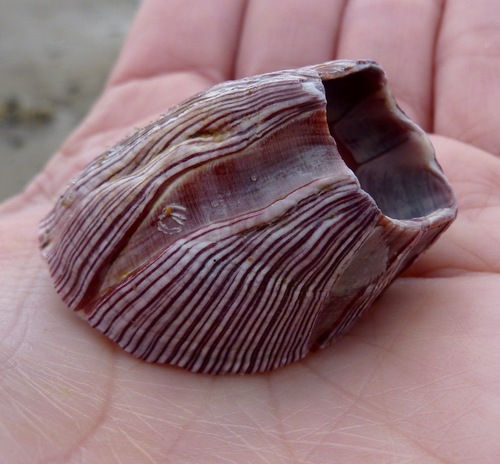
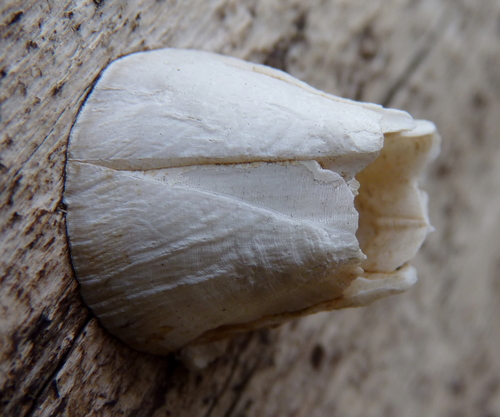
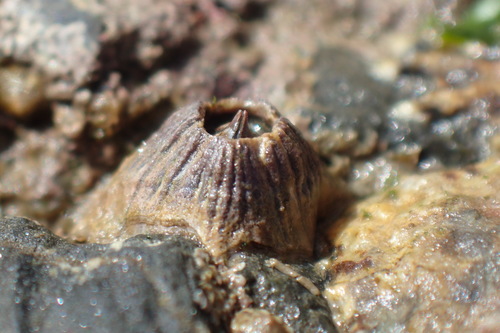
Perforatus perforatus (Bruguière, 1789) is a large barnacle that grows up to 30 millimetres (1.2 in) in both diameter and height. Its shape is volcano-like with steep sloping sides. It has six fused lateral calcareous plates that are pale purplish-brown, often marked with vertical ridges. These plates often separate near the top, leaving jagged ridges. The tissue inside the operculum is brightly coloured. Two pairs of moveable plates cover the operculum, which can be sealed by a purplish-brown flap when the barnacle is exposed above water, or when it is not feeding. This barnacle occurs on coastlines along the eastern side of the Atlantic Ocean, including the Mediterranean Sea and the English Channel. Its most northerly range limit is in southern areas of England and Wales, and populations at this range limit can be greatly affected by severe winters. It has been expanding its range as temperatures have risen over recent decades. It grows on rocks and man-made structures from the mid-shore to the neritic zone, and it is also part of the fouling community that grows on ship hulls. In its typical habitats, P. perforatus is often associated with sponges and encrusting red seaweeds on shady overhanging rocks and cave entrances, and with bryozoans and ascidians in deeper shaded areas. The isopod crustacean Crinoniscus equitans is an ectoparasite of P. perforatus. A second isopod crustacean, Naesa bidentata, normally lives in rock crevices, under seaweed and under stones. But with the spread of P. perforatus, it has started using the barnacle's empty shells as a home.