About Percina roanoka (Jordan & Jenkins, 1889)
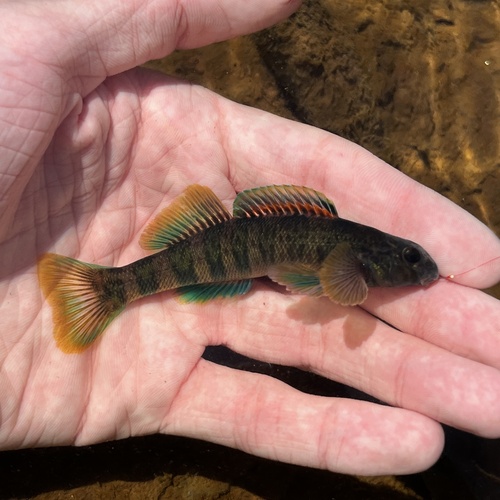
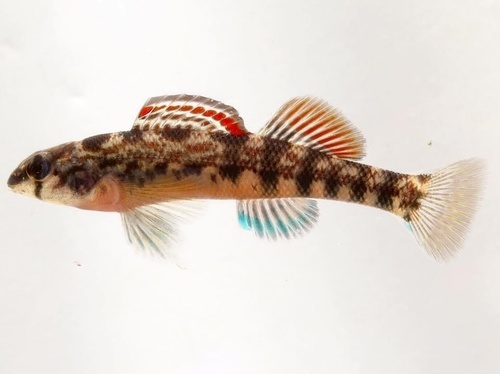
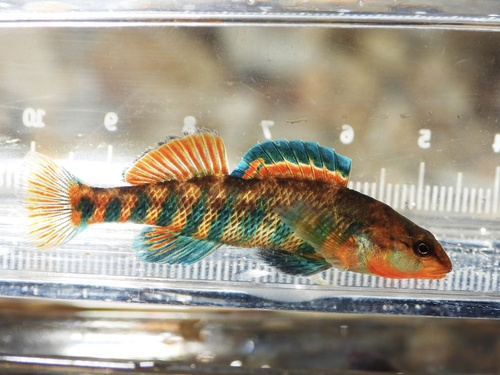
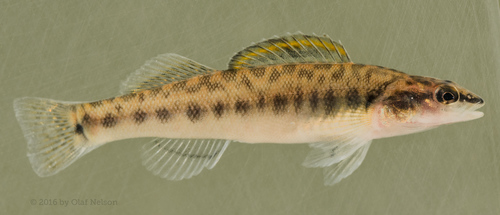
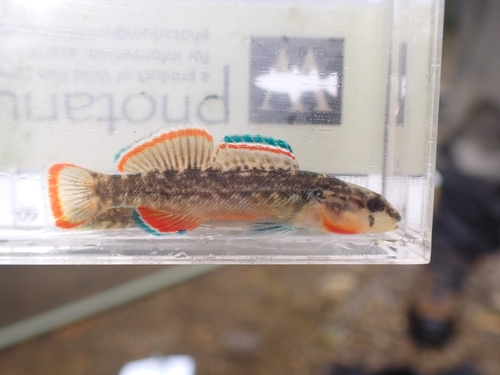
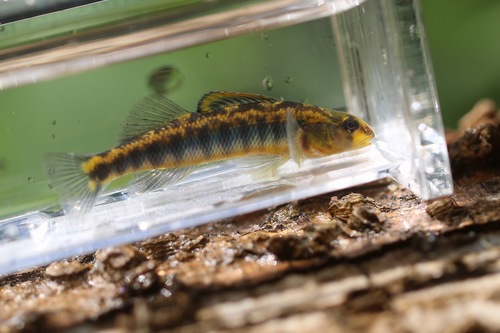
Percina roanoka, first described by Jordan & Jenkins in 1889, has distinct physical characteristics based on sex and breeding status. Breeding males have black heads and red or orange jaws, black spinal fins marked with orange bands, and white anal, pelvic, and pectoral fins with transparent membranes. Their sides range in color from dark brown to black, with blue, yellow, or green highlights. Females and nonbreeding males share a similar color pattern, but their colors are less intense than those of breeding males. This darter species has 9 to 12 dorsal fin spines, 7 to 9 anal fins, and 9 to 12 dorsal fin rays. The average adult length is 4.3 centimeters (1.7 inches), while the maximum recorded length for a specimen is 7.8 cm (3.1 inches), and the species has a maximum lifespan of three years. In terms of distribution and habitat, Percina roanoka inhabits the Roanoke, Tar, and Neuse river drainage basins in Virginia and North Carolina. It also occurs in the northern portions of Virginia's James River, and the New River that spans West Virginia and Virginia; it may have been introduced to the New River. The species prefers small to medium-sized rivers. Both adult and juvenile Percina roanoka typically live in streams and riffles with gravel substrate. Younger juveniles most often occupy pools located near riffles.