About Percina palmaris (Bailey, 1940)
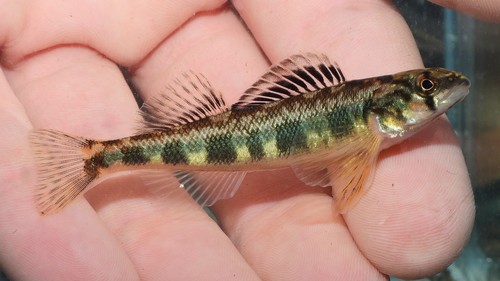
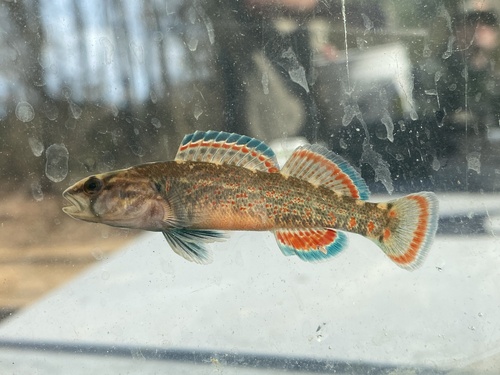
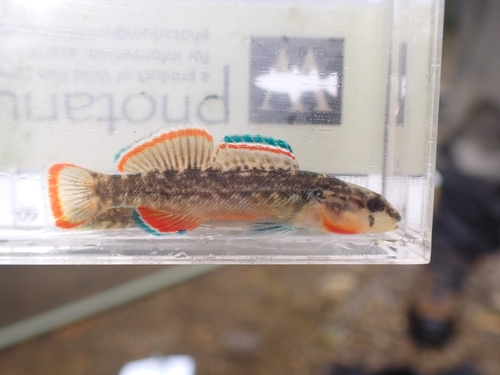
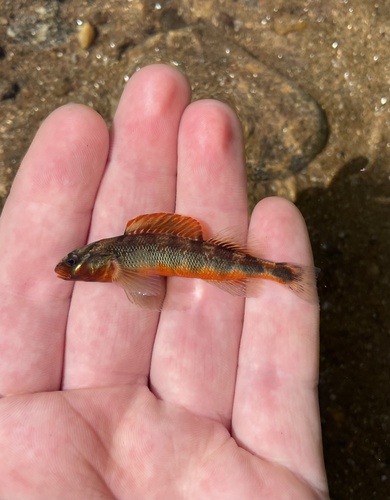
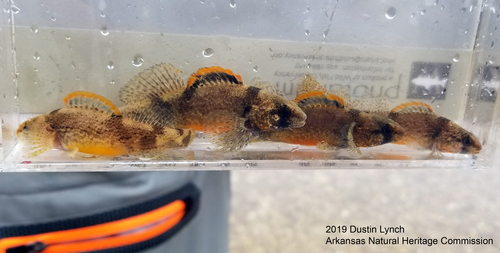
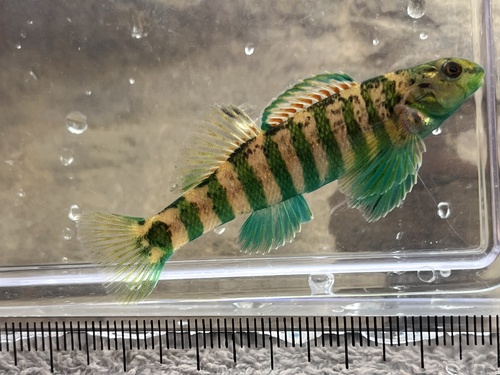
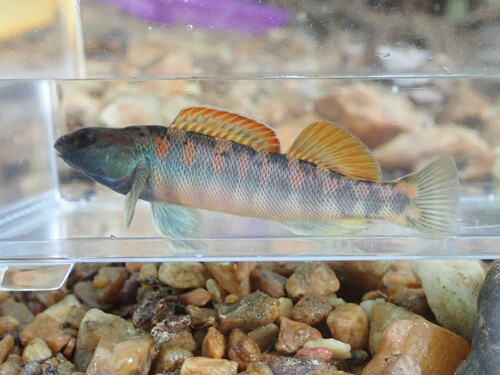
The bronze darter (Percina palmaris) is a relatively small fish that grows up to 3.9 inches long. Cell pigmentation gives its body a distinctive radiating bronze coloration, which becomes more vivid in males during the breeding season.
The bronze darter’s geographic range is restricted entirely to the Mobile Bay drainage, found only in the Coosa and Tallapoosa River systems spanning Georgia, Alabama, and southeastern Tennessee in the United States. This limited range reduces the species’ ability to recover from natural or human-caused threats. It has not been recorded outside these locations, and it still occupies its entire native range. Dams in the Mobile Bay drainage pose potential risks to bronze darter populations by altering water flow. Currently, the species is classified as stable, as its populations have remained abundant historically. However, population stress from urbanization could lead to extirpation from its native range and eventual species extinction.
Bronze darters live in freshwater, and prefer shallow, swift waters up to 30 centimeters deep with partial weedy cover. Their habitat substrate ranges from fine sand to small gravel, which holds the food sources they rely on. They are diurnal visual feeders, with peak activity at sunrise and sunset. Over half of their diet consists of chironomids, a type of aquatic insect, and they require higher concentrations of this food during the reproductive season. Bronze darter populations remain stable, with no imminent sudden threats from human or biological factors. Known biological threats include predation (reluctant predation by large predatory game fish such as Micropterus salmoides, the largemouth bass, and by crayfish). Human-caused threats stem from water impoundment and hydropower production, which create risks that can drive population declines.