About Percina maculata (Girard, 1859)
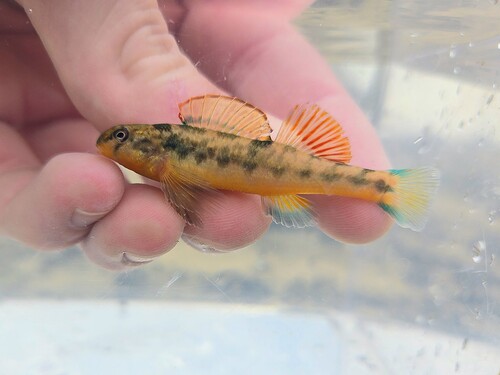
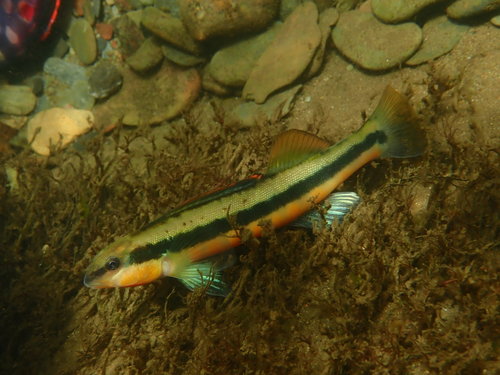
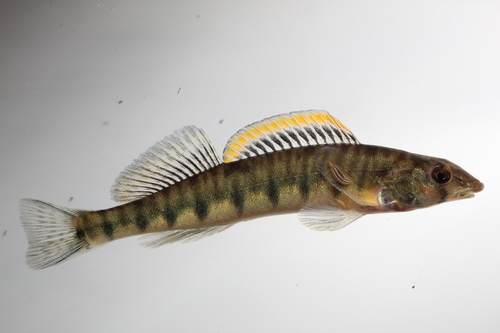
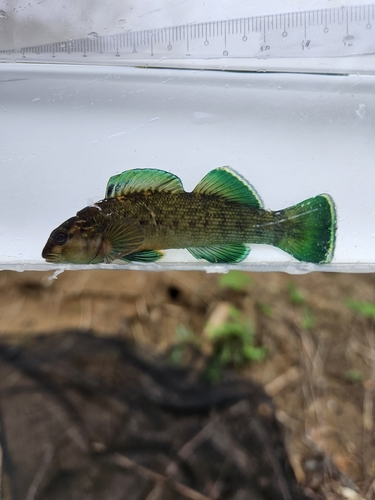
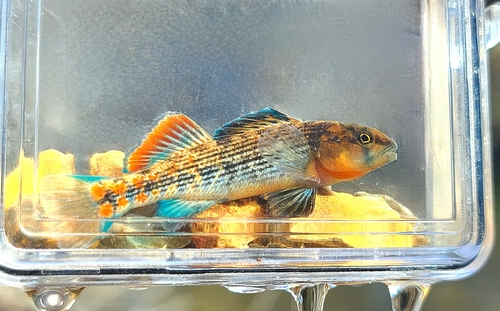
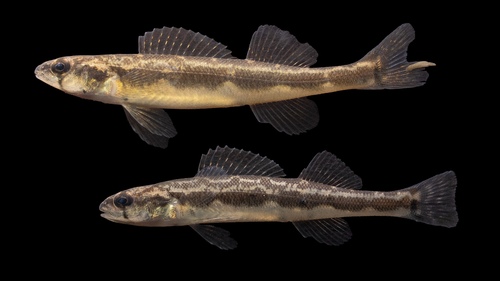
The blackside darter, scientifically named Percina maculata (Girard, 1859), has distinct physical traits that set it apart. Its body is primarily dark, with base coloration in shades of dark brown, olive, and black, with occasional white patches. A key identifying feature is a side stripe formed by 6 to 9 separate black spots; additional black spots appear below the eyes and on the caudal fin. On average, adult blackside darters measure 2 to 3 inches in length, though they can grow as large as 4 inches. This species has two dorsal fins: the first holds spinous rays, while the second holds soft rays. It also has a rounded caudal fin, and a terminal mouth that opens at the anterior end of the snout. Blackside darters inhabit clean, mostly pollution-free small to medium-sized rivers and streams. They prefer areas with slow current and cover for hiding such as roots and natural debris. The species is widespread across the United States. Its known range includes the Hudson Bay, Mississippi River basin, and Gulf drainages stretching from Mobile Bay in Alabama to the Calcasieu River in Louisiana. It also occurs in the Minnesota River basin, Whetstone Creek, Big Sioux basin, Pipestone, and many areas surrounding the Great Lakes. While the species was present in the Big Sandy drainage in the early 1900s, no recent populations have been recorded in any Virginia drainages. Blackside darters spawn in spring, with spawning season beginning around April and lasting through late June or early July. To breed, adults first move upstream, then spawn over sand and gravel near slow riffles, before burying their eggs. Adult blackside darters provide no parental care for eggs or newly hatched young. Juveniles reach maturity at 1 to 2 years of age, and the species can live up to five years.