About Percina evides (Jordan & Copeland, 1877)
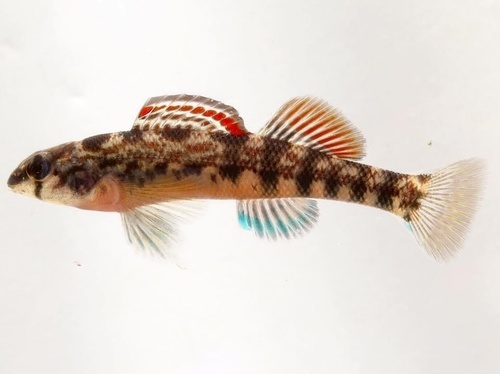
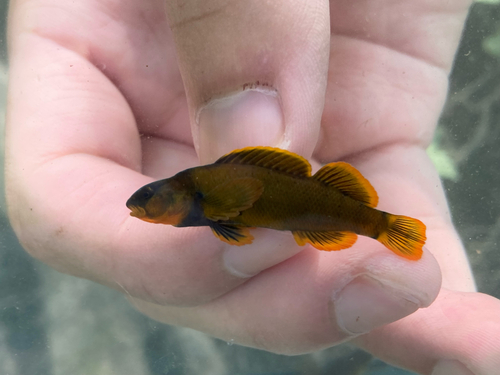
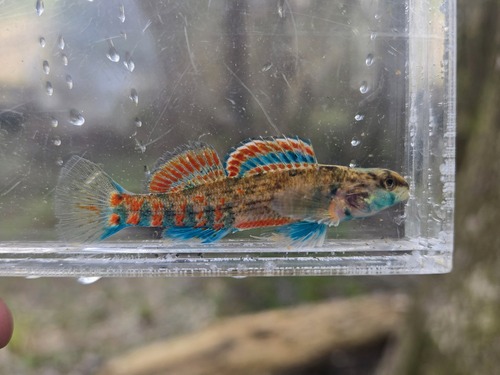
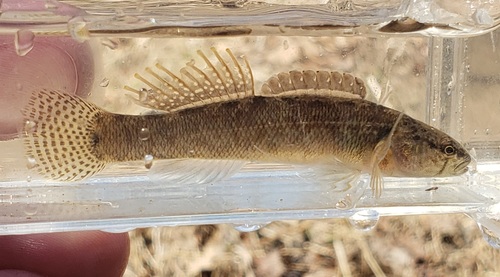
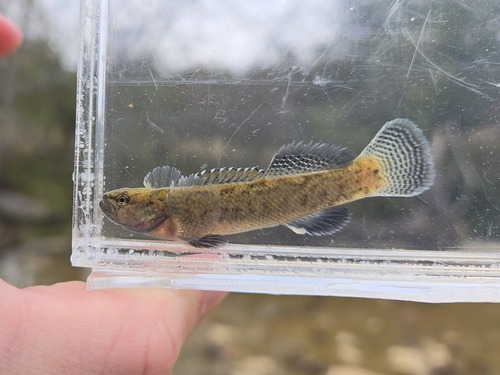
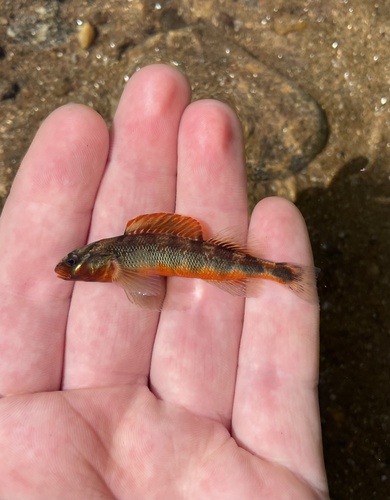
Male gilt darters (Percina evides) grow faster and reach larger sizes than females. By their third year, they typically grow to around 70 mm in length; larger specimens, up to 94 mm, have been recorded in the Ozarks. Males are also more brightly colored than females. As currently described, the gilt darter inhabits the upper portions of the Mississippi River Basin in North America. Historically, the species' geographic range covered 18 states within the Mississippi River drainage, but it is currently thought to be extirpated from New York, Iowa, Illinois, and Indiana. It occurs in western tributaries of the Mississippi River Basin, ranging from the White River in northern Arkansas to the St. Croix River of Minnesota and Wisconsin. Its eastern range extends from tributaries of the Tennessee River system in northern Alabama up to New York in the Ohio River system. It was historically recorded in Indiana's Maumee River system. Locally, gilt darters are regularly found across Tennessee in suitable, high-quality habitats. This species is sensitive to siltation, and can be extirpated from degraded streams. It has been lost from multiple drainages in the Midwest due to stream degradation. According to Ohio's Division of Wildlife, the gilt darter has not been observed in Ohio since 1893. The last confirmed sighting of the species in Indiana was in 1977, and it is also thought to be extirpated from Illinois and New York. However, in *CURRENT STATUS AND DISTRIBUTION OF INDIANA'S SEVEN ENDANGERED DARTER SPECIES (PERCIDAE)*, Brant Fisher, Nongame Aquatic Biologist with the Indiana DNR, stated that a single population of gilt darter still remains in Indiana, in the portion of the Tippecanoe River upstream of Lake Shafer. This population remains completely isolated, with no chance to expand its range further downstream because of Lake Shafer and Norway Dam, and further downstream by Lake Freeman and Oakdale Dam. The gilt darter is a benthic fish that feeds primarily on small aquatic insect larvae. A study of gilt darters in Minnesota's Sunrise River found their diet consisted almost entirely of immature mayflies (46% by number), dipterans (43%), and caddisflies (10%); diet composition varied by season and by age of the fish. A later study that included sites in the St. Croix River found these same dominant food types, though the relative contribution of each type varied substantially between sites. Dietary data from gilt darters in the Little Tennessee River showed the species depends on macroinvertebrates, with midge, mayfly and caddis larvae being the most commonly consumed prey. During warmer months, black fly larvae are also an important food source. Snails have also been found in the stomach contents of this species. Gilt darters have been observed following feeding logperch, attempting to steal food as logperch forage along the stream bottom. Another dietary study of nine sympatric darter species in Pennsylvania examined the dietary preferences of this species. Under the study's conditions, the gilt darter had a very diverse diet containing 7–10 taxa of aquatic invertebrates. It also consumed larger prey and more fish eggs than other Etheostoma darter species that it commonly associates with. At one site in Indiana, the gilt darter was found living alongside central stonerollers (Campostoma anomalum), suckermouth minnows (Phenacobius mirabilis), creek chubs (Semotilus atromaculatus), western blacknose dace (Rhinichthys obtusus), silverjaw minnow (Notropis buccatus), bluntnose minnow (Pimephales notatus), sand shiner (Notropis stramineus), spotfin shiner (Cyprinella spiloptera), Johnny darter (Etheostoma nigrum), rainbow darter (Etheostoma caeruleum), and blackside darters (Percina maculata). The gilt darter prefers upland cool-water streams. Specifically, it is most often found in stream sections with higher water velocities and more cobble on the streambed. It also prefers areas of the stream that experience higher erosion rates. Larger gilt darters are found more often around heterogeneous substrata and more boulders than smaller gilt darters.