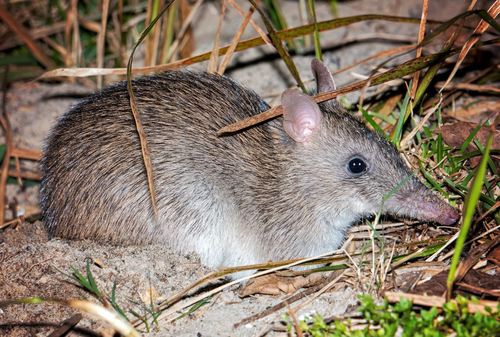
About Perameles nasuta É.Geoffroy Saint-Hilaire, 1804
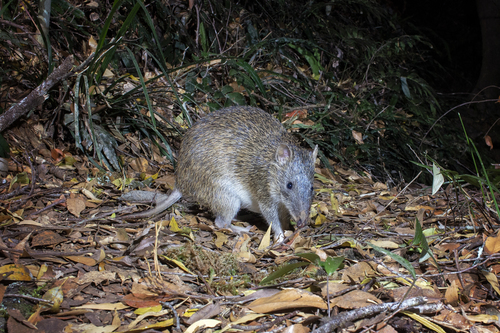
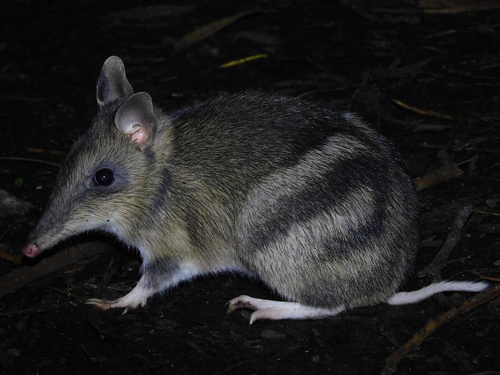
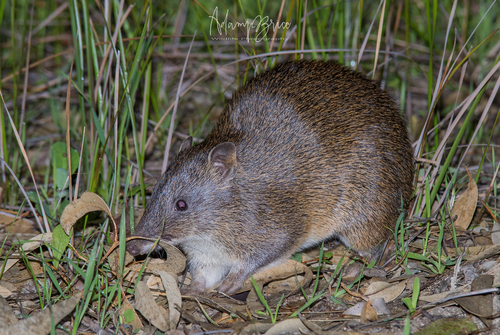
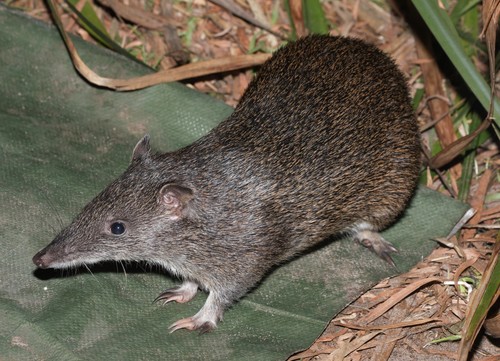
The long-nosed bandicoot (Perameles nasuta É.Geoffroy Saint-Hilaire, 1804) is far less colourful than its relatives, and is primarily sandy-brown or greyish in colour. It is a nocturnal, non-climbing, solitary omnivore. Its total body length is around 40 centimetres (16 in), which includes a 14 centimetre (5.5 in) tail, and it weighs 1.5 kilograms (3.3 lb). It has a very prominent long nose, small pointed upright ears, a hunched-looking posture, a short tail, a rear-facing pouch, and three long, clawed toes on its front feet. Its excreta measure 3.5 centimetres (1.4 in) long by 1 centimetre (0.39 in) wide. When disturbed, the long-nosed bandicoot produces a high-pitched squeak. This species is distributed along the eastern coast of Australia, ranging from the Cape York Peninsula in Queensland through New South Wales to Victoria. It occurs in rainforest, moist gullies, and grassy woodlands. Long-nosed bandicoots benefit from a mosaic of mixed habitats: this includes open grassy areas (such as urban lawns) that they forage in at night, and sheltered areas with undergrowth that they retreat to and nest in.