About Peponapis pruinosa (Say, 1837)
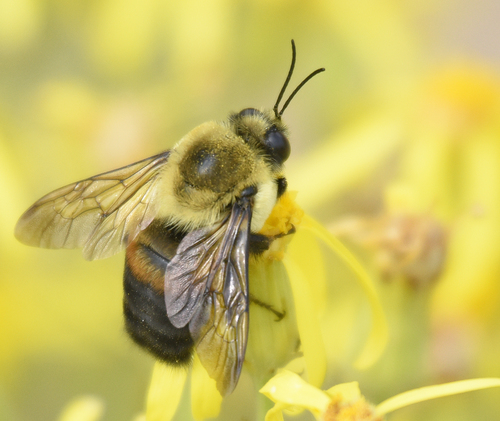
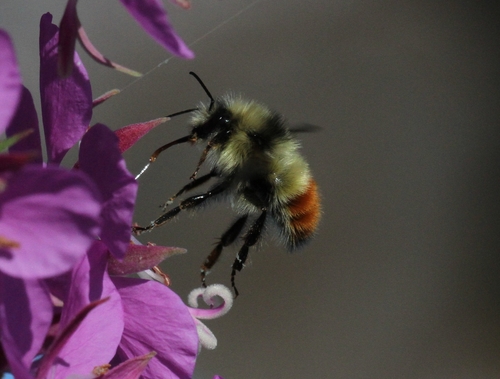
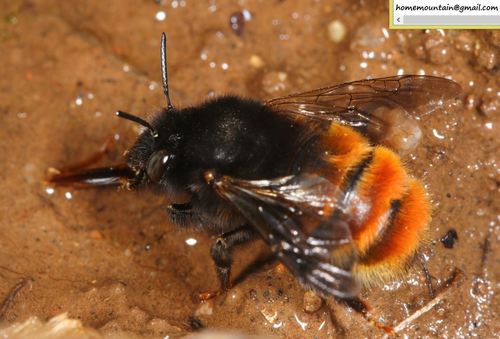
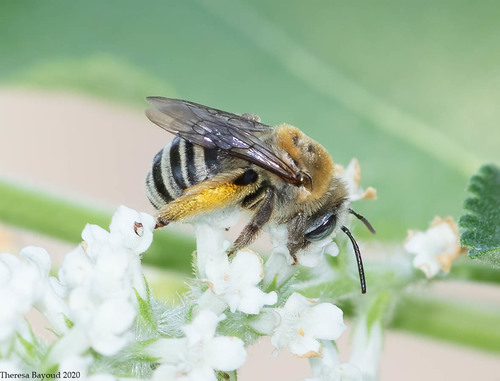
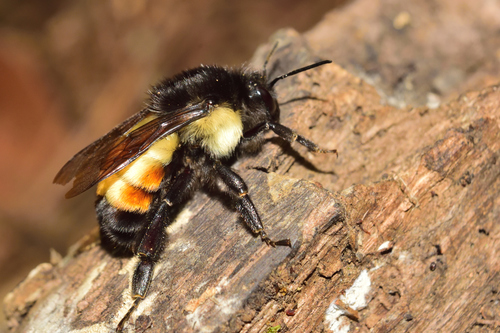
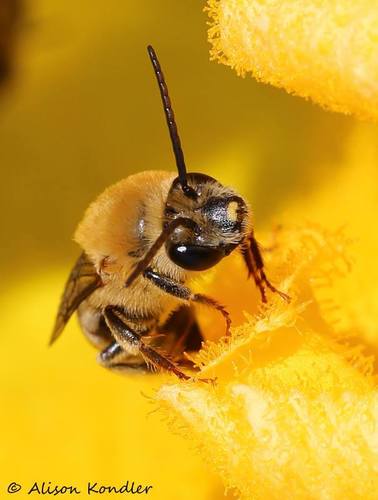
Peponapis pruinosa (Say, 1837) is a species of solitary bee belonging to the long-horned bee tribe Eucerini. It is commonly known as the eastern cucurbit bee, and may also be called the squash bee. The name "squash bee" is not unique to this species, however, as it is also used for other species in its genus and for species in the separate squash bee genus Xenoglossa. This bee is found across North America, ranging from the East Coast of the United States to the West Coast and extending into Mexico. It is an oligolege, meaning it is a specialist bee that only uses a small group of host plants: squashes and gourds from the genus Cucurbita. Its range expanded as human agriculture spread across North America and made squash plants more abundant and widespread. It may also have expanded its range naturally as the range of its preferred wild host plant, Cucurbita foetidissima, grew. This bee measures 11 to 14 millimeters in length, with an abdomen 4 to 5.5 millimeters wide. It is black with whitish bands on its abdomen, and its body is covered in yellowish hairs. Females have branched hairs called scopae on their hind legs that help them carry the large, coarse pollen produced by cucurbits; males do not have scopae, as they do not collect pollen. This bee depends on both wild and cultivated squashes, pumpkins, gourds, and related plants. While it may occasionally get nectar from other types of plants, females only use Cucurbita pollen to provision their developing young. Females dig ground nests close to their host plants. Nests can reach depths of 46 centimeters, but offspring are usually placed at shallower depths. The bee prefers to nest in irrigated soils and soils cleared by fire, and it may also nest in lawns. Bees will sometimes plug their nest just below the soil surface, and may create a small mound of soil called a tumulus at the nest entrance. Nest building typically occurs later in the day, because bees spend mornings foraging. Squash flowers open early in the morning and close before noon, and the bee's activity pattern is aligned with this flower cycle. Males spend almost all of their time in and around flowers: they forage and mate in open flowers, and sleep inside closed flowers after noon. Females stay in and around flowers until nesting season, when they occupy and maintain one or more nests. Young bees pupate in late June and early July. This species is an important pollinator of cultivated squash, pumpkins, and related crops. A squash field with a healthy population of this squash bee can be fully pollinated without needing to introduce managed honeybees. As a ground-nesting bee that often spends its entire life in an irrigated crop field, it faces multiple hazards including agricultural tillage and pesticides. The impact of tillage on P. pruinosa is severe: tilled farms can have up to three times fewer squash bees than farms that do not use tillage. The bumblebee Bombus impatiens has also been recorded as a good pollinator of squash, especially pumpkins.