About Peperomia tetraphylla (G.Forst.) Hook. & Arn.
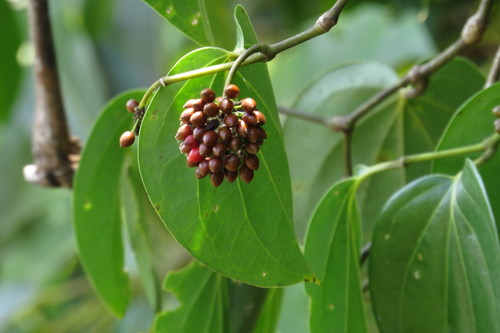
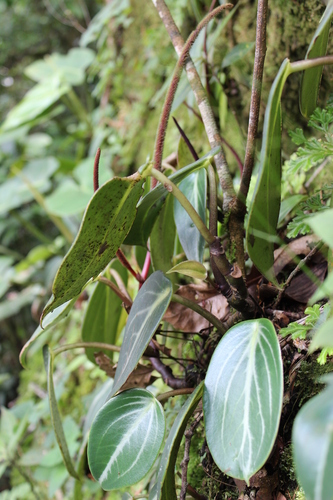
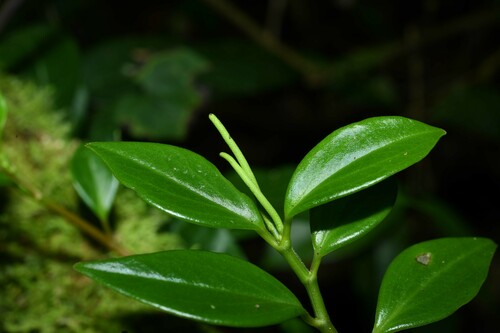
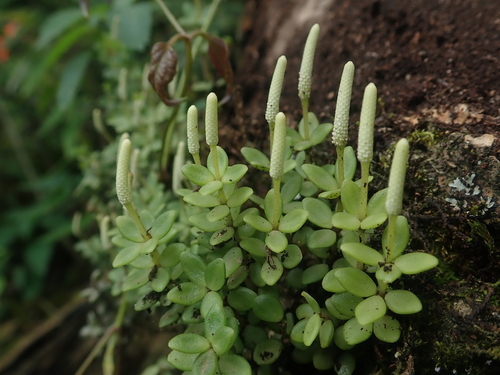
Peperomia tetraphylla, commonly called acorn peperomia or four-leaved peperomia, is a small plant species in the Piperaceae family. It is native to tropical and subtropical regions across the globe, and has been introduced to Easter Island. This species is a low-growing herb with creeping stems, and sometimes forms dense mats. Its leaves are elliptic or round, grow in whorls of 3 to 4, are typically green on their upper surface, and may have a reddish underside. It grows in wet evergreen forests, most often as an epiphyte growing on trees or fallen logs, but can also occur on rocky knolls or among grasses along river banks. Its specific epithet tetraphylla comes from Ancient Greek, and translates to "four leaves". It was first formally described in 1832 by W.J. Hooker and G.A. Walker-Arnott, following a coastal survey of South America commanded by Captain F.W. Beechey. Three varieties of the species are currently recognized: the autonym Peperomia tetraphylla var. tetraphylla, Peperomia tetraphylla var. piedadeana, and Peperomia tetraphylla var. tenera.