About Peperomia pellucida (L.) Kunth
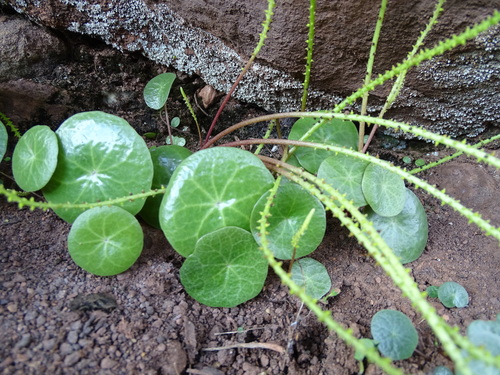
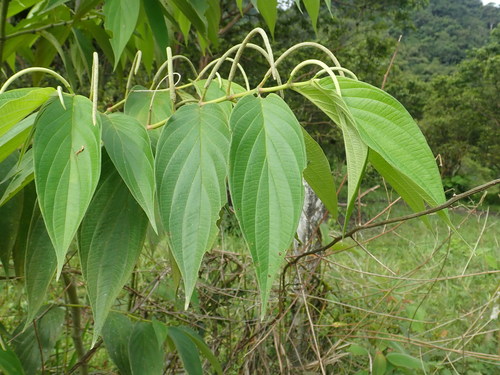
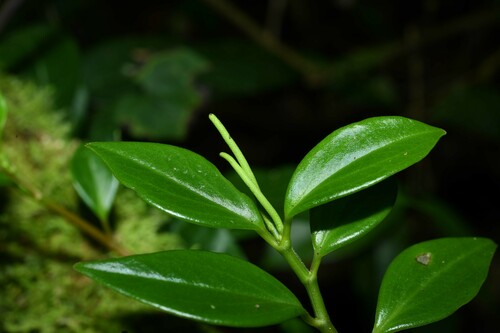
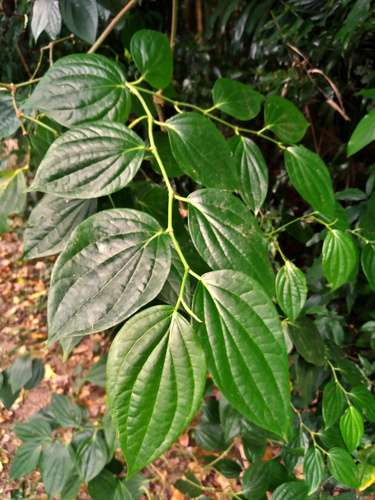
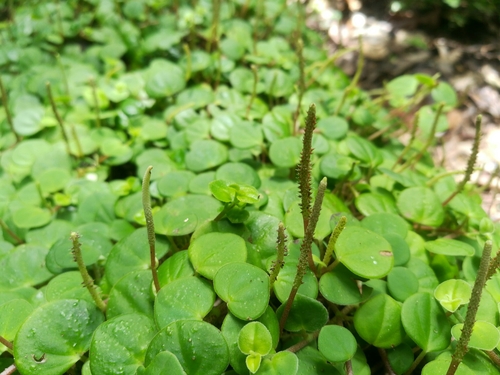
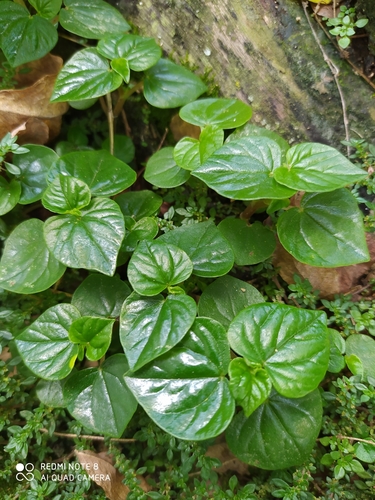
Peperomia pellucida (L.) Kunth has common names including pepper elder, shining bush plant, crab claw herb, and man to man. It is an annual shallow-rooted herb that typically grows between 15 and 45 cm (6 to 18 inches) tall. This species is identifiable by its succulent stems, shiny heart-shaped fleshy leaves, and tiny dot-like seeds attached to multiple fruiting spikes. When crushed, it releases a mustard-like odor. Peperomia pellucida flowers year-round, and grows in clumps. It is found in a wide range of shaded, damp habitats across Asia and the Americas, and thrives in loose humid soils with a tropical to subtropical climate. Peperomia pellucida is used as both food and a medicinal herb. While it is mostly grown for its ornamental foliage, the entire plant is edible, and can be eaten either cooked or raw. Ethnomedicinal uses for Peperomia pellucida vary across regions. It has been used to treat abdominal pain, abscesses, acne, boils, colic, fatigue, gout, headache, renal disorders, and rheumatic joint pain. Among the Alteños Indians of Bolivia, the whole plant is used to stop hemorrhages; the roots are used to treat fevers, and the aerial parts are used as wound dressing. In northeastern Brazil, the plant is used to lower cholesterol. In Guyana and the Amazon region, it is commonly used as a cough suppressant, emollient, and diuretic, and is also used to treat proteinuria. It is also applied topically to treat skin disorders such as acne and boils. In western Nigeria, a water extract of the plant is used to treat high blood pressure, urinary tract infections, and insomnia. In the Philippines, it is one of 10 medicinal plants endorsed by the country's Department of Health. It is used to reduce uric acid levels, which cause arthritis and gout, and can be prepared as a decoction or eaten raw as a salad.