About Pentachaeta aurea Nutt.
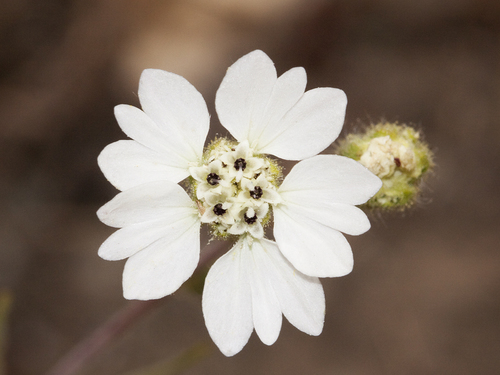
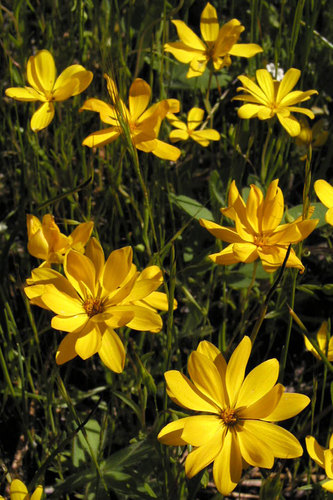
Pentachaeta aurea Nutt. is a species of flowering plant in the aster family. It has three common names: golden-rayed pentachaeta, golden chaetopappa, and golden leastdaisy. This plant is native to southern California in the United States, where it grows in the San Gabriel Mountains, San Bernardino Mountains, and Peninsular Ranges, and also to northern Baja California. It is an annual herb that grows from a slender taproot, producing a hairy stem that reaches a maximum height of around 36 centimeters. Its leaves are narrow and linear, growing up to 5 centimeters long and only a few millimeters wide, and may be covered in dense hairs. Each plant can produce up to 22 flower heads, each borne singly as a solitary inflorescence. The flower head holds many ray florets that can be yellow, brownish, or whitish, measuring 3 to 12 millimeters long. The center of the flower head is made up of many five-lobed disc florets, which range in color from yellow to reddish. The fruit produced by this plant is an achene, tipped with a pappus made of bristles.