About Peniocereus striatus (K.Brandegee) Buxb.
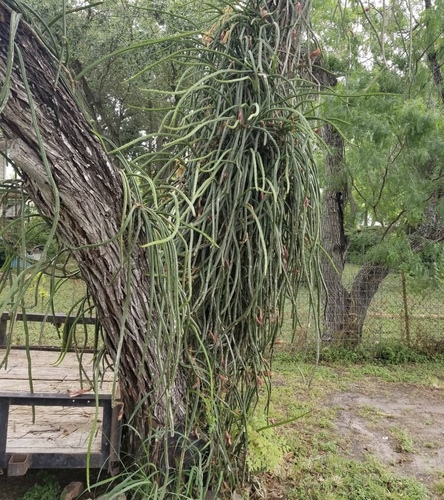
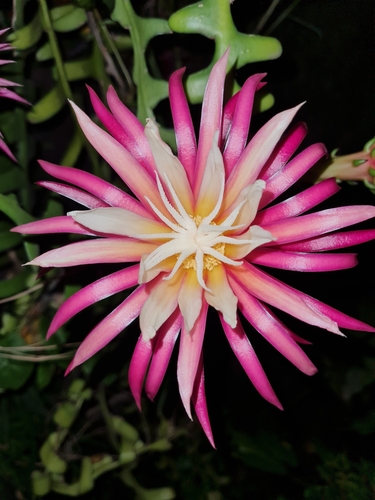
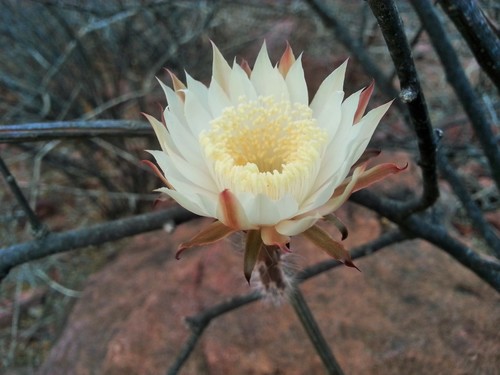
Peniocereus striatus is a species of cactus that goes by several common names: gearstem cactus, cardoncillo, jacamatraca, sacamatraca, and dahlia-rooted cactus. This species is endemic to the Sonoran Desert, where it can be found in the Mexican states of Baja California, Sinaloa, and Sonora, as well as in Arizona in the United States. This cactus grows as a shrub, with narrow brown or greenish cylindrical branching stems that reach up to 1 meter in length, and can occasionally grow as long as 2 meters. When it is not producing flowers or fruit, the plant is very inconspicuous, and often looks more like a collection of dead stems hidden among the dry branches of other plants. Its stems are covered in clusters of small, weak spines that are a few millimeters long; the spines are yellowish white, and sometimes have black tips. The roots have tuber-like swellings at their tips that look similar to sweet potatoes. The flowers of Peniocereus striatus bloom at night. They can grow up to 10 centimeters wide, with white or pinkish inner tepals and reddish or purplish outer tepals. The style can reach up to 6 centimeters long, while the stamens are roughly one centimeter in length. The cactus produces bright red, spiny fruit that is 4 to 5 centimeters long. Flowering and fruiting typically begin when summer rainfall arrives. This cactus grows in sandy desert soils on hills and flats, and usually grows underneath other plants. It relies on association with nurse plants, which include ironwood (Olneya tesota) and creosote bush (Larrea tridentata). Its flowers are pollinated by sphinx moths. Birds eat the cactus's seeds and disperse them, and many of these cacti grow beneath the trees where birds roost. While some local populations of this cactus are threatened and in decline, the species as a whole is common across its native range and is not considered a threatened species overall.