About Penelopina nigra (Fraser, 1852)
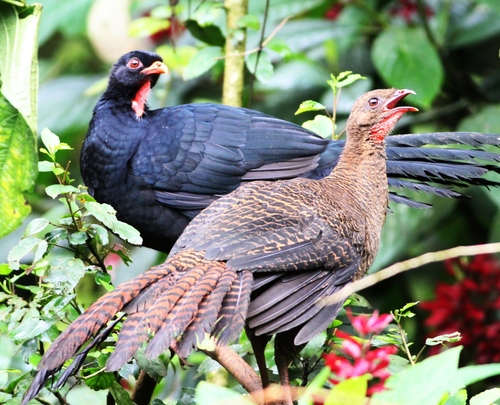
Penelopina nigra (Fraser, 1852), commonly known as the highland guan, reaches an adult length of 590 to 650 millimeters (23 to 26 inches). Males have overall black plumage, with the upper parts glossed in green or blue, and underparts that are more dull in tone. Males have a reddish-brown iris, with reddish-brown or purplish bare skin located around and behind the eye. The beak, bare throat skin, large wattle, legs, and feet of males are all reddish-orange. In contrast, females are black with heavy mottling and barring in reddish-brown and cinnamon. Females have a red beak, red bare skin around the beak, and purplish bare skin around the eye. This species occurs on both sides of Central America’s mountain ranges. It is uncommon across Mexico, but found in moderate populations in the El Triunfo Biosphere Reserve. It is also common in some parts of Guatemala, but is much rarer in Honduras, north-central Nicaragua, and El Salvador. It may already be extinct in El Salvador. Its native habitat is humid broad-leaved mountain forest, primarily cloud forest and pine-oak forest, though it has also been recorded in secondary forests and plantations. The highland guan forages for fruit, both in trees and on the forest leaf litter.