About Pelopidas thrax (Hübner, 1821)
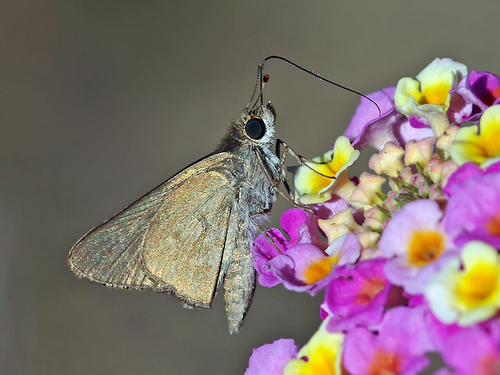
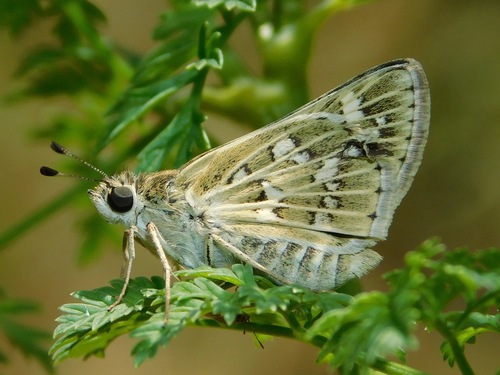
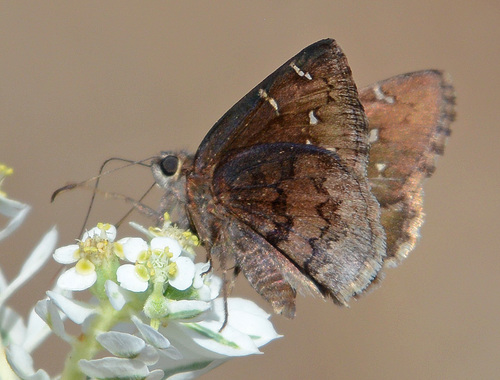
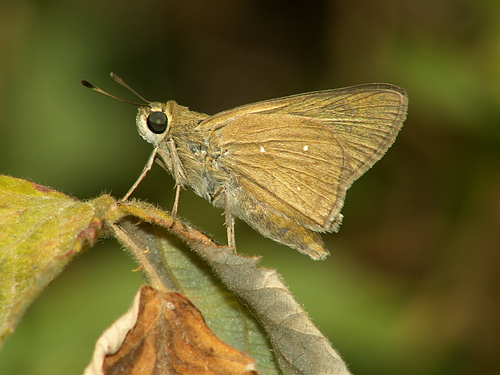
This species, Pelopidas thrax (Hübner, 1821), has brown ground colour on both forewings and hindwings. The upper side of the wings features a series of white spots of varying sizes. Males have a narrow white scent scale patch on the upper surface of their forewings. The arrangement of the translucent spots in this species differs from the arrangement seen in both Gegenes nostrodamus and Gegenes pumilio. Newly laid eggs are yellowish, and turn salmon-colored as they develop. Eggs are flattened, measuring approximately 0.9mm in height and 1.5mm in diameter. The egg surface is covered with around 60 very fine elongated ribs, which extend from the base across roughly two-thirds of the egg's total height; these ribs intersect with horizontal lines. Larvae hatch from the egg eight days after laying. Fully developed sixth-stage caterpillars reach a maximum length of 35 mm. The caterpillar body is light green, with a darker line running along its back. Its secondary back lines and lateral lines are paler than the base body colour. The head is light brown, and often outlined with a dark brown line. This species goes through six distinct larval stages. Pupae are approximately 32mm long, relatively slender, and have a 3mm long appendage on the head that points slightly upward or downward. Pupae are yellowish white, with a faint, paler subdorsal line. The proboscis sheath extends one segment past the wing sheaths.