About Pelophylax ridibundus (Pallas, 1771)
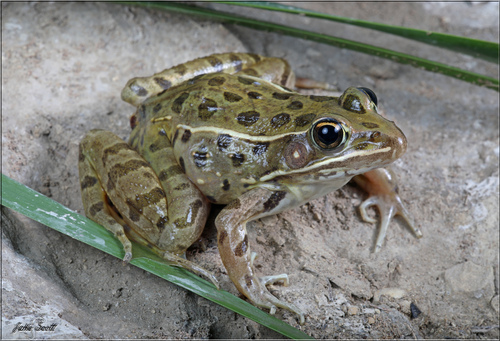
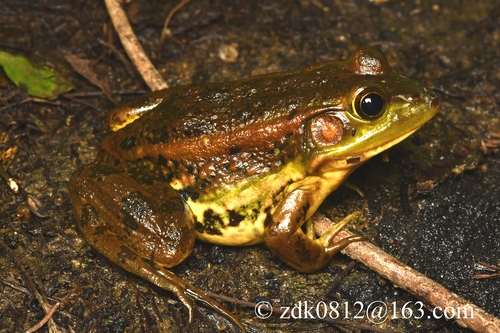
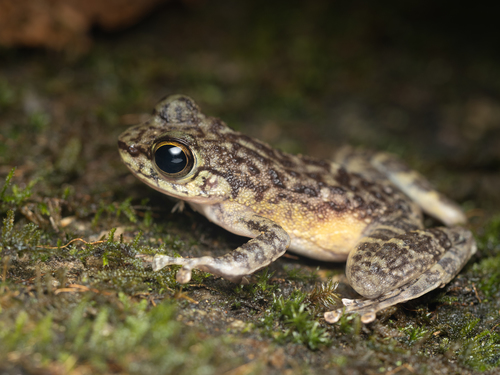
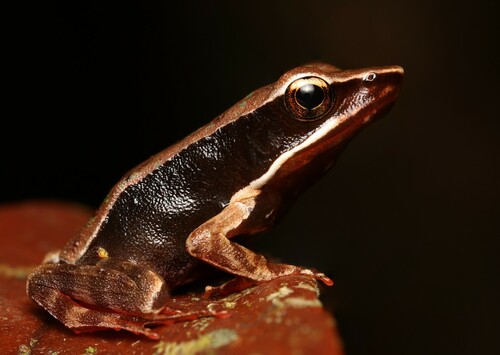
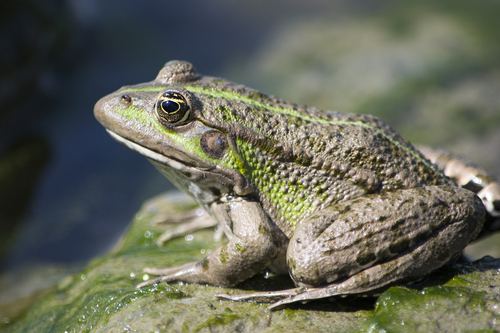
Description: The marsh frog, Pelophylax ridibundus, is the largest frog species across most of its range. Males reach roughly 100 mm (3.9 in) snout-vent length (SVL), while females are slightly larger at 4 inches SVL. The species shows significant variation in color and patterning, ranging from dark green to brown or grey; it may sometimes have lighter green lines, and a lighter line along the back is usually present. Individuals are typically darker in early spring, which helps them absorb heat more efficiently. Marsh frog tadpoles can grow up to 190 mm (7.3 in) in length. This maximum size usually develops in areas with long winters, which give tadpoles more time to grow.
Distribution and habitat: The marsh frog is found across a large portion of Europe, beginning in western France and extending east into the Middle East and covering roughly the western quarter of Russia. Isolated populations also exist in Saudi Arabia and the Russian Far East. Introduced populations are established in the United Kingdom and other locations. This species is highly tolerant of different habitat conditions, and can live in most types of water bodies. Marsh frogs hibernate over winter either underwater or in burrows, and can use the Earth’s magnetic field to locate breeding ponds.