About Pelophylax nigromaculatus (Hallowell, 1861)
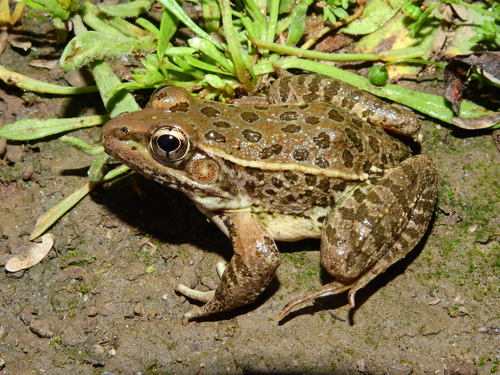
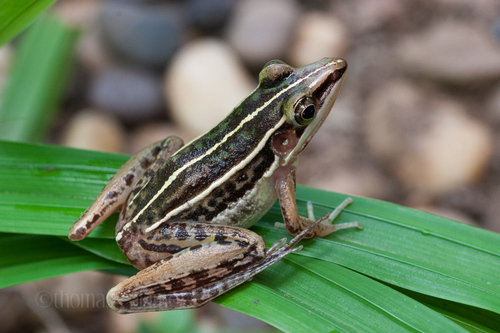
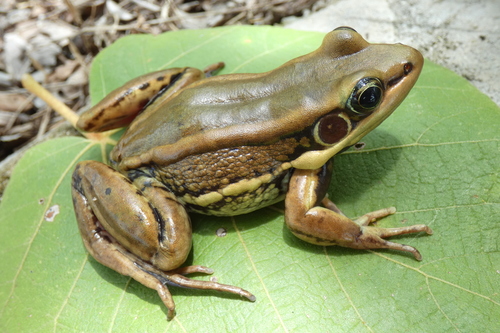
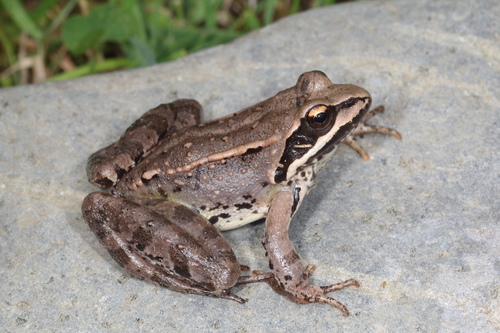
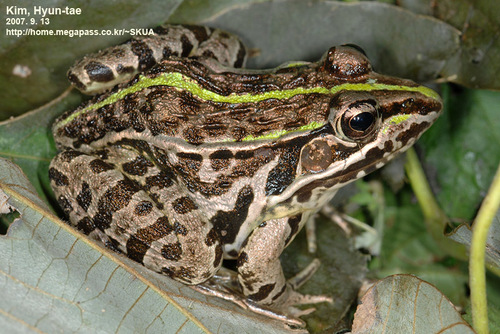
Pelophylax nigromaculatus, also called the dark-spotted frog, has distinct physical size and appearance traits between adult sexes. Adult males reach a snout–vent length of around 62 millimetres (2.4 inches), while adult females reach approximately 74 millimetres (2.9 inches). Dorsal body colour ranges from grey to greyish-olive, olive, or green. Individuals usually have large dark spots on the back, a light mid-dorsal line, and two additional lines along the dorso-lateral folds. The belly is white, and the toes are fully webbed. Mature males have a paired vocal sac, plus nuptial pads on the first finger. This species mates soon after hibernation ends. Individuals likely reach sexual maturity at two years of age, and the maximum recorded total lifespan is 13 years. Reported clutch sizes fall into two ranges: 1800 to 3000 eggs, or 600 to 5000 eggs. Females lay clutches of eggs in shallow water. This frog is unaffected by venom from the Asian giant hornet, which it preys on and consumes. The opalinid parasite Protoopalina pingi is known to infect this frog species. The dark-spotted frog is a species that occurs at relatively low altitudes, and it has not been recorded at elevations above 2200 metres. It occupies a wide variety of habitat types, including deserts, bushland, meadows, and forests. It is almost always found in or located close to stagnant or slow-moving water. While it has a relatively high tolerance for human disturbance, populations are increasingly threatened by hunting for human use and water pollution.