About Pelophylax lessonae (Camerano, 1882)
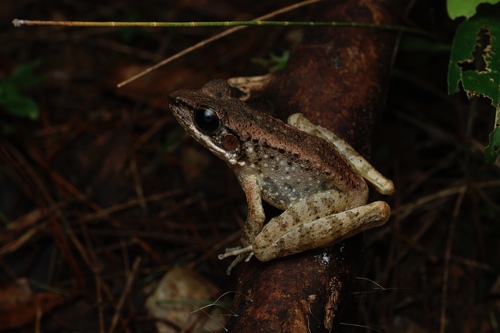
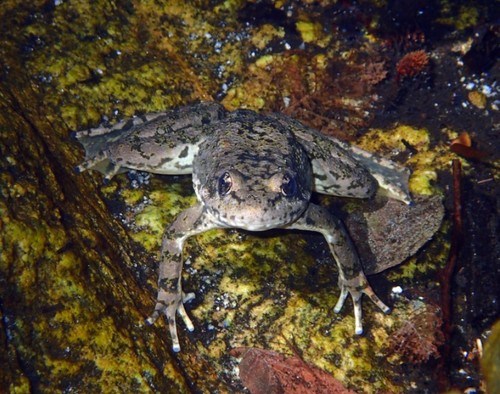
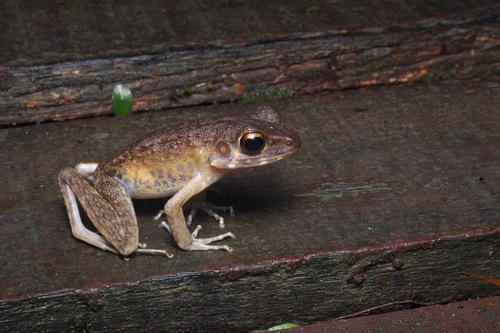
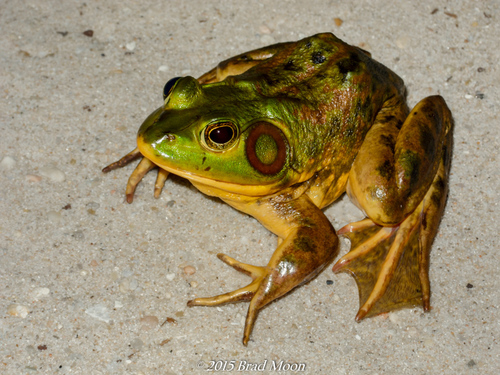
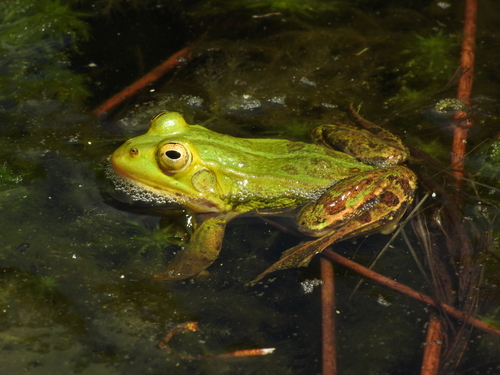
Pelophylax lessonae, commonly called the pool frog, is a small frog species. It rarely reaches more than 8 cm (3.1 in) in total length, though females can grow as large as 9 cm (3.5 in). Males are typically around 5 cm (2.0 in) long, while females average 6–6.5 cm (2.4–2.6 in) long. Their base coloration is brown or green, with dark blotches across their backs. They have a pair of ridges running from each eye, plus a cream or yellow stripe running down the center of the back. Male pool frogs have cream or even white vocal sacs.
This species is distributed across most of central Europe, ranging from the west coast of northern France to western Russia. Small populations also exist in the United Kingdom, Spain, Sweden, and Norway. Pool frogs were previously thought to be non-native to the UK, but studies show that English populations are related to the populations of Sweden and Norway. Pool frogs live in damp areas with dense vegetation, as well as calm, slow-flowing rivers, ponds, bogs, and marshes. According to Amphibiaweb, populations of this species can survive in urban areas and even fisheries. The creation of new ponds and other water bodies allows increased dispersal and leads to population growth for these frogs.