About Pelophylax cretensis (Beerli, Hotz, Tunner, Heppich & Uzzell, 1994)
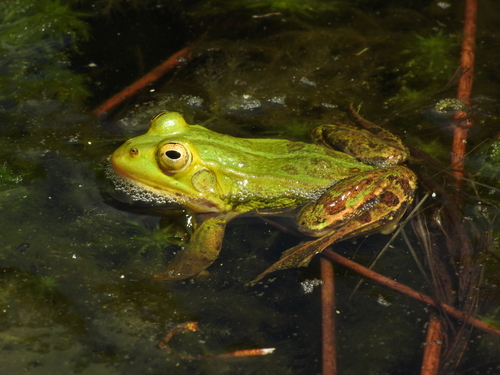
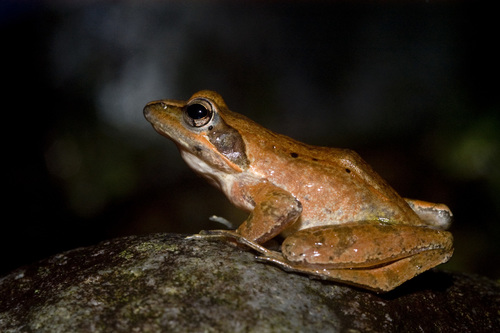
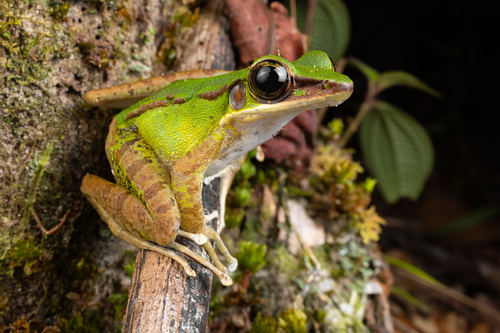
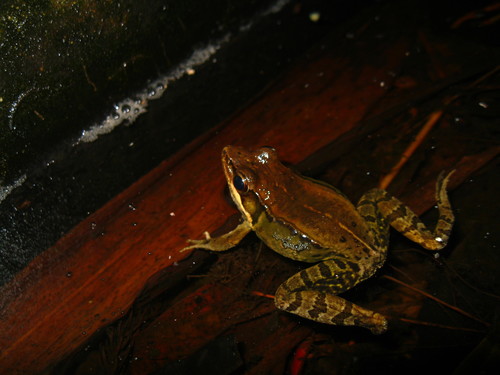
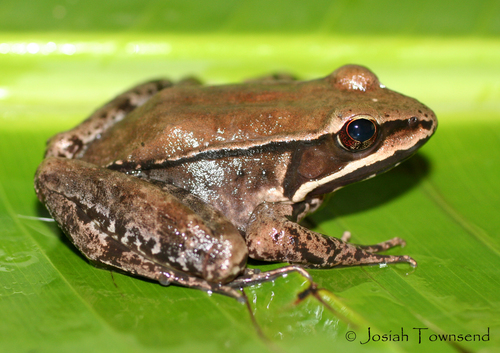
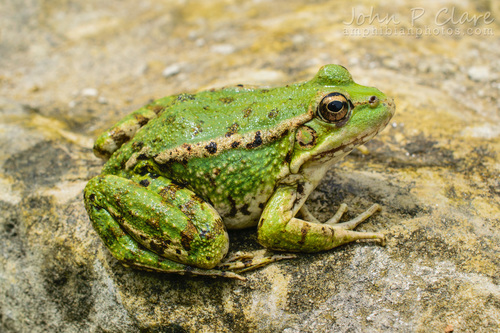
Pelophylax cretensis, commonly known as the Cretan frog, is a medium-sized frog that reaches a maximum length of 8 cm and a weight of 40 g. Most individuals have a light grey to brown base color, with brown or olive-grey mottled spots across the back; the throat and underside of the body are whitish-grey. Rarely, the upperparts may be grass-green with clearly defined brown spots. The inner surfaces of the hind legs are yellow, and yellowish color may also appear on the sides of the body. This species has a prominent dark brown fold of skin running along its back, with smooth, slightly glossy skin. Males can have prominent vocal sacs on their throats, particularly during the breeding season. Like other frogs, it has long, muscular hind legs that support its agile swimming and jumping abilities. This species is endemic to the Greek island of Crete, where it has a patchy distribution across a broad area. It occurs at altitudes up to 920 meters above sea level; there is one unconfirmed record of the species at 1,330 meters. Its entire distribution falls within the Crete Mediterranean forests ecoregion. Its natural habitats include Mediterranean-type shrubby vegetation, rivers, intermittent rivers, swamps, freshwater lakes, intermittent freshwater lakes, freshwater marshes, intermittent freshwater marshes, and plantations. Mating takes place in spring. Females lay their eggs in water in clusters of a few hundred eggs, and a single female can lay up to 5,000 eggs total. Eggs hatch after approximately one week, with hatching time varying based on water temperature. During the breeding season, males develop prominent throat vocal sacs, and aggressively defend their territories using a combination of strategic calling and physical confrontation.