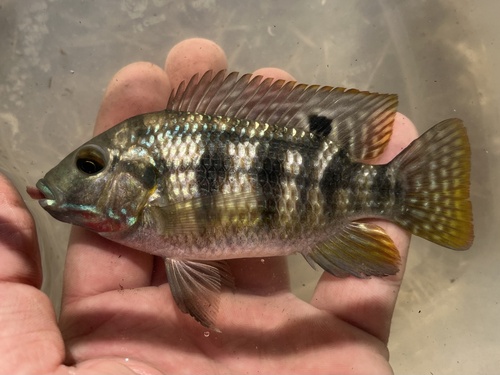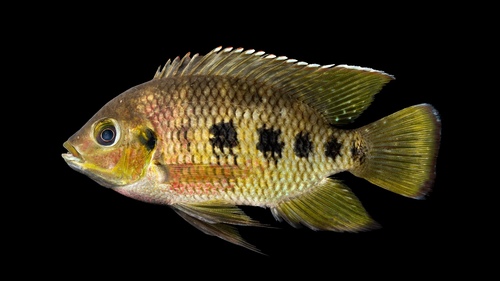
About Pelmatolapia mariae (Boulenger, 1899)
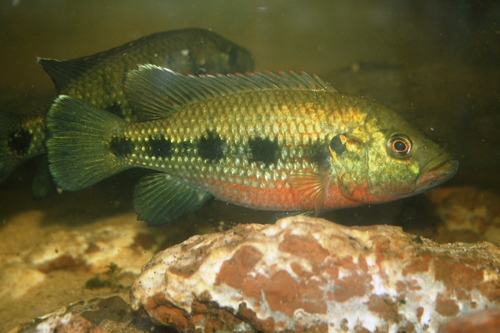
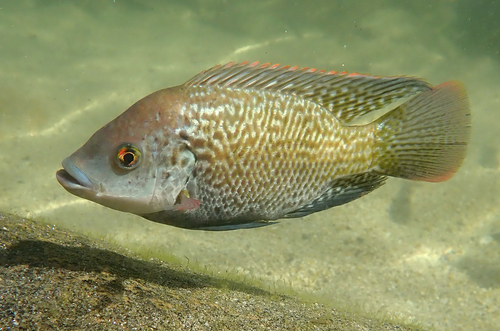
Pelmatolapia mariae, commonly called the spotted tilapia, spotted mangrove cichlid, or black mangrove cichlid, is a cichlid species. It is native to fresh and brackish water systems in West and Central Africa, but has been introduced to other regions where it is classified as invasive. This species has high fecundity, simple food requirements, and broad tolerance for environmental variables including water temperature, salinity, and pollution. These traits let spotted cichlids rapidly colonize many suitable habitats. Spotted tilapia are typically an aggressive, territorial species; research has found that internal reproductive androgenic factors can override the effect of body size on the outcome of dominance encounters between individuals. The native range of spotted tilapia in Africa extends from Côte d'Ivoire to Ghana, and from Benin to Cameroon. Large feral populations have become established outside its native range, for example in Florida and Australia. Spotted tilapia occupy a wide variety of habitats; they have been recorded in both still and flowing waters, in both shallow and deep water, in areas with little to no coverage, and in rocky, debris-filled areas. Spotted tilapia feed primarily on plant matter, and males and females never feed at the same time. Instead, one individual feeds while the other remains nearby, and then the pair switches roles. Multiple natural factors contribute to mortality in spotted tilapia. Their predators include electric catfish (Malapterurus electricus), which prey on spotted tilapia eggs, and African pike and obscure snakehead, which prey on adult spotted tilapia. This species is also prone to severe fatal intestinal infections from nematode parasites. Additionally, rain-induced flooding can sweep spotted tilapia out of their native streams into small residual pools on stream banks, where they become stranded. When rain stops and these pools dry out, the stranded fish die. Spotted tilapia have ecological as well as commercial importance, so they are commonly exploited and cultured.