About Pelecanus rufescens Gmelin, 1789
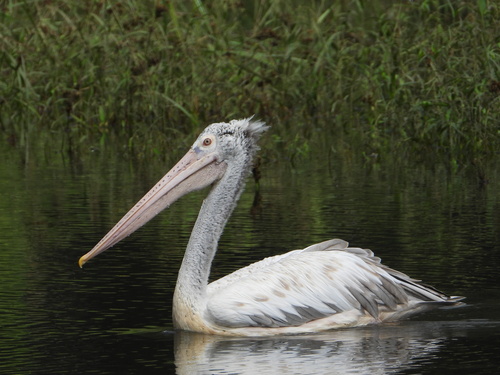
Pelecanus rufescens (pink-backed pelican) is a relatively small pelican species, but it is still not a small bird by general bird standards. It measures 125 to 155 cm (49 to 61 in) in length, has a wingspan of 2.15–2.9 m (7.1–9.5 ft), and weighs 4 to 7 kg (8.8 to 15.4 lb). Its bill is 30 to 38 cm (12 to 15 in) long. The plumage is grey and white, with an occasional pinkish hue on the back that is never as deep as the pink of a flamingo. The top of the bill is yellow, and the pouch is usually greyish. Breeding adults grow long feather plumes on their heads. This species shares its habitat with the great white pelican, which is generally larger and has all-white plumage instead of the pink-backed pelican's greyish plumage. The pink-backed pelican lives in a range of aquatic habitats, and prefers quiet backwaters with shallow water. It avoids steep, vegetated lake banks. It favors freshwater lakes, swamps, large slow-flowing rivers, and seasonal pools, but also regularly uses reservoirs, seasonally flooded land, and flood-plains near river mouths. It can live on alkaline and saline lakes and lagoons, and is sometimes found along the coast in bays and estuaries, though it seldom occurs on open seashore. This species typically roosts and breeds in trees such as mangroves, but will also roost on sandy islands, cliffs, coral reefs, and sand-dunes. When nesting in trees, many nests are built close together. These nests are reused every year until the trees collapse, and the birds normally remain in the local area after this. The pink-backed pelican nests colonially in trees, reeds, or low bushes along waterfronts; less often, it nests on the ground on sandy islands and in mangroves. Its nest is a large heap of sticks, and may be 10–50 m (33–164 ft) above the ground. The female lays two to three large white eggs. After hatching, chicks feed by plunging their heads deep into the adult's pouch to eat partially digested, regurgitated fish.