About Pelargonium sidoides DC.
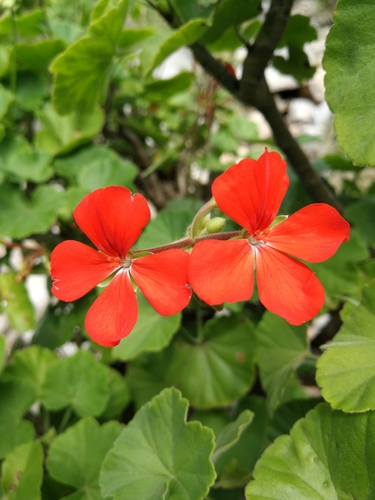
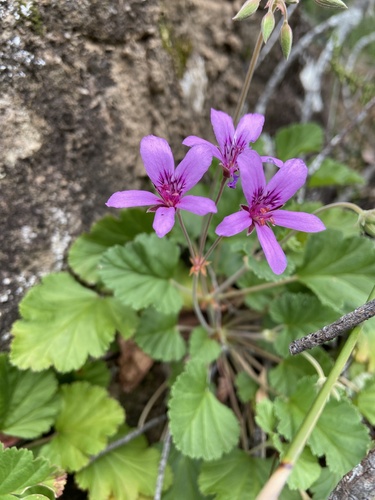
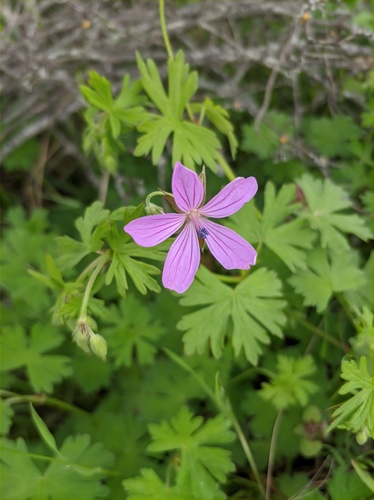
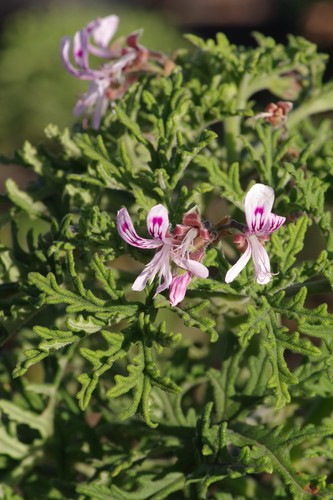
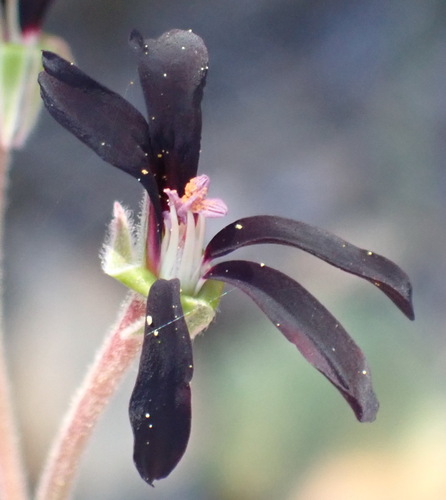
Commonly called African geranium, Pelargonium sidoides DC. forms a basal rosette of heart-shaped leaves with a velvet-like texture and a small number of short trichomes, attached to long petioles. Its flowers have five petals that range from dark red to nearly black, and two of these petals are sometimes fused. This species can often be found in flower for almost the entire year. It prefers growing in grasslands with rocky soils. It can be hard to tell apart from Pelargonium reniforme, which grows in the same general area; P. reniforme typically has more distinctly kidney-shaped leaves. When grown in cultivation in the United Kingdom, Pelargonium sidoides has earned the Royal Horticultural Society's Award of Garden Merit. If grown as a perennial, it requires winter protection, because it cannot survive temperatures below 5 °C (41 °F). It grows best in a sunny, sheltered location. A 2013 Cochrane review found limited to no evidence that Pelargonium sidoides root extract benefits symptoms of acute bronchitis, the common cold, or acute rhinosinusitis. A summary of this review noted that all included studies were conducted by the same investigator affiliated with the extract's manufacturer, and all were carried out in the same region (Ukraine and Russia). Pelargonium sidoides root extract may be sold as a dietary supplement or traditional medicine under many different brand names, but there is no high-quality clinical evidence that it produces any therapeutic effect.