About Pediocactus sileri (Daul) L.D.Benson
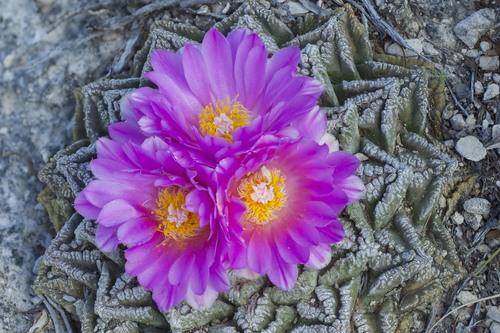
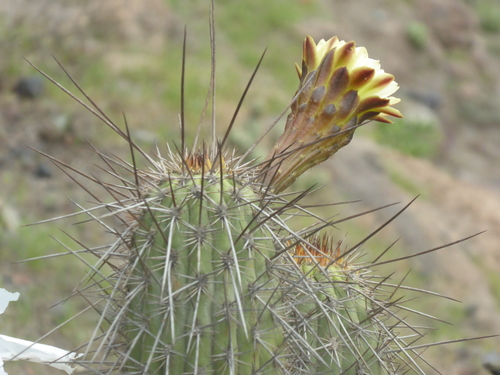
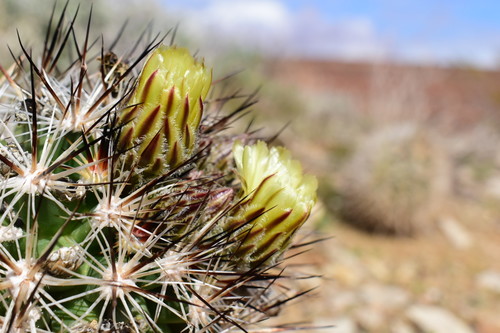
This cactus is generally egg-shaped, sometimes cylindrical, and may have short branches. It grows up to 25 centimeters tall and around 11 centimeters wide. Its surface is bumpy with areoles covered in hairs or woolly fibers. Each areole has 3 to 7 main spines that range in color from black to gray or white; spines near the base of the cactus body reach up to 3 centimeters long. Each areole also has many smaller white spines 1 to 2 centimeters long. Spines around the cactus base may help anchor it to the soil. This cactus flowers in April and May. Flowers are up to 2 centimeters long by 3 centimeters wide, with brown outer tepals that have white margins and purple-veined yellow inner tepals. Fruits are yellow-green and just over a centimeter long. This species grows on sand and clay substrate belonging to the Moenkopi Formation, especially the Schnabkaib Member of the formation, in gypsum- and salt-rich soils. Its habitat includes desert scrub, woodlands, and grasslands, and most of its growing area is stewarded by the Bureau of Land Management. It is distributed across parts of Coconino and Mohave Counties in Arizona, and Washington and Kane Counties in Utah. The total current population of this cactus has not been estimated, but over 10,000 individuals have been documented across just over 34,000 acres (140 km2) of territory. Threats to the species include uranium exploration; as uranium prices have risen recently, the number of mining claims in the area has increased, and all known cactus occurrences sit on land with potential for uranium discovery. While uranium mining plans are often modified to avoid damaging the cactus, the threat still remains. Petroleum exploration and gypsum mining are considered future rather than current threats. Off-road vehicle use is popular in the region, with designated vehicle routes and vehicle-closed areas to protect the plant. Livestock grazing is considered a minor threat. Natural threats include drought and predation by rodents and rabbits. Conservation activities include the establishment of the White Dome Nature Preserve in Utah, which protects land that hosts this cactus, the rare dwarf bear claw poppy (Arctomecon humilis), and animals such as the zebra-tailed lizard (Callisaurus draconoides) and the loggerhead shrike (Lanius ludovicianus).