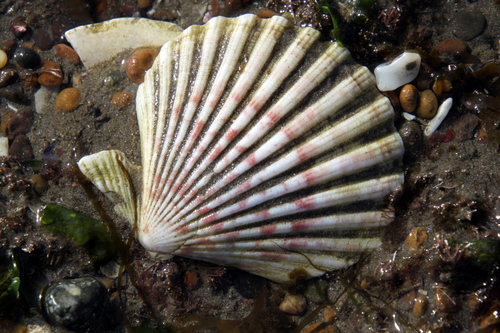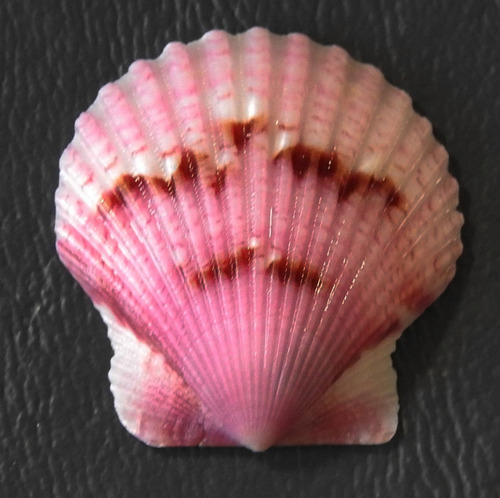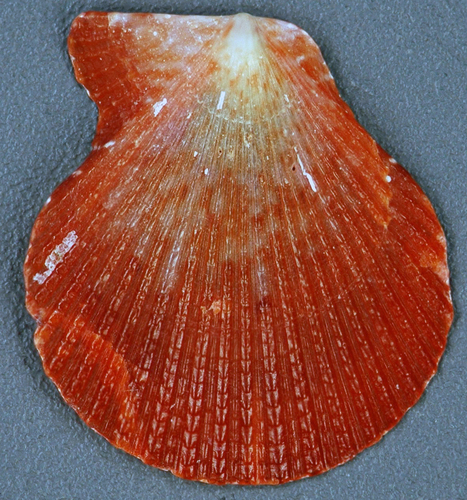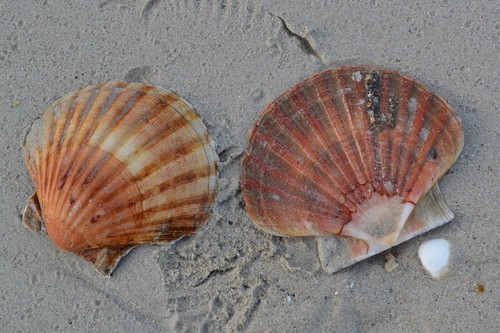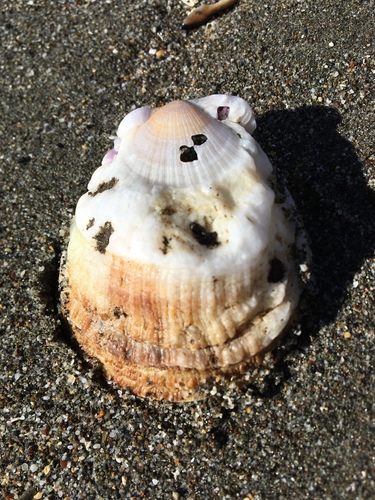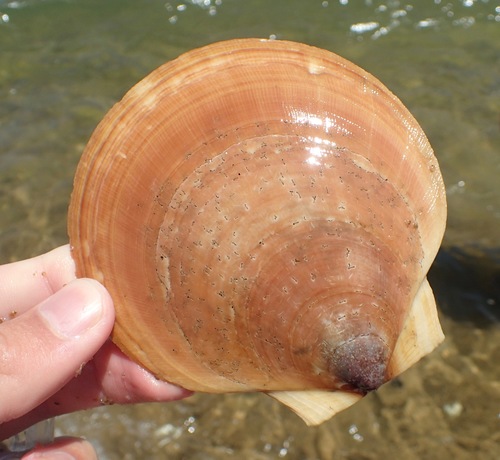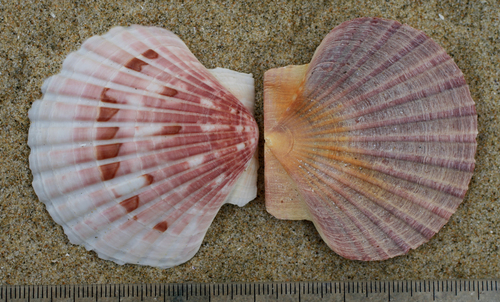
About Pecten novaezelandiae Reeve, 1852
Pecten novaezelandiae Reeve, 1852, commonly known as the New Zealand scallop, is a bivalve mollusc that belongs to Pectinidae, the scallop family. This species is sometimes misspelled as Pecten novaezealandiae in scientific literature. Pecten novaezelandiae is endemic to New Zealand, where it can be found around the North Island, South Island, Stewart Island, and the Chatham Islands. This scallop inhabits sand, silt, and mud substrates ranging from low tide level down to depths of over 90 metres. Large populations of the species occur at depths between 10 and 25 metres. Sexually mature Pecten novaezelandiae are hermaphrodites, and are broadcast spawners. Their spawning season varies across different locations; in Tasman Bay / Te Tai-o-Aorere, spawning peaks from November to March. After fertilisation, a planktonic larva develops, and this life stage lasts approximately three weeks. Once metamorphosis is complete, the larvae shift from a planktonic to a benthic lifestyle by attaching to suitable substrate on the seafloor. Individuals remain attached to the substrate until they reach at least five millimetres in length. After detaching from the substrate, they continue growing into mature adults. Individuals typically reach sexual maturity within 18 months.