About Pecten maximus (Linnaeus, 1758)
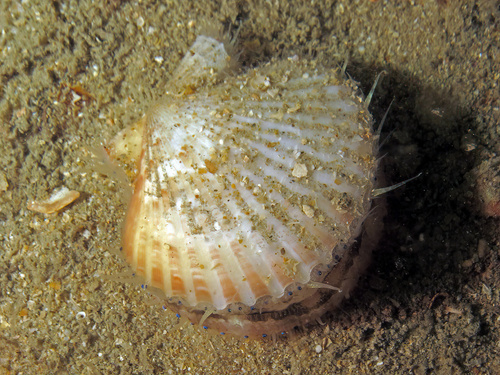
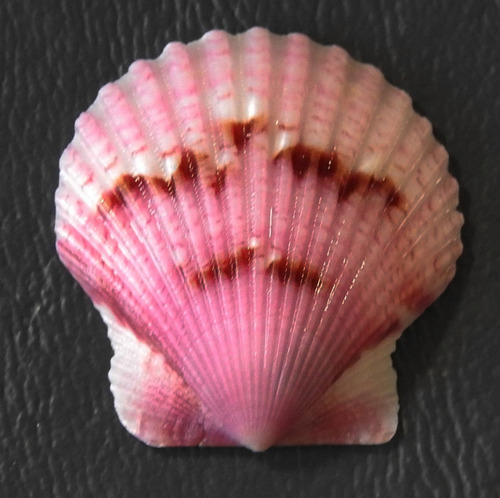
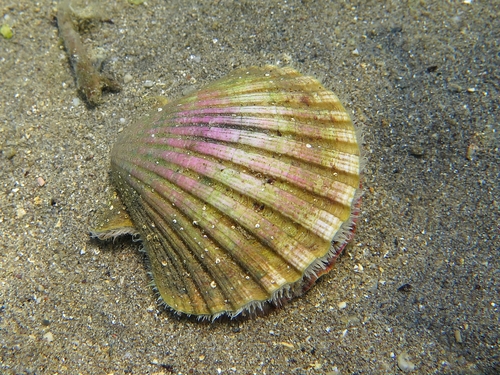
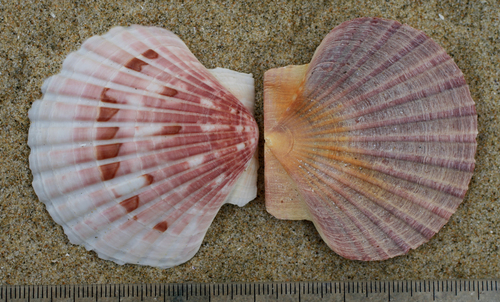
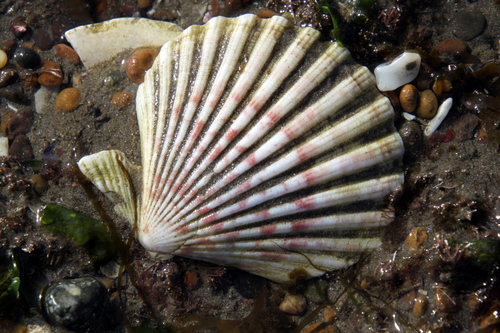
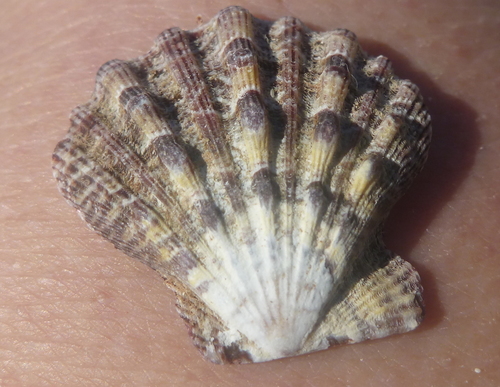
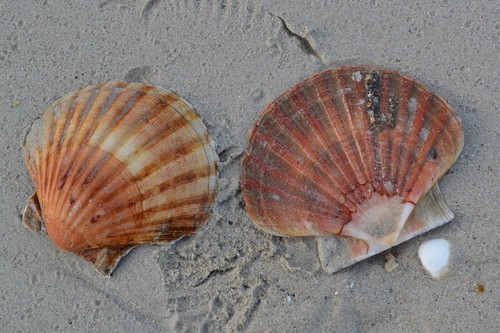
The shell of Pecten maximus is quite robust, and is defined by equal-sized "ears" on either side of the apex. The right (lower) valve is convex and slightly overlaps the flat left (upper) valve. Larger specimens have a nearly circular outline, and the largest specimens can reach 21 cm in length. The "ears" are prominent, and are at minimum half the width of the shell. The byssal notch, located in the right anterior ear, is slight and not serrated. The valve sculpture is distinct: it is made up of 12 to 17 wide radiating ribs, plus numerous concentric lines that clearly show the scallop's growth history. The "ears" have a few thin ribs that radiate from the beaks. The radiating ribs extend to the valve margins, creating a crenulated shape. The left valve is normally reddish-brown, while the right valve ranges in color from white through cream to pale brown shades, with contrasting pink, red or pale yellow tints. Either valve may display zigzag patterns, as well as bands and spots of red, pink or bright yellow. The body of Pecten maximus is pink or red, and the mantle is marbled brown and white. Young individuals attach to the substrate via a byssus, but mature animals can swim by opening and rapidly closing their valves. The adductor muscle that opens and closes the valves is very large and powerful. The foot is a finger-like organ that spins byssal threads, which pass through the byssal notch on the ears. The mantle margin has two layers: the inner layer is finely fringed, while the outer layer is lined with long tentacles. Two series of 30–36 dark blue or green simple eyes, or ocelli, form two rows at the base of these tentacles. Pecten maximus lives in the eastern Atlantic along European coasts, from northern Norway south to the Iberian Peninsula. It has also been reported off West Africa, and off the Macaronesian Islands. Around the coasts of Great Britain and Ireland, it is distributed across the entire coast, but it is uncommon and localised on the eastern North Sea coast. It prefers offshore waters down to 100 metres (330 feet; 55 fathoms) depth.