About Pecten jacobaeus (Linnaeus, 1758)
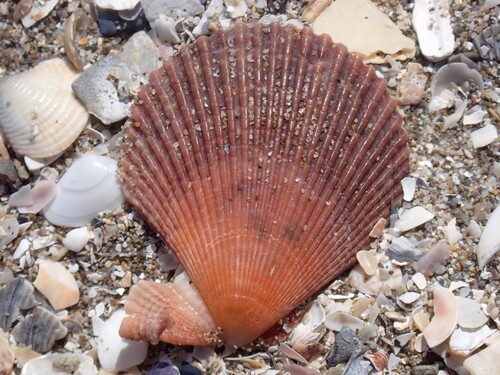
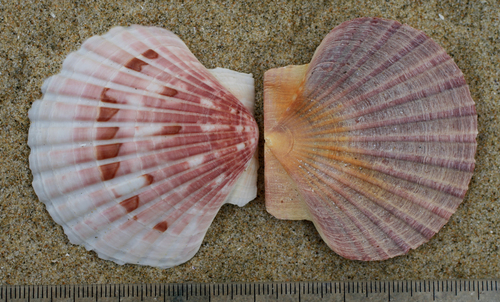
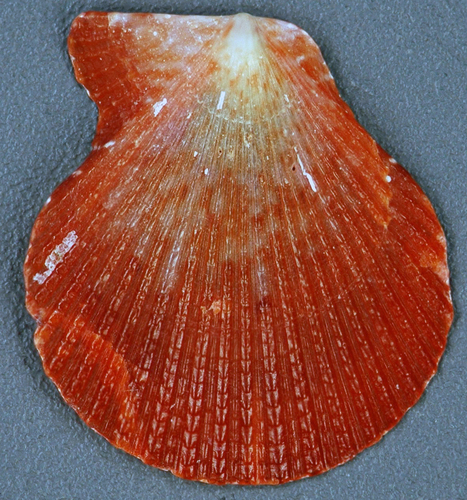
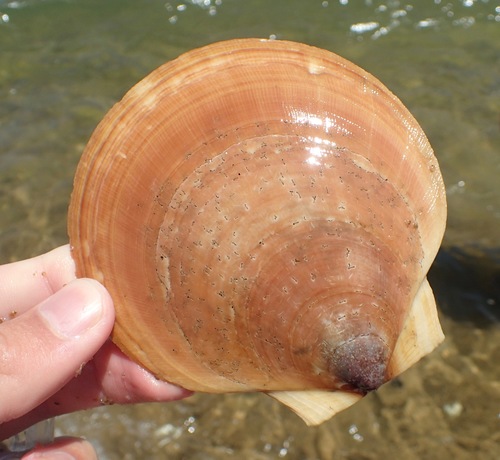
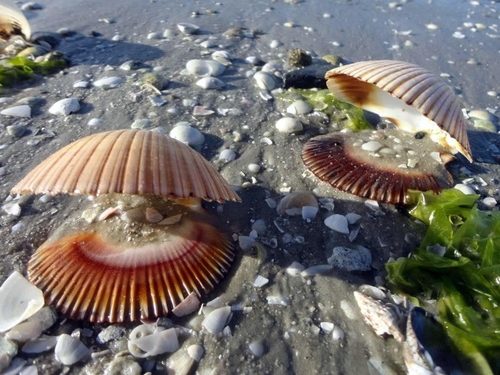
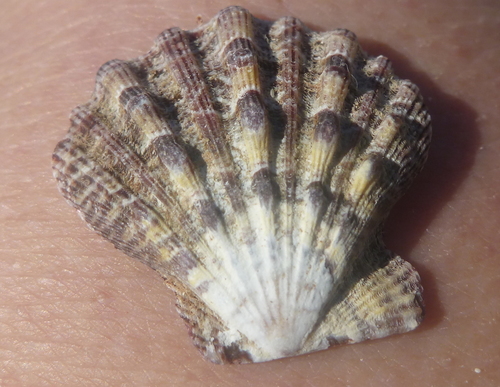
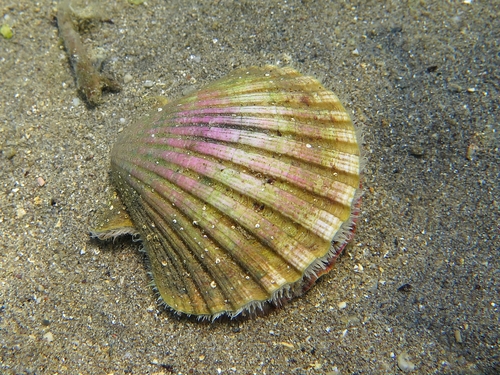
Pecten jacobaeus (Linnaeus, 1758) usually reaches a length of about 120–140 millimetres (4.7–5.5 in), while the world record size for the species is over 210 mm. Its two valves have different shapes. The lower valve, which the animal uses to rest on the seabed, is very convex and light-colored, while the upper valve is flat and brown. Both valves have 14 to 16 radial ribs (radial wrinkles) with a more or less rectangular cross section. The inside of the valves is smooth with a porcelain-like texture. Along the edge of this mollusc’s mantle, there are many short tentacles. Between these tentacles, there are a total of 60 blue-millimeter lens eyes. If threatened, this scallop can quickly close its two valves to swim several meters away. These scallops feed on planktonic organisms and other floating food particles, which they get by filtering seawater with their gills. This species appears to be endemic to the Mediterranean Sea, but it may be conspecific with Pecten maximus, the great scallop, which has a larger distribution. Although the two species are morphologically similar, they have distinguishing features. Fossils of Pecten jacobaeus first appear at the start of the Pliocene, and are quite common in Pliocene and Pleistocene deposits of Italy.