About Paysandisia archon (Burmeister, 1880)
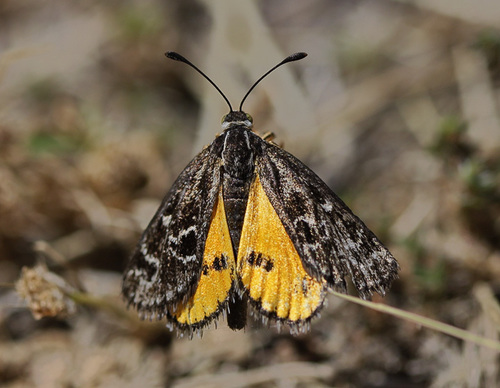
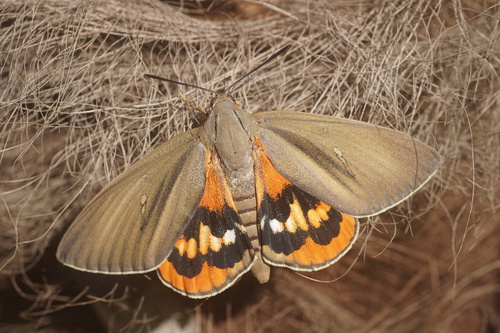
Paysandisia archon is a moth species in the family Castniidae, and it is the only recognized member of the genus Paysandisia. German naturalist Hermann Burmeister first described the species in 1879 under the name Castnia archon, and it was later reclassified to the binomial Paysandisia archon (Burmeister, 1880). This moth is native to Uruguay and central Argentina, and has been accidentally introduced to Europe, where it is currently spreading rapidly. It is a very large moth, with a wingspan measuring 90–110 mm. Females are generally larger than males, and can be easily identified by their prominent ovipositor. Its forewings are dark green with brown streaking, while its hindwings are bright red with distinct black and white markings. Like other members of Castniidae, this species is active during the day, has clubbed antennae, and is often mistaken for a butterfly. Adult Paysandisia archon fly from June to September. The larvae are whitish and maggot-shaped, and feed inside the stems and trunks of palms. Recorded host palms native to the species' natural range include Trithrinax campestris. Recorded host palms in the species' introduced European range include Chamaerops humilis, Trachycarpus fortunei, multiple species from the genus Livistona (including L. chinensis, L. decipiens, and L. saribus), multiple species from the genus Phoenix (including P. canariensis, P. dactylifera, and P. reclinata), Sabal species, and multiple species from the genus Washingtonia (including W. filifera). After feeding, the species pupates inside a cocoon made with palm fibers, within the larval feeding gallery. In its native range, damage caused by the larvae is not noticeable, and the species is not considered a pest. In Europe, however, the species is a growing source of concern, because larval feeding can cause fatal damage to both native and exotic palms.