About Paxistima canbyi A.Gray
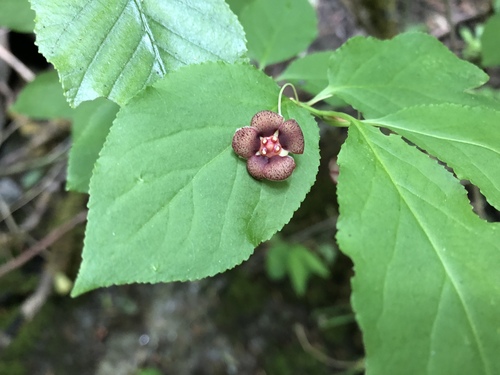
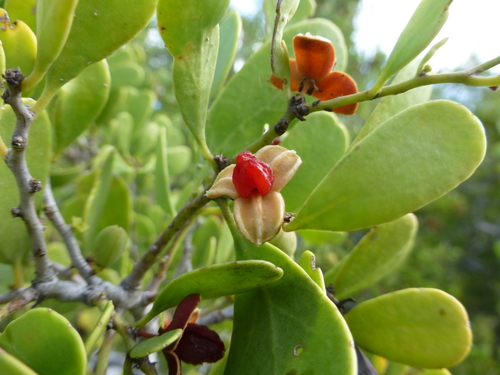
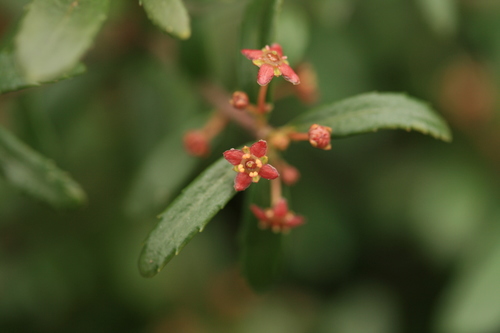
Paxistima canbyi A.Gray, commonly called Canby's mountain-lover, is a small evergreen shrub that typically grows 8 to 16 inches tall. It produces opposite, simple, evergreen leaves that are linear-oblong or narrow oblong in shape. The leaves measure roughly 1⁄4 to 1 inch (6.4 to 25.4 mm) long, and are no more than 3⁄16 inch (4.8 mm) wide. The plant has fine-textured foliage that is lustrous dark green on the upper surface during summer, and often develops a bronze tint during cold weather. Its tiny, unnoticeable flowers are perfect (have both male and female reproductive parts), are greenish or reddish-green in color, and bloom in late April or early May. Each flower has four petals and four sepals. The plant also produces tiny, unnoticeable fruit: a leathery two-valved capsule that is roughly 1⁄16 inch (1.6 mm) long and white in color. This species is native to the Appalachian Region of the eastern United States. Canby's mountain-lover is rare across its entire natural range, which extends from south-central Pennsylvania south to northwestern North Carolina, and west to western Kentucky and southern Ohio. It grows in USDA hardiness zones 3 to 7. In the wild, it tolerates a wide range of growing conditions, from shady sites with moist, organic soil, to full sun sites on uplands and cliffs with calcareous, rocky soil. When grown in gardens or landscapes, the species is finicky; it often fails to adapt to cultivation and dies out even when given good conditions, so it grows best in moist, well-drained, organic acidic soil located in a shady, sheltered site. It is a rare plant in landscapes, but is sold as a groundcover, usually in small pots, by some large, specialty, or native plant nurseries. Canby's mountain-lover is currently listed as a candidate species for federal listing by the United States Fish and Wildlife Service. In 2021, it was designated as state threatened in Kentucky and Maryland.