About Pavona varians (Verrill, 1864)
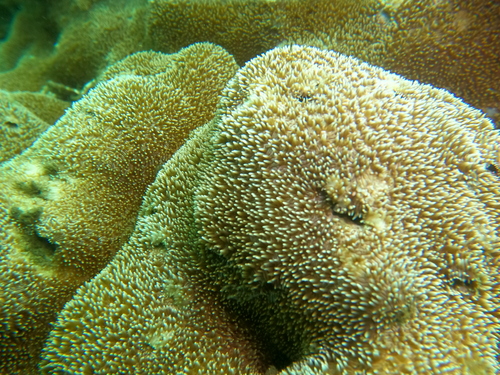
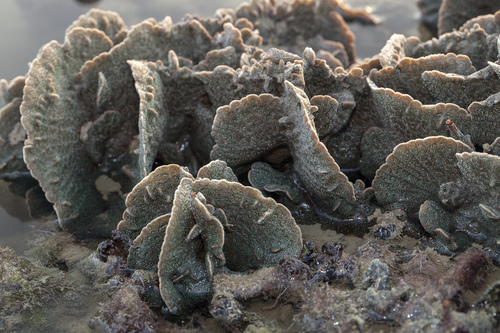
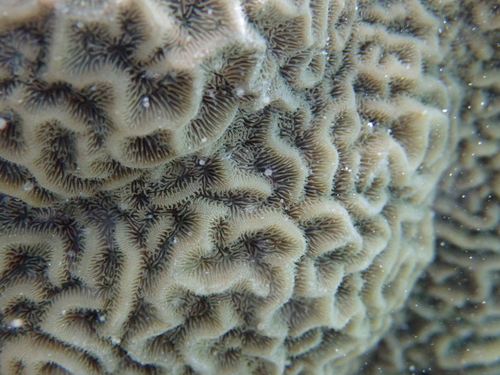
Pavona varians, first described by Verrill in 1864, is commonly called the corrugated coral, and is a species in the genus Pavona. It is a type of hermatypic coral that generally lives in tropical environments. Its distribution covers the equatorial Indian and Pacific Oceans, and it is not found in the Atlantic Ocean. This coral has been recorded as far north as the Sea of Japan, and is also found in the Red Sea, and around islands off the Pacific coasts of Colombia and Costa Rica.
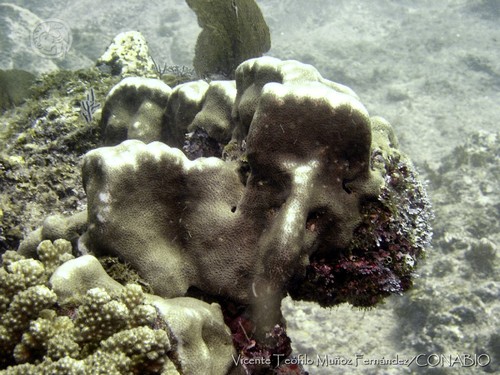
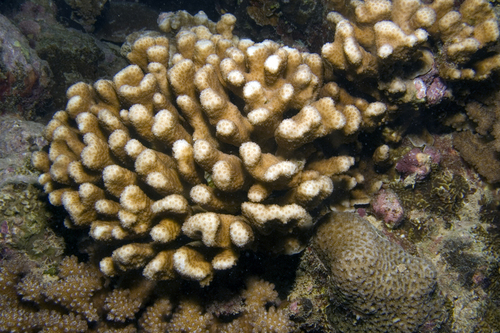
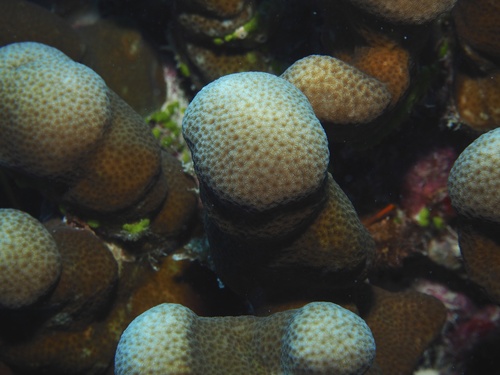
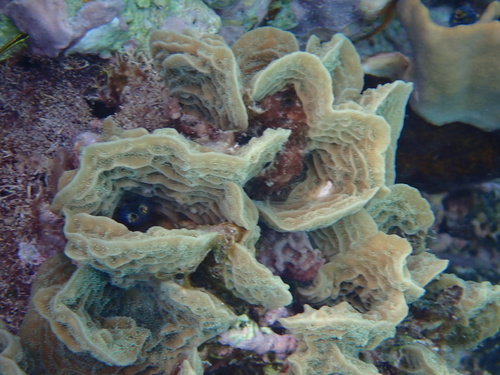
Pavona varians typically occurs at an average depth of 45 feet below water, on vertical surfaces in turbid, nutrient-rich water. It is specifically found between crevices in reef crest habitats and back reef habitats, including lagoons. It is an encrusting coral species that varies in overall color; it usually has red polyps, a green coenosteum, and blue mouths. Its structure differs from many other species in the genus Pavona, as it has unique ridges, and sometimes grows into a cup-like shape.
Pavona varians usually forms small, plate-like colonies that grow no larger than 25 centimeters across on rocky surfaces, and prefers calm water. Researchers have observed that this coral can rapidly colonize areas where other coral species have died or failed to establish colonies. It is especially notable for colonizing areas that were once home to large colonies of Goniopora and Porites.