About Pavona maldivensis (Gardiner, 1905)
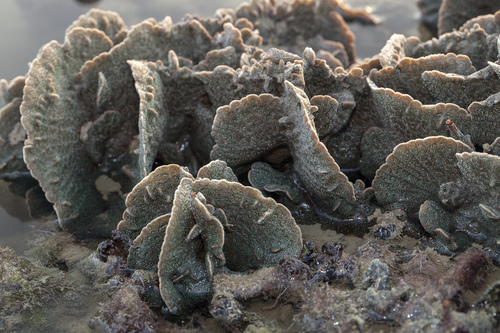
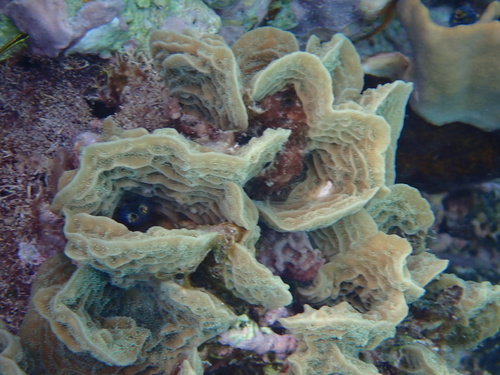
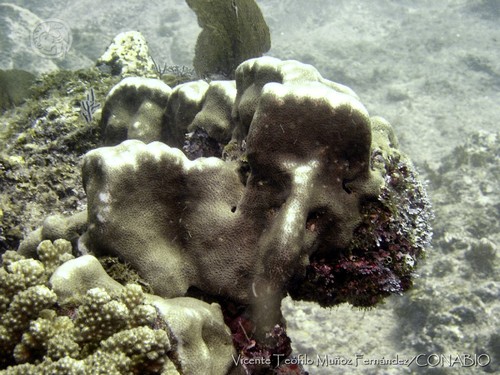
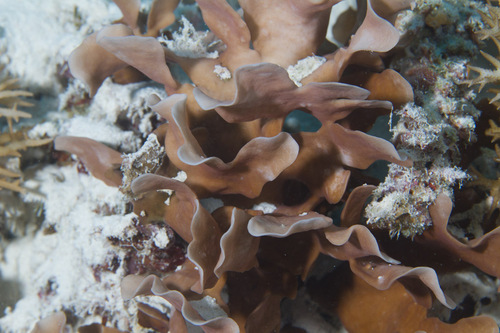
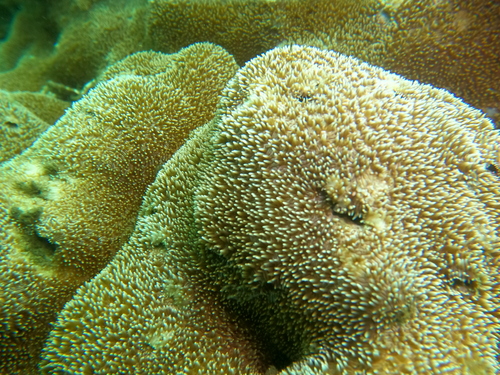
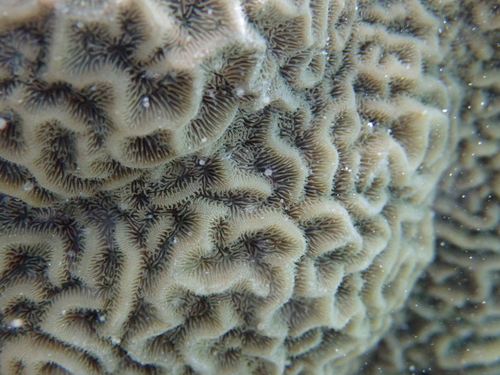
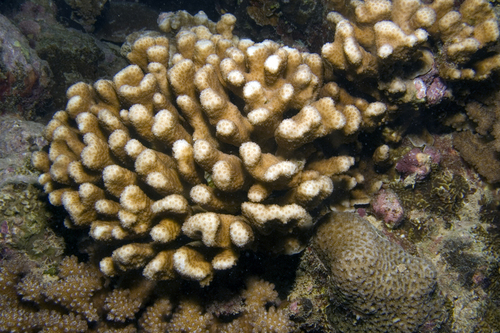
Pavona maldivensis can grow as an encrusting, massive, or mixed growth form, and it can form clumps over one meter in diameter, though colonies smaller than 30 cm (12 in) across are more common. In locations with strong water movement, this species typically develops cylindrical, finger-like growths; in other areas, it may form horizontal plates that often have "leafy" edges. The corallites, the stony cups that hold the coral polyps, are circular, come in irregular sizes, and have individual but indistinct stony walls. This coral is usually a shade of greyish-brown or green, but it can also be bright orange. Though its specific epithet maldivensis means "of the Maldives", P. maldivensis has a broad distribution across tropical and subtropical waters. Its range extends from the Red Sea, Gulf of Aden, and Madagascar, through the southwestern and central Indian Ocean, northern Australia, southern Japan, and the South China Sea, all the way to the western, central, and eastern Pacific Ocean. Pavona maldivensis is a zooxanthellate coral species: its tissues host symbiotic single-celled algae that supply part of the coral's nutritional needs. These symbiotic algae contain chlorophyll and are typically brown or green, but this coral also produces an additional photosynthetic pigment called phycoerythrin. In daylight, phycoerythrin absorbs light at one wavelength and transmits it at another, which produces a bright orange fluorescence.