About Pavona duerdeni Vaughan, 1907
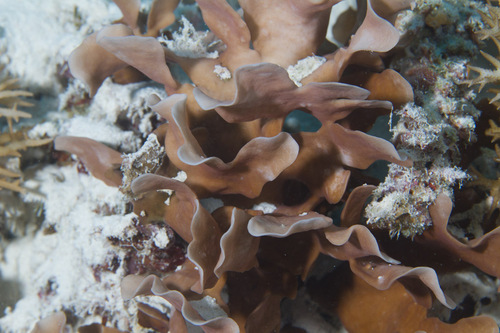
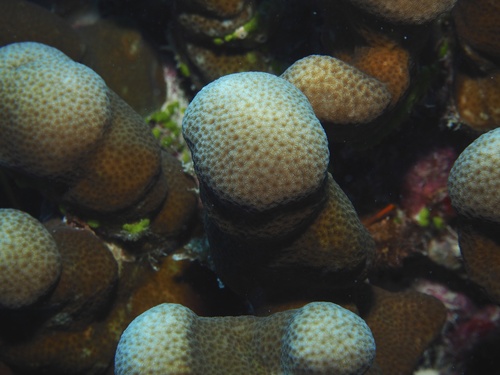
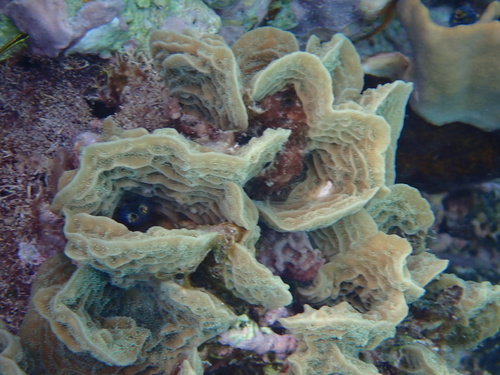
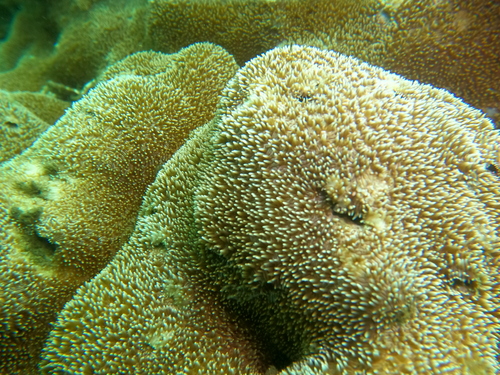
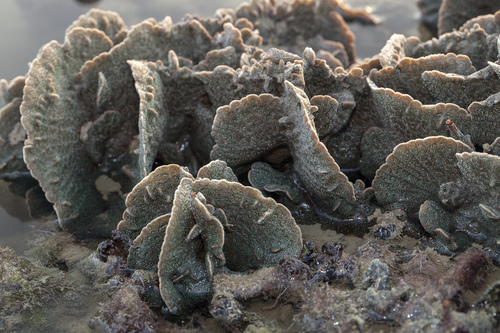
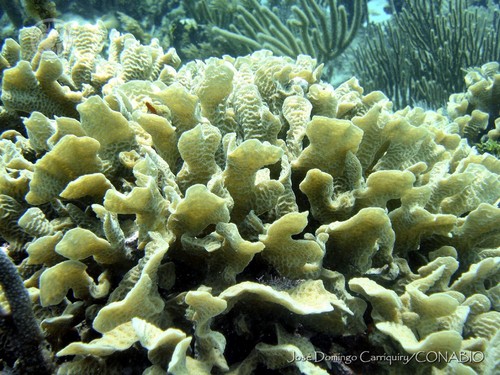
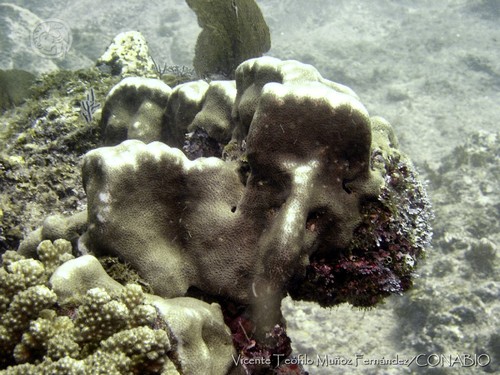
Pavona duerdeni Vaughan, 1907 is a species of marine invertebrate anthozoan belonging to the order Scleractinia, making it a stony hard coral. It is a colonial species: the founding polyp settles and secretes calcium carbonate to protect its body. As a member of the family Agariciidae, it is a reef-building stony coral that hosts mutualistic symbiotic zooxanthellae in its tissue, which help the coral meet its nutritional needs. As part of the genus Pavona, it has a distinct flower-like surface pattern. This pattern forms because its corallites lack walls between them, and each corallite connects to neighboring corallites via clearly delineated septo-costae. Fossils of Pavona duerdeni from the Hawaiian archipelago date to the Pleistocene, the first epoch of the Quaternary period that falls between the Pliocene and Holocene epochs. The first recorded taxonomic reference for this species was published in 1980, where it was classified as Pavona minuta, and marine scientists continued to refer to it under this name until a 2000 closer investigation led by the Australian Institute of Marine Science reclassified it as the distinct species Pavona duerdeni. Pavona duerdeni has corallites similar in form to those of Pavona clavus, but its corallites are smaller and have more protruding primary septo-costae. It is also often confused with Pavona minuta; while their corallites are similar, Pavona minuta corallites are smaller, have fewer septo-costae, and its color ranges from dark green to brown. This species is considered uncommon due to its low confirmed abundance. Its confirmed geographic distribution includes Hawaii, the Indo-Pacific, and the Tropical Eastern Pacific. Confirmed locations where large aggregations of Pavona duerdeni have been found are: the Gulf of Panama; the Carrizales, Colima coral reef on the Western Mexican coast; Koh Tao reef in Thailand; Johnston Atoll reef; the Hawaiian Archipelago; and the Emperor seamount chain. Pavona duerdeni inhabits shallow reef environments, where it forms large colonies on horizontal shallow substrates. It occurs from 5 meters depth and below, and becomes more abundant at 9 to 10 meters depth, alongside sedimentation from other similar massive corals. As a reef-building coral, it is geographically restricted to shallow marine environments. It can live either freely or attached to reef frameworks or rocky substrates, in rubble zones and soft bottom areas. The recorded ideal temperature range for this species to thrive is 25 °C to 29 °C, with an observed minimum average temperature threshold of 18 °C. Pavona duerdeni provides the structural framework needed to support a coral holobiont: an ecological unit formed by the coral’s polyps and associated microorganisms including bacteria, archaea, fungi, viruses, and protists, that enables nitrogen fixation and decomposition of organic materials within the system. As an anthozoan, Pavona duerdeni reproduces by simultaneously releasing eggs and sperm into the water column for spawning. After fertilization, the zygote develops into a planula larva: a solid, flattened free-swimming organism that uses cilia for movement and is further transported by surface currents. Once fully developed, the larvae settle on the seabed, attach to a substrate, and eventually grow into new coral polyps. As a hermatypic (reef-building) coral, it constructs reefs by depositing hard calcareous material to form large structures. Over time, it grows into a massive coral that forms boulder-sized formations that support life around and within the colony. Adult Pavona duerdeni attach to the seabed, while their larvae are dispersed as part of plankton.