About Pavona cactus (Forskål, 1775)
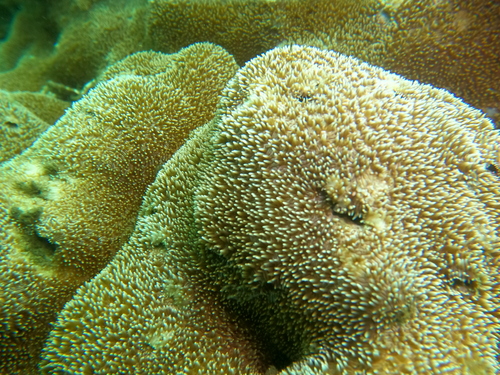
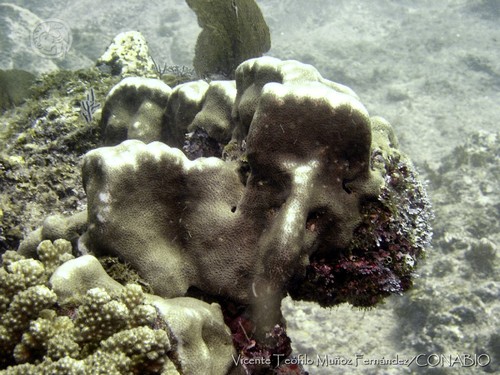
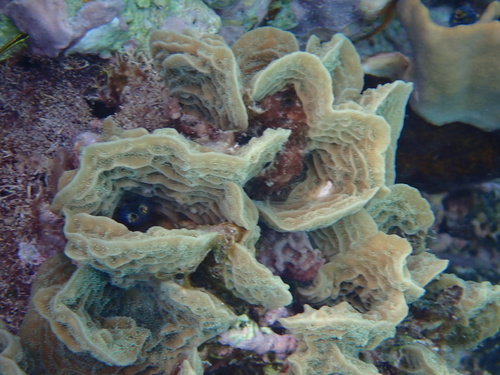
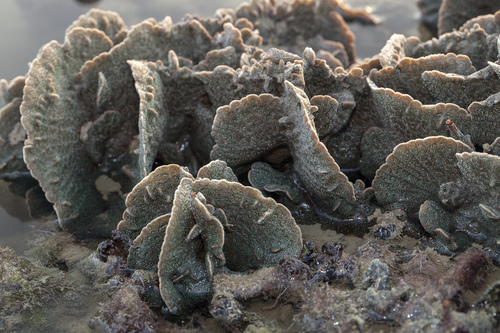
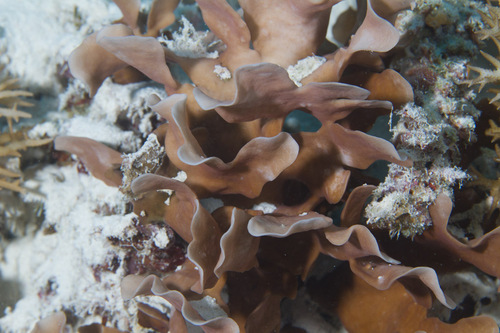
Colonies of Pavona cactus have vertical, irregular, two-sided fronds that are about 5 cm (2 in) tall and no more than 5 mm (0.2 in) thick. The corallites that house the coral polyps are very shallow, and form widely separated rows that run parallel to the margins of the fronds. The bases of these fronds may be dead, while the upper parts remain alive, supported by the underlying skeletal tissue. Fronds may cluster together to form a supercolony, which develops from one or more individual colonies and can extend several metres (yards) across the seabed. This is a zooxanthellate coral species, meaning symbiotic microscopic algae live within its tissues. It is typically olive green or brownish in colour. Pavona cactus is native to the tropical Indo-Pacific, with its range stretching from the Red Sea and East African coast to Japan, Tahiti, and Australia. It occurs in turbid but calm waters, on upper reef slopes and in shallow lagoons, at depths of up to 40 metres (130 ft).