About Patella aspera Röding, 1798
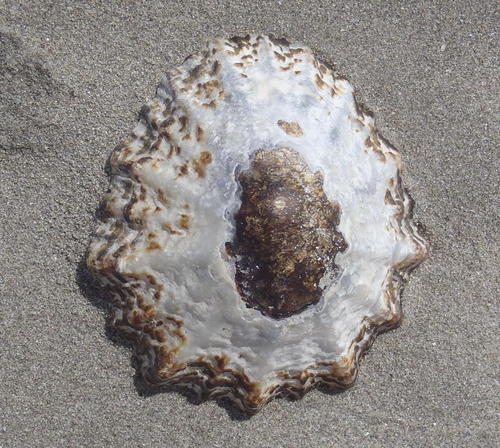
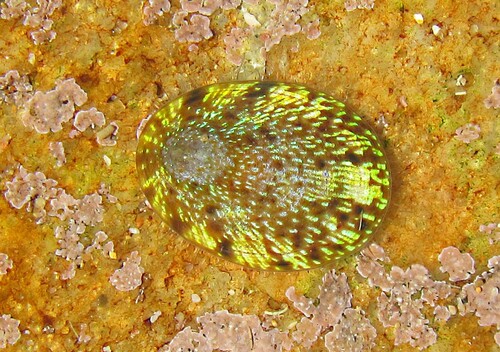
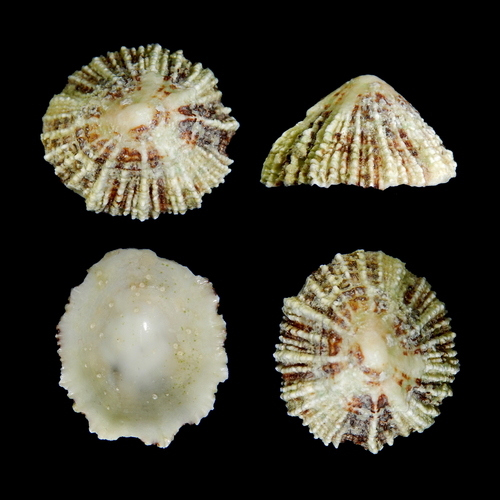
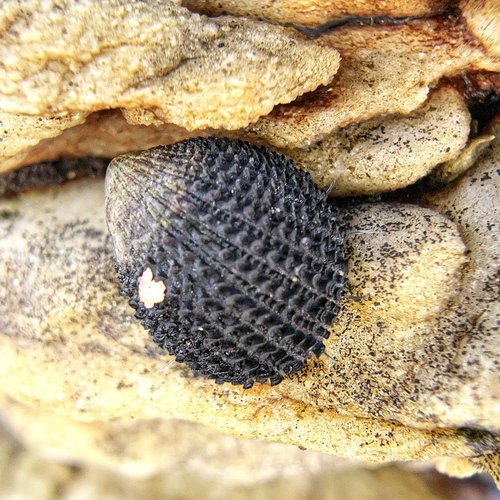
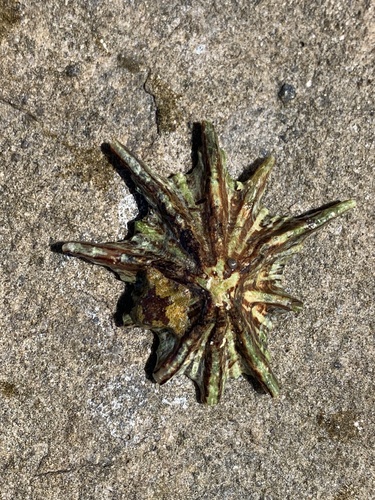
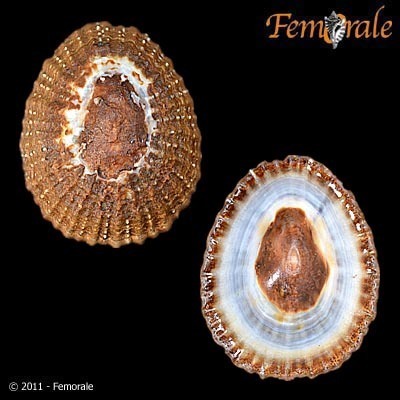
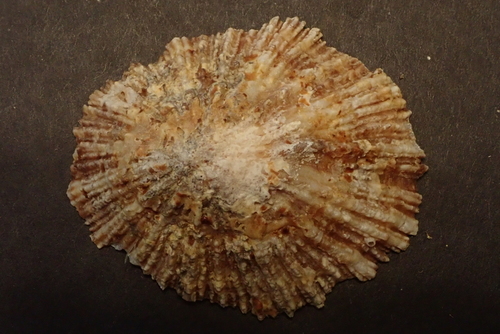
Patella aspera Röding, 1798 is a species of limpet. This limpet has a pentagonal, flattened shell with deeply indented margins. Its shell is sculpted with numerous semi-regular furrows that radiate from the apex, which sits slightly forward of the shell's central point. The shell's exterior is light brown, while the interior ranges from white to bluish-white, marked with a bordering brown band. The mantle of Patella aspera is edged with translucent tentacles, and its foot is yellow or orange. This species reaches a maximum length of around 8 cm (3 in). Females have a lifespan of up to eight years, while males live up to nine years. Patella aspera is native to the eastern Atlantic Ocean. It is common around the Azores and along the coast of Portugal. The species' most northerly range limit is northern Scotland, and its easternmost limit is the Isle of Wight. It grows on rocks and in rock pools within the littoral zone, and also lives on rocks in the shallow sublittoral and intertidal zones. Patella aspera is a keystone species, and has ecological importance as a grazer. Breeding occurs year-round, with a peak in activity during winter, between January and April. This limpet is collected for human food, most notably used as the delicacy grilled limpets in Portuguese cuisine. Another limpet species, Patella candei, is also harvested for this purpose. The main threat to Patella aspera is overharvesting, which has caused population declines and the collapse of its fishery. Harvest of the species has been banned in some areas. Overharvesting is especially harmful to Patella aspera because larger individuals are targeted, and larger individuals are far more likely to be female. This species is protandric: all individuals are born male, and most become female as they age. When large individuals that would have become females are removed, the species is left with too few breeding females to sustain the population.