About Patagioenas subvinacea (Lawrence, 1868)
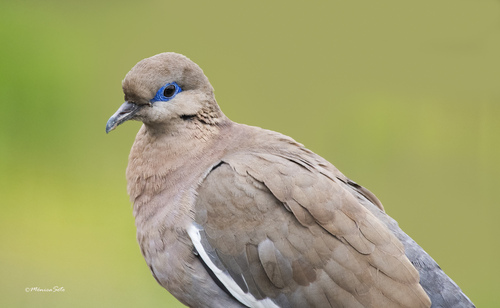
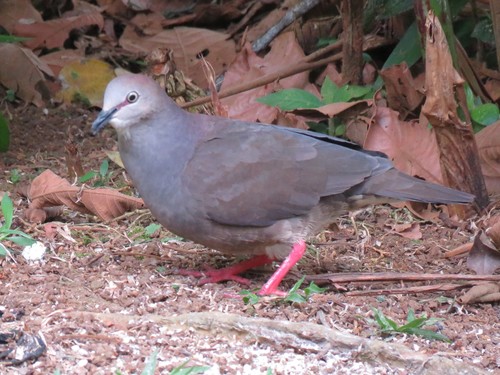
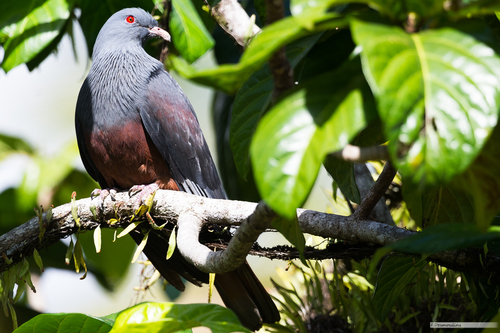
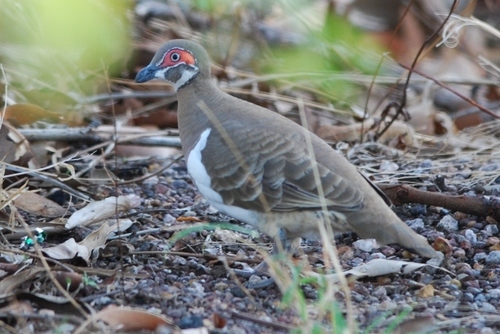
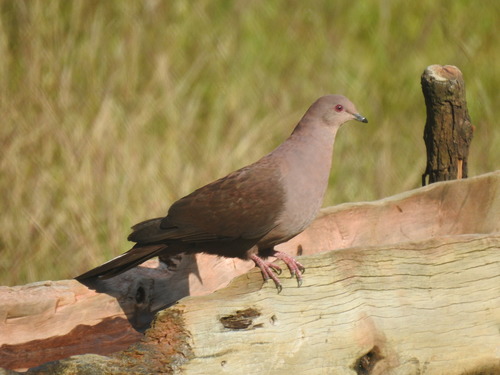
The ruddy pigeon, scientifically named Patagioenas subvinacea, is a moderately large pigeon that breeds from Costa Rica southward to western Ecuador, Bolivia, and central Brazil. It is part of a clade of small, relatively plain Patagioenas species with distinct calls, which make up the subgenus Oenoenas. Like other New World pigeons, it was previously grouped with Old World pigeon relatives in the genus Columba, but the New World genus Patagioenas is now recognized as a separate genus again. Ruddy pigeons measure 28 cm (11 in) in length and weigh 170 g. Their plumage is unpatterned, with a dominant wine-purple color that shifts to more rufous tones on the back. Their tail and primary flight feathers are dark brown, the bill is black, and the legs are purple-red. The iris is typically red, but it can sometimes be dull yellow at least in the Amazon basin; however, because of the red eye-ring, the iris never looks as noticeably white as it does in adult sympatric subspecies of the plumbeous pigeon (P. plumbea). Females are slightly duller and browner than males, while juvenile ruddy pigeons have greyish brown heads, necks, and breasts, with cinnamon or rufous scaling on the head and upperparts. This species has a loud, fairly high-pitched call: the sequence is ko'COO coo, with long pauses between calls, matching the calling pattern of its close relatives. There is geographic variation in its vocalizations: some populations produce four-noted songs, while others sing three-noted songs. In Central America, the closely related, very similar short-billed pigeon (P. nigrirostris) replaces the ruddy pigeon at lower altitudes. The two species are most reliably distinguished by their calls; the call of P. subvinacea is faster and less complex than that of the short-billed pigeon. In Central America, the ruddy pigeon inhabits highland forest canopies and semi-open woodland, ranging from 1500 m (5000 ft) above sea level up to the timberline. In South America, it occurs in the canopy of humid forest from near sea level up to 1500 m (5000 ft) above sea level, and occasionally occurs at higher elevations; in exceptional cases, it may be found at 3000 m above sea level or higher. While the ruddy pigeon is not uncommon across its large range, it is classified as a Least Concern species by the IUCN despite projected deforestation. It is normally seen in pairs while foraging for fruits and berries in tree canopies, and it is especially fond of mistletoe fruit. It may occasionally be found on tracks and roadsides seeking grit. It builds a simple platform nest made of twigs, 5 meters high in a small tree, and lays one white egg per clutch.