About Patagioenas nigrirostris (P.L.Sclater, 1860)
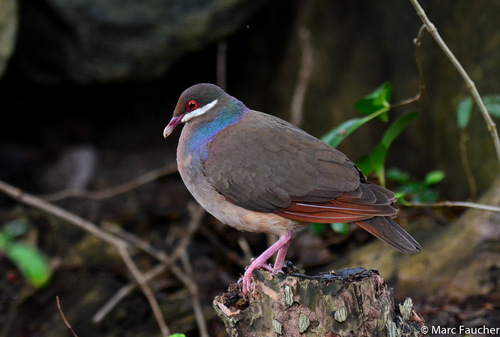
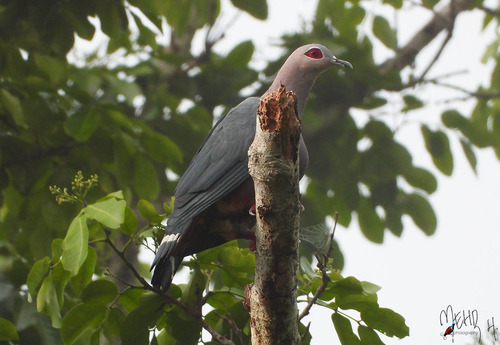
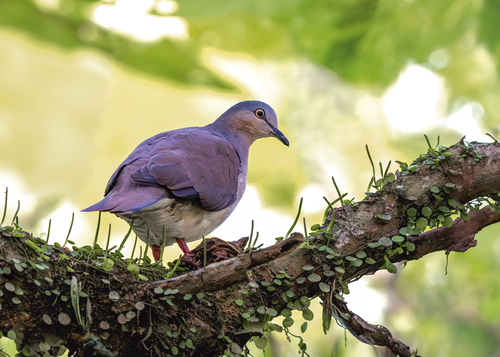
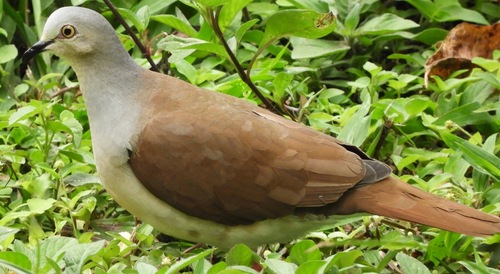
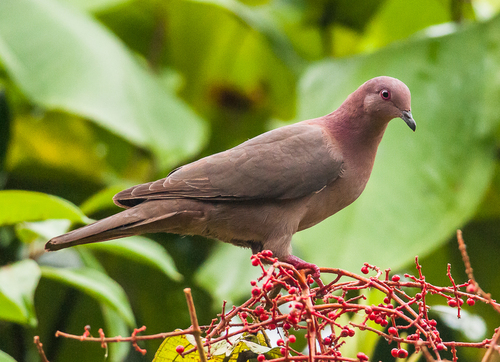
The short-billed pigeon, scientifically named Patagioenas nigrirostris, is a largish pigeon that breeds from southern Mexico south to northwestern Colombia. It belongs to a clade of Patagioenas that includes smaller, fairly plain species with characteristic calls, which form the subgenus Oenoenas. This species inhabits lowland forest canopies and semi-open woodland. It builds a simple rudimentary platform nest from twigs, placed 5–30 m (16–98 ft) high in a tree or among vines, and lays one white egg per clutch. Short-billed pigeons measure 26.5 cm (10.4 in) long and weigh 150 g (5.3 oz). Their plumage is unpatterned, mainly wine-purple overall, with browner tones on the belly and olive-brown coloring on the back. The tail and primary flight feathers are blackish, the bill is black, and the legs and eyes are purple-red. Females are slightly duller and browner than males. Juvenile short-billed pigeons have greyish brown coloration on the head, neck, and breast, with cinnamon scaling on the head and upperparts. This pigeon produces a complex, loud, high-pitched call transcribed as coo... cu-COO k’CO coohoo; calls are typically given singly, with long pauses between individual calls. The species is most often seen in pairs while foraging for mistletoe, fruits, and berries in tree tops, but it may also visit tracks and roadsides to look for grit or small invertebrates. In southern Central America, the short-billed pigeon is replaced by its close, very similar relative the ruddy pigeon, Patagioenas subvinacea, at higher altitudes. The two species can be distinguished by the slower, more complex call of the short-billed pigeon.