About Patagioenas cayennensis (Bonnaterre, 1792)
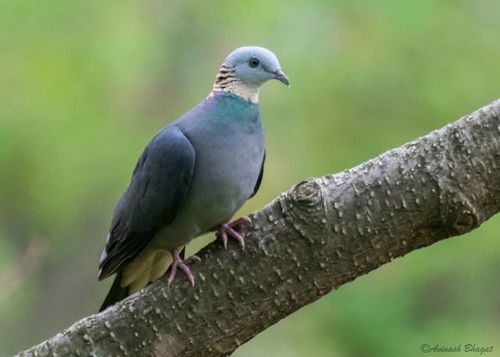
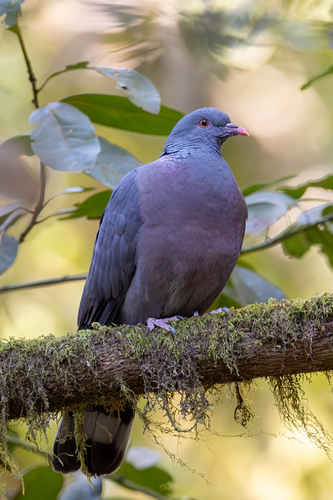
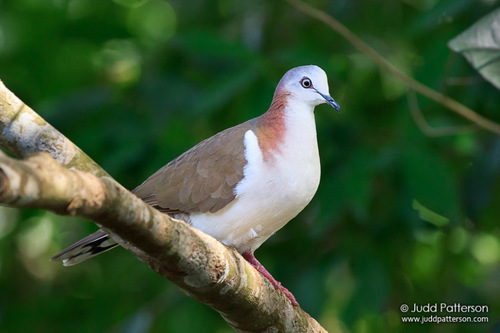
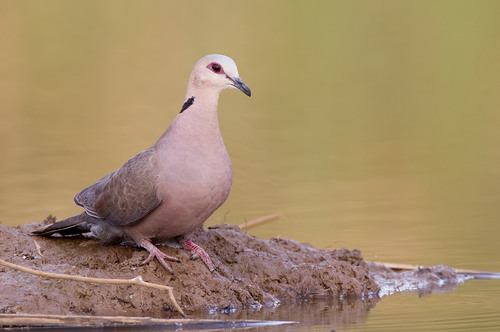
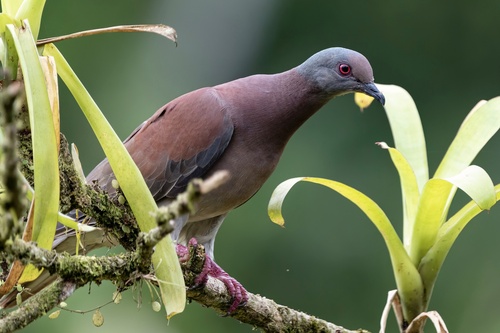
The pale-vented pigeon, with the scientific name Patagioenas cayennensis (Bonnaterre, 1792), measures 30–32 cm in length and normally weighs 230–250 g. Adult males have primarily dull purple plumage covering the head, breast, and upperparts, with copper iridescent gloss on the nape and a whitish throat. The lower back and tail are dark grey, while the lower underparts are pale grey. The bill is black, and the legs, iris, and eyering are red. Females are similar in appearance to males but have duller overall plumage. Immature individuals are entirely greyish-brown and very dull in color. The southern subspecies P. c. andersoni has white lower underparts, unlike the pale grey lower underparts of the nominate subspecies P. c. cayennensis. The species' call is a sequence of soft kuk kuk croo-ooos. The initial short kuk call is a characteristic feature of the "cayennensis group" of Patagioenas. Overall, this species' song is intermediate between the songs of its close relatives, the plain pigeon (P. inornata) and the red-billed pigeon (P. flavirostris). In the field, it may be confused with the scaled pigeon (P. speciosa), which has a similar display flight. These two large species are also the only pigeons in their range that are often seen flying in open areas away from forests. However, P. cayennensis does not have the scaly plumage pattern that gives the scaled pigeon its name, and close-range observations of both call and appearance show the two species are not particularly close relatives among Patagioenas congeners. Pale-vented pigeons are common in forest edges, riverbanks, and other partially open areas that contain some trees. They feed mainly on small fruits, berries, and seeds. They are fairly solitary birds, but may gather into small flocks at drinking areas. Their flight is high, fast, and direct, with the regular wingbeats and occasional sharp wing flick that are characteristic of pigeons generally. They perform a breeding display that includes a semi-circular glide down to their original perch. They build a small nest out of twigs in a small tree, and normally lay a single white egg. The species is widespread and common, and the IUCN classifies it as a species of least concern.