About Passiflora suberosa L.
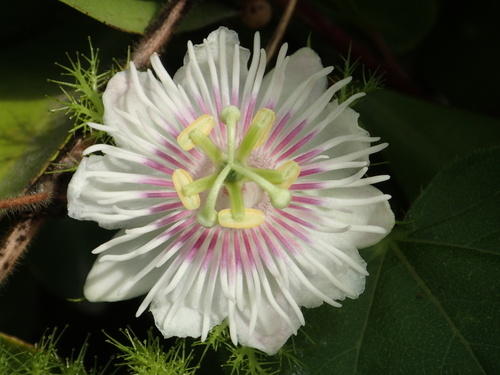
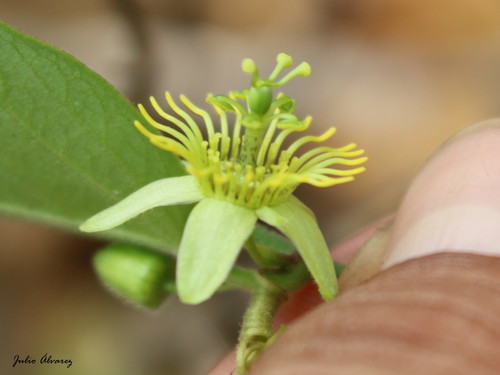
Passiflora suberosa L. is a passionflower species native to the Americas. It gets its most common name, corkystem passionflower, from the corky texture of its older stems. Other common names include corky passion vine, cork-bark passion flower, corkstem passionflower, and corky passionfruit; in Latin America it is called Meloncillo. It may represent a cryptic species complex, with multiple distinct species currently grouped under this single name. Its native range extends from Florida and the Lower Rio Grande Valley of Texas in the United States, south through Mexico, Central America, and the Caribbean to South America. It was introduced to Polynesia and Australia in 1909. This species is extremely prolific, producing up to 1000 seeds per square meter, and smothers any vegetation it grows on, including trees. In New Caledonia, introducing this species into the wild is prohibited. Many clones of Passiflora suberosa are self-pollinating. The plant is hardy down to winter temperatures around 7 °C, and can be propagated either by sowing seeds or from cuttings. This species acts as a host plant for the caterpillars of the Gulf fritillary (Agraulis vanillae), Julia heliconian (Dryas iulia), Mexican silverspot (Dione moneta), red postman (Heliconius erato), and zebra heliconian (Heliconius charithonia). In Australia, it also serves as a larval host plant for the glasswing butterfly (Acraea andromacha).