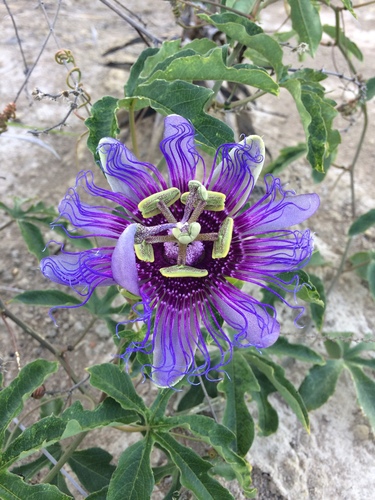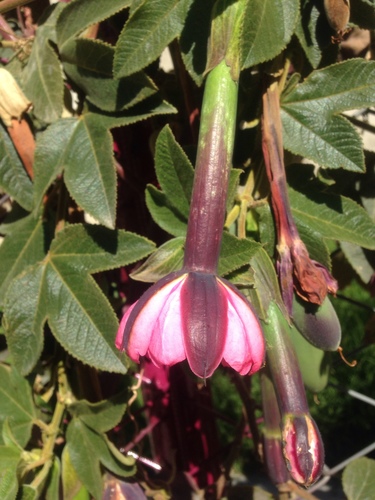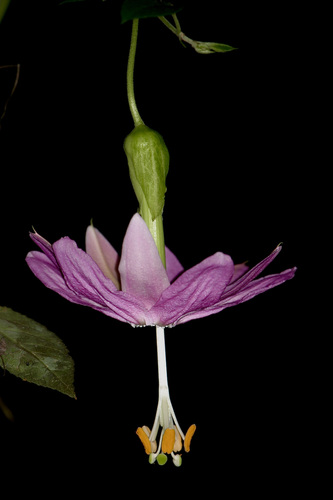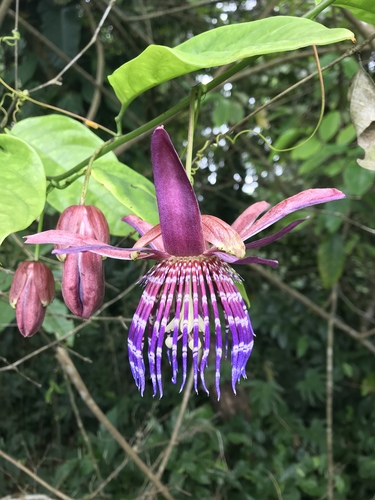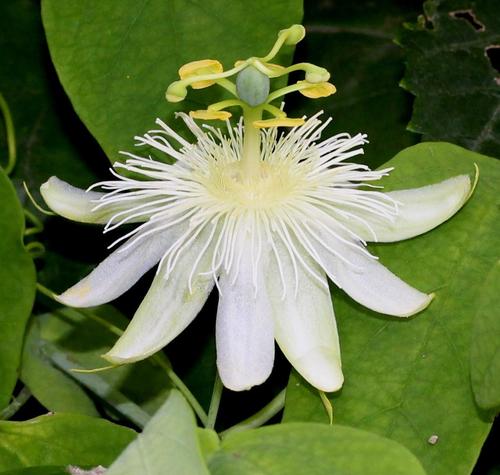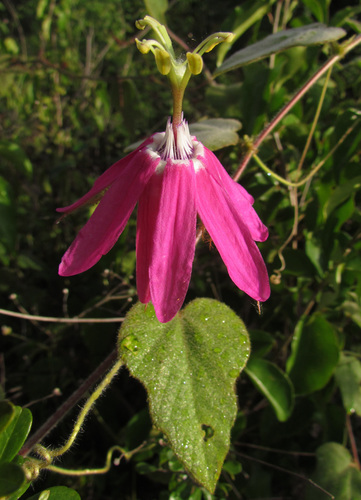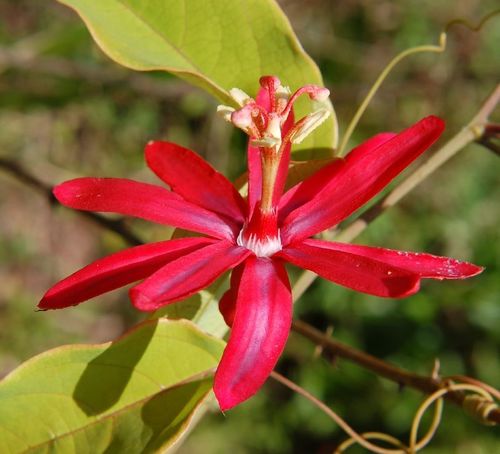
About Passiflora glandulosa Cav.
Passiflora glandulosa Cav. is a climbing liana, which is classified as a long-stemmed, vertically growing vine that climbs over surrounding vegetation using its tendrils. It has woody, cylindrical stems, and smooth oblong leaves with rounded margins. This species is native to northern South America, specifically found in Venezuela, Guyana, French Guiana, Suriname, and Brazil. In Brazil, it occurs in the country's northern, northeast, and central-west regions, including the states of Acre, Amazonas, Amapá, Pará, Rondônia, Roraima, Tocantins, Bahia, Ceará, Maranhão, Paraíba, Pernambuco, Piauí, Distrito Federal, Goiás, and Mato Grosso. Its conservation status is LC (Least Concern), as it remains abundant in natural habitats. Passiflora glandulosa is abundant across the Amazon rainforest and tropical South America; its native habitats include primary rainforests and secondary forests, and it has also been recorded growing along roadsides. Its typical microhabitat includes areas with plant families Chrysobalanaceae and Annonaceae, and red laterite soil. This species has a range of human uses, primarily for medicinal and nutritional purposes. Many species in the Passiflora genus are cultivated and commercialized as passion fruit, including the commercially common yellow passion fruit (Passiflora edulis f. flavicarpa) and sweet passion fruit (Passiflora alata). However, Passiflora glandulosa, a wild passion fruit, has seen very little commercialization, as industry has not confirmed whether harvesting the species is economically worthwhile. Unlike commercial passion fruits which have high levels of polyphenols and flavonoids that give them strong antioxidant properties, Passiflora glandulosa has low polyphenol levels and thus lower antioxidant activity. Despite this, a study by Sousa et al. found that pectin isolated from fresh Passiflora glandulosa fruit peels produced a hypoglycemic effect in diabetic mice. Insufficient research has been completed to confirm the full value of this wild fruit, so commercialization remains limited. Various parts of Passiflora glandulosa are used for traditional medicinal purposes addressing first aid needs, infections, and sexual health. In French Guiana, historically during the Republic of Suriname period, the Maroon people prepared a bark decoction of this plant to treat pinworms (called black skin worms, an intestinal parasite). Crushed stem sap was used to make an eyewash to relieve symptoms of conjunctivitis (pink eye), an eye infection. The plant was also added to curative herbal baths. Among the Patamona people of Brazil, leaves are processed into an emollient to treat bruises, sores, and cuts, while fruit is soaked in water to make a tonic. Sap and rasped bark are used to treat symptoms of gonorrhea and kidney stones: sap is applied to the skin, while rasped bark is inserted into the opening of the male genitalia.