About Passerina caerulea (Linnaeus, 1758)
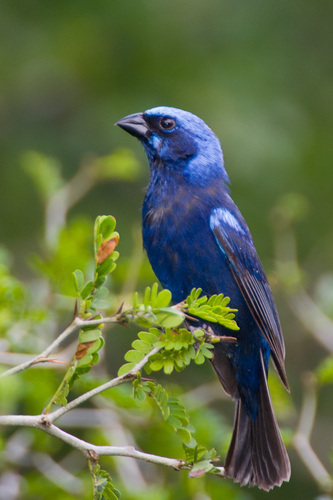
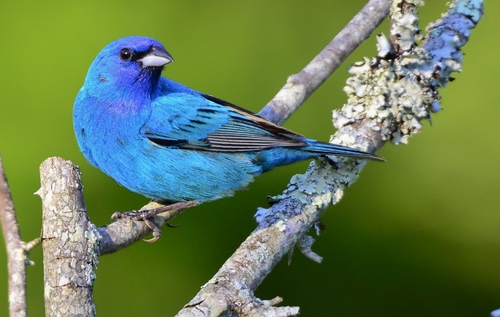
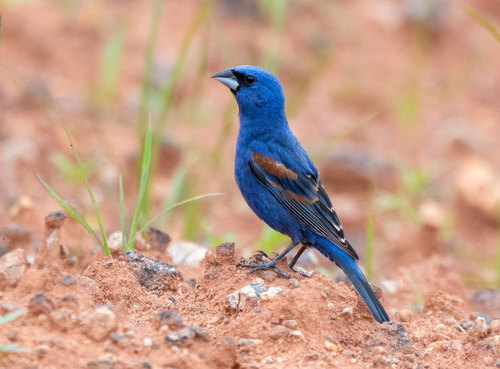
This bird species, scientifically named Passerina caerulea (Linnaeus, 1758), is commonly known as the blue grosbeak. Adult males have deep blue plumage, with both black and brown markings on their wings. Adult females are mostly brown overall. Both sexes can be identified by their large, deep bill and double wing bars. These features, along with the blue grosbeak's relatively larger body size, separate this species from the indigo bunting. The blue grosbeak ranges in length from 14 to 19 cm (5.5 to 7.5 in), has a wingspan of 26 to 29 cm (10 to 11 in), and typically has a body mass between 26 to 31.5 g (0.92 to 1.11 oz). It is a migratory species. Its nesting grounds cover most of the southern half of the United States and much of northern Mexico. It migrates south to Central America, with very small numbers reaching northern South America; the southernmost documented record of the species comes from eastern Ecuador. Blue grosbeaks live in partly open habitats that include scattered trees, riparian woodland, scrub, thickets, cultivated lands, woodland edges, overgrown fields, and hedgerows.