About Passer simplex (Lichtenstein, 1823)
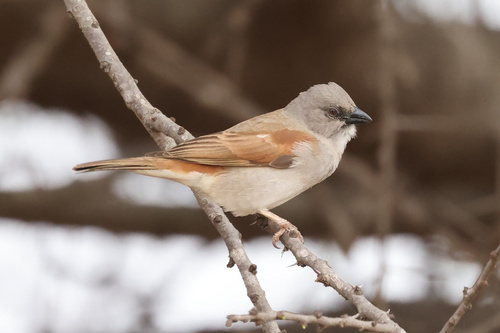
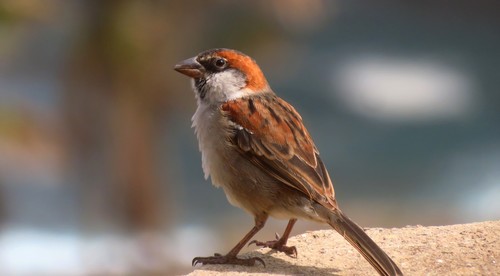
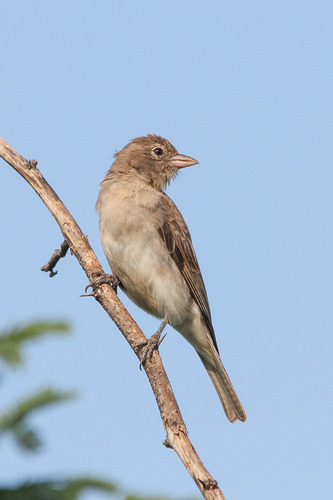
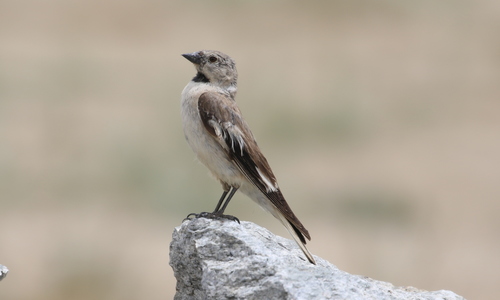
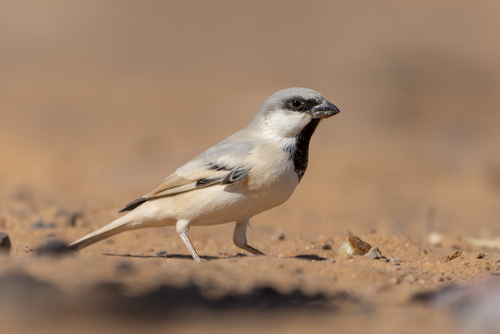
The desert sparrow, scientifically named Passer simplex (Lichtenstein, 1823), is a bird species belonging to the sparrow family Passeridae, native to the Sahara Desert of northern Africa. A similar bird called Zarudny's sparrow, which lives in Central Asia, was historically classified as a subspecies of the desert sparrow. Due to its multiple consistent differences from the desert sparrow, it is now recognized as a separate species by BirdLife International, the IOC World Bird List, and the Handbook of the Birds of the World Alive. The currently recognized desert sparrow has two subspecies, which inhabit some of the driest regions of the Sahara Desert in Northern Africa. Habitat destruction has caused this species to become increasingly rare, but it is still categorized as a species of least concern for conservation on the IUCN Red List. Zarudny's sparrow is also classified as a species of least concern, as was the combined taxon that included both species before 2012. The desert sparrow is unafraid to approach humans, and sometimes builds its nests in muddy walls. Mozabite Berbers intentionally build holes in the walls of their homes to welcome these birds, which they name "bar-rode". According to local belief, if a desert sparrow sings throughout the day inside a home, this is a sign of good news. The Tuareg people, who call this bird "moula-moula", also hold the belief that the bird brings good news when it comes to stay near their camp.