About Passer luteus (Lichtenstein, 1823)
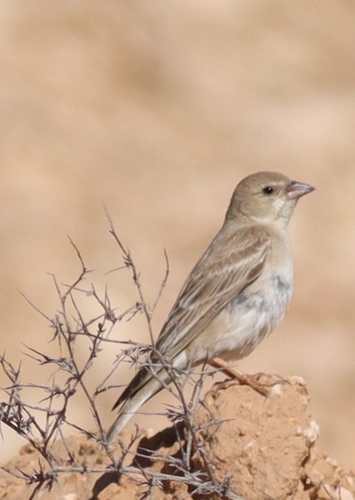
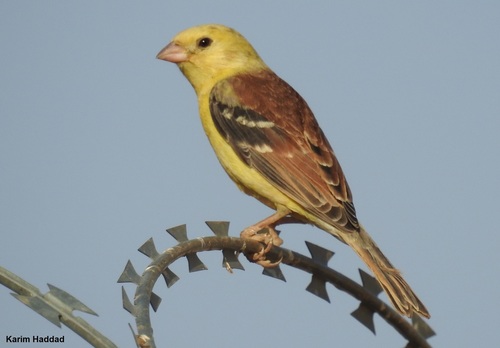
The Sudan golden sparrow, scientifically named Passer luteus (Lichtenstein, 1823), is a small sparrow species. Adults measure 12–13 cm (4.5–5 in) in length, with a wingspan ranging from 5.7–7 cm (2.2–2.8 in). Males have a distinct appearance: they have bright yellow heads and underparts, deep chestnut brown wings and back, and two white wingbars. During the breeding season, a male's plumage becomes even brighter, and its bill changes color from horn to shiny black. Females are pale sandy-buff overall, with a yellowish face, light brown wings, a back faintly streaked with chestnut, and underparts that are pale yellow fading to whitish. Juveniles resemble females but are greyer in tone. Around 10 weeks after hatching, young males may begin to develop a yellow wash around their shoulder area. The species' basic call is a chirp or tchirrup, similar to the calls of other sparrows. It also produces varied calls including a song-like call and a rapid rhythmic che-che-che. The Sudan golden sparrow breeds across Africa south of the Sahara, ranging from Senegal east to Sudan and Ethiopia. In April 2009, a flock of seven Sudan golden sparrows was found northwest of Aousserd, Morocco. Two individuals were sighted in 2013, and a few more were recorded in 2014. This bird inhabits dry open savanna, semi-desert, arid scrub, and cereal cultivation areas. It is a highly gregarious and nomadic bird that forms mixed flocks with other seed-eating birds, including red-billed quelea and other sparrow species. Evening roosts, often located in cities such as Khartoum, can hold hundreds of thousands of individual birds. The species feeds mainly on seeds, and also consumes some insects, particularly when feeding its young. It prefers grass seeds, including small cereal seeds such as millet. In captivity, Sudan golden sparrows are fed the same mixture of foxtail millet, other grains, vegetables, mealworms, and other supplements that is typically given to weavers. It breeds in very large colonies that can hold up to 65,000 nests. The nest is a large, untidy dome structure built from twigs in tree branches, and it contains a feather-lined nest chamber. Sudan golden sparrows lay one or two clutches per year, and each clutch typically holds three or four eggs. The eggs are white with dark spots.