About Passer griseus (Vieillot, 1817)
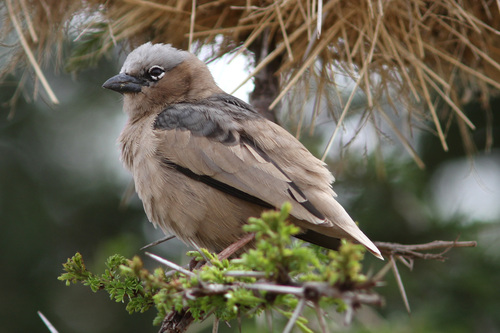
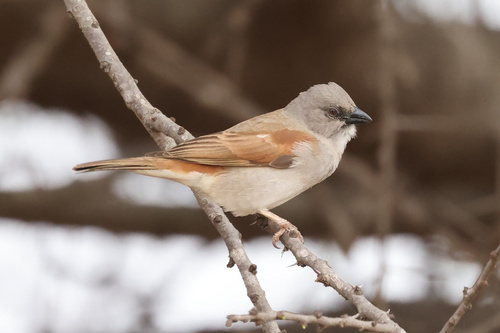
The northern grey-headed sparrow, with the scientific name Passer griseus (Vieillot, 1817), is also commonly called the grey-headed sparrow. It is a bird species that belongs to the sparrow family Passeridae, and it is a resident species across much of tropical Africa. This species occupies a wide variety of open habitats, including open woodlands and areas of human habitation. It often fills the same ecological niche in tropical Africa that the house sparrow fills in Eurasia.
Adult northern grey-headed sparrows have a pale grey head with a white moustache stripe, pale brown upperparts, and whitish underparts. Their wings are chestnut with a small white shoulder patch. The plumage of males and females is similar, while young birds are slightly duller in color and do not have the white wing patch. Three subspecies of Passer griseus are recognized, and these subspecies differ in plumage tone, particularly in how dark the head is.
This sparrow is mostly a non-migratory resident within its range, though it does make some seasonal movements. Outside of the breeding season, it forms flocks that can contain as many as 50 birds. It builds a cup-shaped nest in trees, thatch, or old nests left by other bird species, and it lays clutches of 2 to 4 eggs. Like other sparrows, it feeds mainly on seeds and grain, but it will readily eat insects including termites, especially when it is feeding young. Its calls include cheeps, chirps, and the churring alarm call that is typical of sparrows.
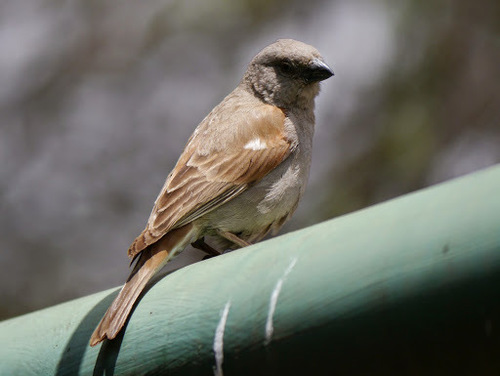
In eastern and southern Africa, this species is replaced by very similar birds that are sometimes classified as subspecies of the northern grey-headed sparrow. These similar birds are Swainson's sparrow, the parrot-billed sparrow, the Swahili sparrow, and the southern grey-headed sparrow.