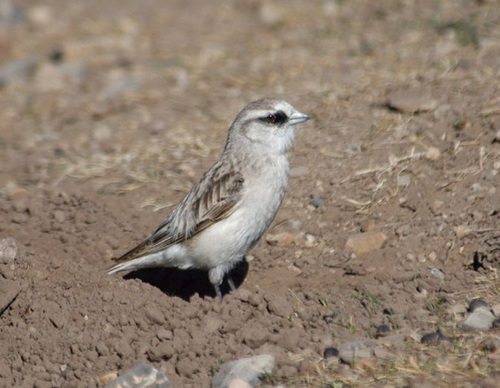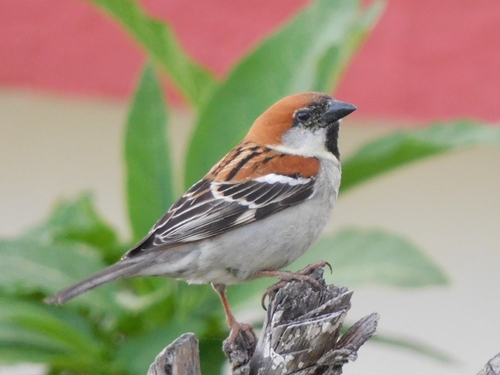
About Passer cinnamomeus (Temminck, 1836)
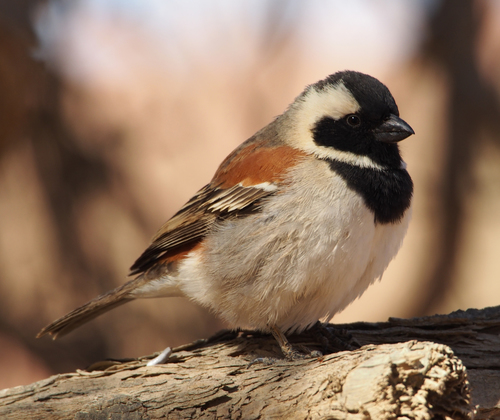
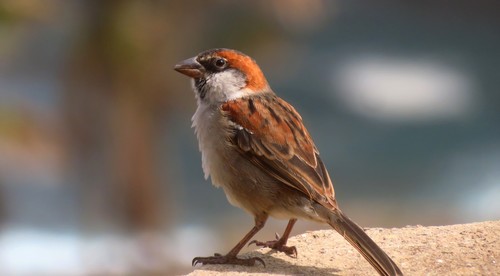
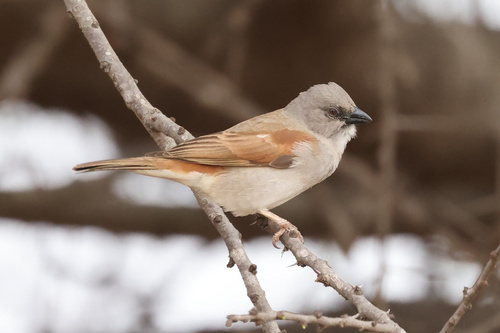
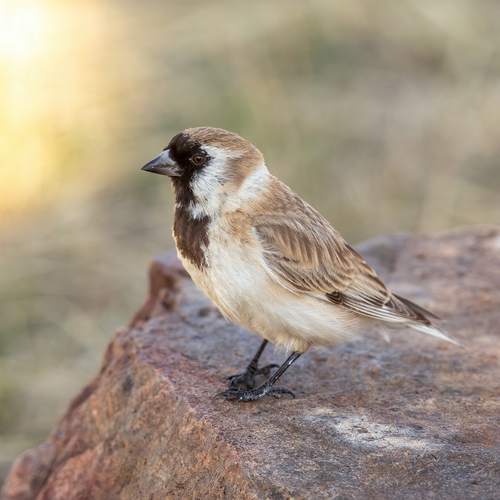
The russet sparrow, scientifically named Passer cinnamomeus (Temminck, 1836), is a small, chunky bird with overall warm rufous plumage. It is a medium-sized sparrow, measuring 14 to 15 cm (5.5–5.9 in) in length and weighing 18 to 22.5 grams (0.63–0.79 oz). It has a thick bill adapted for eating seeds: the bill is black on breeding males, horn-coloured on non-breeding males, and yellowish with a dark tip on females. Male wingspans range from 6.8 to 8.2 cm (2.7–3.2 in), while female wingspans range from 6.7 to 7.7 cm (2.6–3.0 in). Tail length measures 4.3 to 5.1 cm (1.7–2.0 in), bill length 1.1 to 1.3 cm (0.43–0.51 in), and tarsus length 1.6 to 1.8 cm (0.63–0.71 in). Russet sparrow measurements vary geographically, across its three subspecies, and even within the Himalayan subspecies cinnamomeus. Subspecies cinnamomeus is generally larger than the other two subspecies; within this form, birds at higher altitudes tend to be larger, and there is clinal size variation, with the smallest birds in the west of the range and the largest in the east. The iris is chestnut-coloured, and the legs of both sexes are pale brown to pinkish-brown. Like all sparrows, the russet sparrow has a swift flight, and its flight is recorded as swifter and more direct than that of the Eurasian tree sparrow. The russet sparrow is found in parts of eastern Asia and the Himalayas. It is unknown whether its distribution is continuous between these two regions, because political sensitivity of the Brahmaputra River valley near the China-India border makes the area less accessible to ornithologists. In the Himalayas, the russet sparrow breeds from the far northeast of India through southeastern Tibet, Bhutan, Sikkim, Nepal, Uttarakhand, and Himachal Pradesh to Kashmir and Nuristan in Afghanistan. In most parts of this Himalayan range, the russet sparrow makes short altitudinal movements to lower elevations between November and April. In eastern Asia, the russet sparrow occurs in Sakhalin, the Kuril Islands, a small part of mainland Russia, Japan, southern Korea, and part of northern China, where most populations are migratory. It is distributed across southern China, Taiwan, the mountainous parts of Burma, southern Northeast India, Laos, and Vietnam, where most populations are resident. The russet sparrow also occurs as a winter visitor in southern Japan, further southern China, and northern Thailand. In eastern Asia, autumn migration takes place between August and November. The russet sparrow is abundant across most of its very large range, and is among the most common birds in some areas. In Southeast Asia, its range has contracted at lower elevations due to global warming, but it has also moved to higher elevations and remains common. Although its global population has not been quantified, it is assessed as Least Concern for global extinction on the IUCN Red List. Across most of its range, breeding occurs in mountains and uplands. Its preference for high altitudes is influenced by latitude: in the farthest south of its range, it never breeds below 2,500 metres (8,200 ft) above mean sea level, but in the northernmost part of its range, it often breeds near the sea. In eastern Asia, the russet sparrow prefers open woodland, though it is sometimes found in towns and agricultural areas. On Sakhalin, it mostly breeds in riparian forest. In Hokkaidō, the russet sparrow finds more food for its young in more remote forests, and has higher reproductive success there. In the Himalayas, it is strongly associated with terrace cultivation, and it likely only spread to the Himalayas when these agricultural practices arrived 3000 to 4000 years ago. In towns where it occurs alongside house sparrows or tree sparrows, it is found in gardens and less built-up areas. In Indian hill stations where both the house sparrow and the russet sparrow occur, the house sparrow breeds around more built-up areas and bazaars, while the russet sparrow occupies larger houses with gardens and open spaces. In towns where it is the only sparrow present, it does not depend on trees, breeding around houses and eating scraps in streets. In winter, migratory individuals occur in open cultivated land and riverine grasslands, but are never far from shrubs or trees.