About Parus aplonotus Blyth, 1847
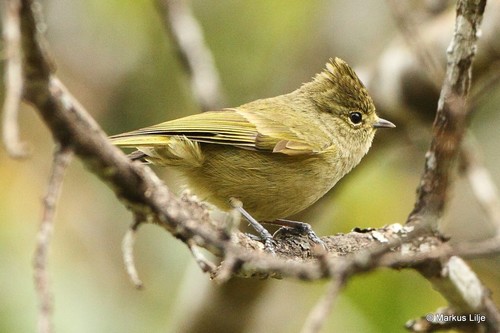
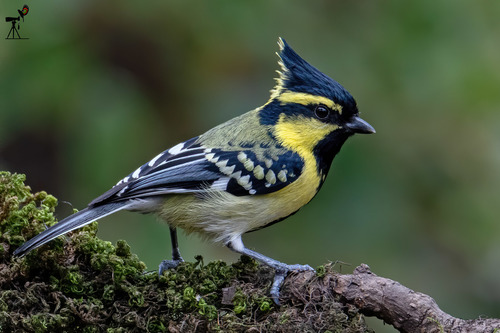
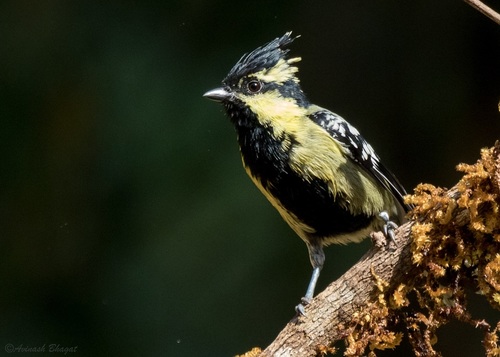
The Indian black-lored tit, also known as the Indian tit or Indian yellow tit, is a passerine bird belonging to the tit family Paridae. This species was originally described under the scientific name Parus aplonotus Blyth, 1847, and was historically classified within the genus Parus. Its closest relative is likely the yellow-cheeked tit, and both birds may also be related to the yellow tit. Morphology and mtDNA cytochrome b sequence analysis indicate that these three tits almost certainly form a distinct lineage, and the subgenus name Macholophus may be applied to this group. This species is a resident breeder native to the Indian subcontinent, where it is common in open tropical forests; it does not occur in Sri Lanka. It is an active and agile feeder, that catches insects and spiders from the forest canopy, and will sometimes eat fruit. This tit is easy to recognize across most of India. It measures 13 cm in length, making it relatively large for its group. It has a broad black line running down an otherwise yellow underbelly, and this line is broader in males. Its large crest, neck, throat, and head are black, while its cheeks and supercilia are yellow. Its upperparts are olive-green, and it has two white or yellowish wingbars alongside white outer tail feathers. Females and young birds have duller coloration than males, and the brightness of its underpart color becomes increasingly dull from the north to the south across its range. Like other tits, this is a vocal species with a large variety of calls; the most familiar call is a si-si. Its song is a sometimes nuthatch-like chi-chi-chi. For nesting, the Indian black-lored tit uses woodpecker or barbet holes, but it will also excavate its own nesting hole or use man-made sites. Its typical clutch contains 3 to 5 white eggs with red spots. The bird sits tightly on its nest and will hiss when disturbed. In 2013, a molecular phylogenetic analysis published showed that the members of what became the new genus Machlolophus formed a distinct clade, so this species was moved from the genus Parus to Machlolophus, and is now sometimes referenced under the scientific name Machlolophus aplonotus.