About Paruroctonus boreus (Girard, 1854)
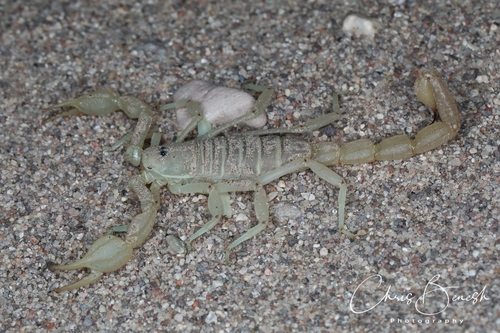
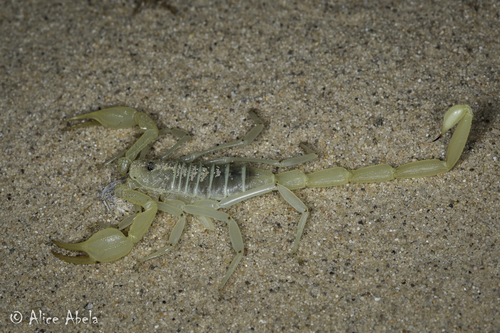
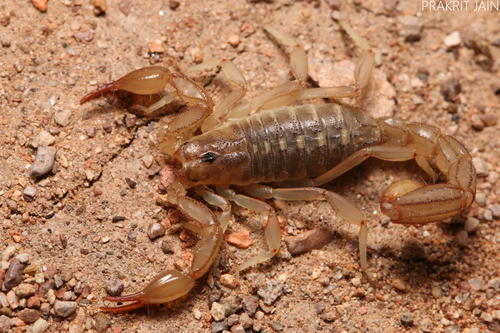
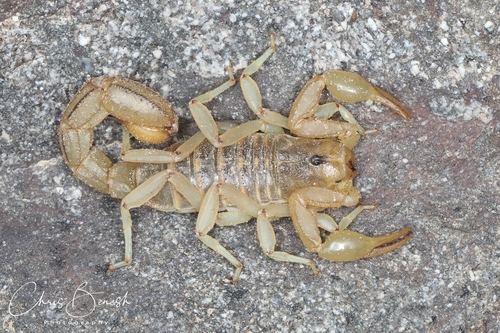
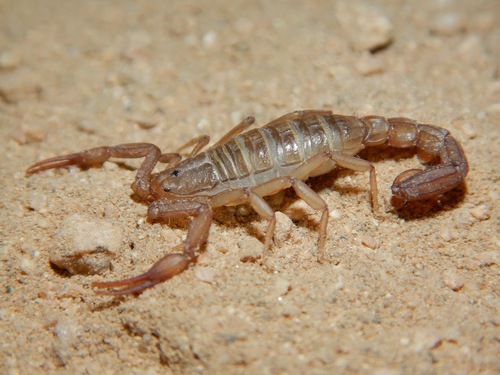
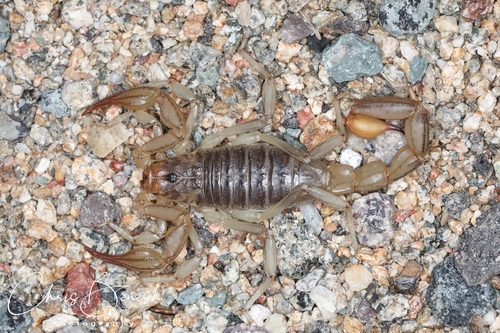
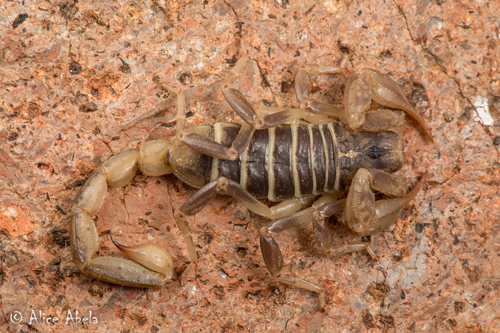
Paruroctonus boreus, first described by Girard in 1854, is a moderately sized scorpion that is most commonly light yellow in color. It has a V-shaped black pattern centered on its median eyes, and faint dark streaks across the segments of its preabdomen. Adult females are consistently larger than males, with longer and wider carapaces and preabdomens. Females average a total body length of approximately 38.9 mm, while males average around 35.5 mm. Females also typically have fewer pectinal teeth than males. This species has been reported across a broad range of North America, and is described as one of the most widely distributed scorpions on the continent. In the United States, it occurs in Arizona in the Southwest; Nebraska, South Dakota, and North Dakota in the Midwest; and most of the western region including California, Colorado, Idaho, Montana, Nevada, Oregon, Utah, Washington, and Wyoming. In Canada, it is found in British Columbia and Alberta, as far north as 52° N, and has been reported anecdotally near Medicine Hat, Alberta during dry years. It is the only scorpion species found in Canada, and the northernmost scorpion species in the world; specimens have been collected in British Columbia's Okanagan valley, southwestern Saskatchewan, and across most of Alberta. P. boreus inhabits a range of terrains that are usually bounded by tall mountains or low elevation valleys. In northern parts of its range, it primarily occupies sagebrush and similar habitats, living at low elevations around 200 m above sea level. In southern areas, it lives in a wider variety of natural environments at moderate elevations up to 1900 m. In Idaho, it is most often collected on barren, cracked, or rocky soil on hillslopes. During the day, it shelters in soil openings or under stones. Individuals are most frequently found directly on the soil surface, but may also be seen on plants up to 50 cm above ground. A collection of specimens across 12 distinct plant communities in southeastern Idaho indicates the species prefers locations with at least 85% vegetation ground cover, made up of roughly 60% broad-leaved plants and less than 5% grasses. P. boreus is almost entirely nocturnal, with most movement and hunting occurring at night. Individuals emerge from their burrows between 21:30 and 23:00, and will not leave their burrows during rainfall or when temperatures are below 10 °C. If an individual does not emerge by 23:00, it will not seek food that night. The species is most active in the first two hours after nightfall, and surface activity gradually decreases after this window. It also shows increased activity in the 3 to 5 days following rainfall. There is a large difference in daily movement distance between males and females: males routinely roam up to six times farther than females. Once females find a suitable shelter, they restrict their above-ground activity to the area immediately around the shelter. Females are also more active on the surface than males, which may increase their chance of encountering roaming males that travel much longer distances. P. boreus engages in territorial fights; the larger scorpion usually wins and cannibalizes the loser, though this is not always the case, and smaller females have been observed eating larger males. Younger P. boreus are more willing to use their stingers for both defense and offense than older scorpions. When giving birth, female P. boreus take a stilting position on their rear walking legs. A female produces between 10 and 40 young, which emerge through the birth opening enclosed in a translucent membrane. Young scorpions free themselves from this membrane within 10 to 20 minutes. After escaping the birth membrane, offspring climb up their mother's walking legs and gather in a group on her dorsum. The young have their first molt after approximately 12 days, and about one week later they begin moving more freely across their mother's carapace.