About Parthenocissus inserta (A.Kern.) Fritsch
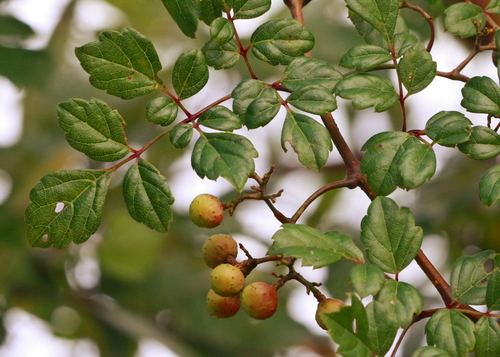
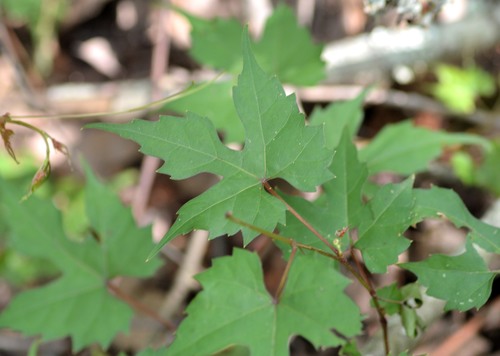
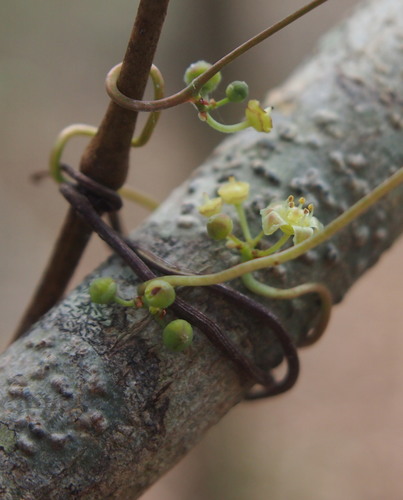
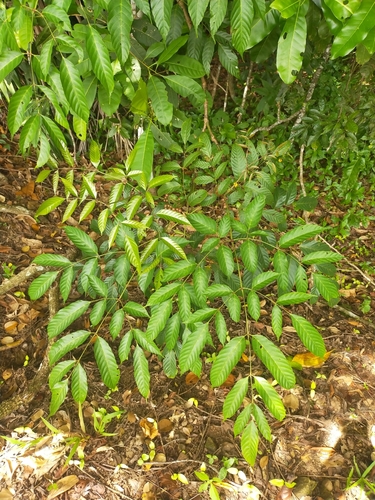
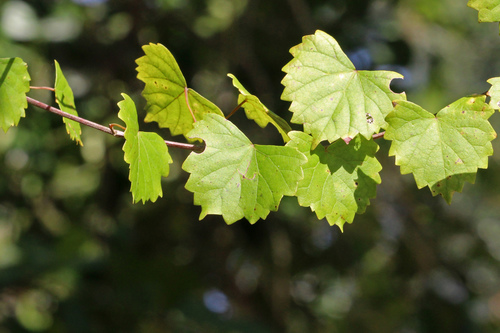
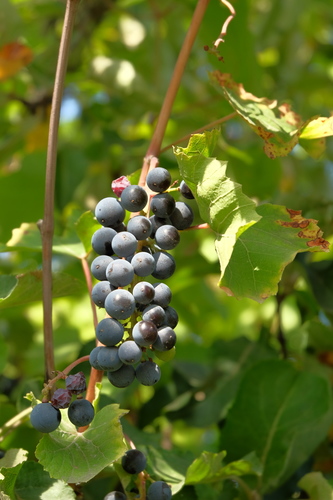
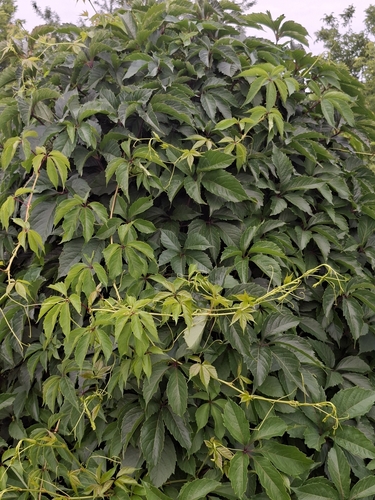
Parthenocissus inserta is a climbing and sprawling woody liana that can grow up to 20 metres (66 ft) long. It climbs using small branched tendrils with twining tips. Its leaves are palmately compound, made up of five leaflets. Each leaflet grows up to 13 centimetres (5 in) long and 7 centimetres broad, and has a coarsely toothed margin. This species produces small greenish flowers in clusters during late spring. After pollination, the flowers mature into small blue-black berries by late summer or early fall. The berries can be up to 1.5 cm (1⁄2 in) wide, are palatable, and contain oxalates. This plant is distributed across southeastern Canada, ranging west to southern Manitoba, and across a large area of the United States. In the eastern U.S., it grows from Maine west to Montana and south to New Jersey and Missouri; in the western U.S., it ranges south from Montana to Texas and Arizona. It is currently becoming invasive in northeast Louisiana. It is present in California, but may be an introduced species in this far western region. It is an introduced species in Europe. The common name thicket creeper refers to this species. Its flowers are frequently visited by Mordella marginata, a tumbling flower beetle. Multiple bee species have been observed collecting pollen from its flowers, including the sweat bees Augochlora pura, Lasioglossum subviridatum, and Lasioglossum zephyrus. Birds eat the fruits of Parthenocissus inserta.