About Parthenium hysterophorus L.
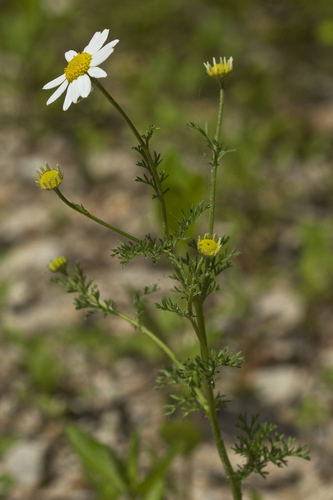
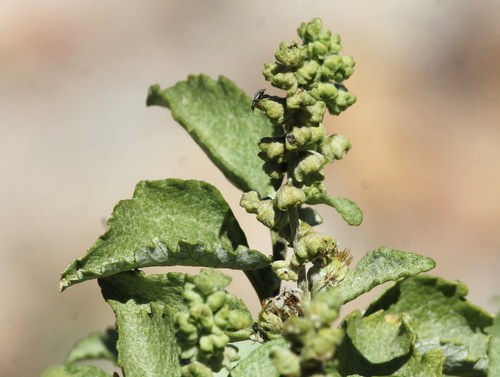
Parthenium hysterophorus L. is a herbaceous flowering weed in the Asteraceae family. It is one of the most common weeds worldwide. It is most widely known as Santa Maria feverfew, and is also called Santa-Maria, whitetop weed, and famine weed. It is native to the American tropics, but has become an invasive species in East Asia, India, Australia, and parts of Africa. It is widely considered one of the most noxious, harmful weed species. It is known for its rapid, abundant reproduction, and prefers to grow in nutrient-poor habitats. It is allelopathic, which creates both positive and negative effects on local ecology. Many control methods have been evaluated and implemented over time to address management of the species and the ecosystems it invades.
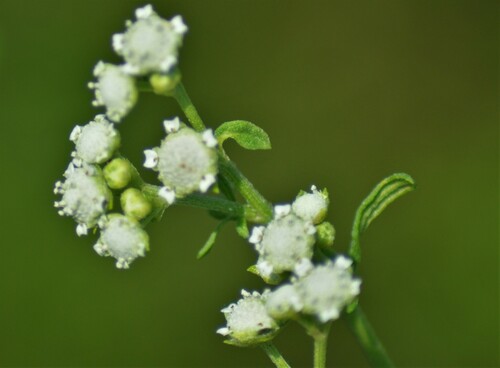
Parthenium hysterophorus is a fecund but ephemeral herbaceous plant. Its seeds do not germinate well unless buried at least 5 centimeters below the soil surface. Germination can occur at temperatures between 8 and 30 °C (46 and 86 °F), with an optimum temperature range of 22 to 25 °C (72 to 77 °F). Each of its flowers produces five black seeds, and each fruit is a cypsela. The life cycle of Parthenium hysterophorus is divided into two main phases: the juvenile (also called rosette or vegetative) phase, and the adult (also called mature or reproductive) phase. After germination is complete, during the juvenile stage the plant does not produce flowers, and its leaves grow prostrate along the soil surface. Adult Parthenium hysterophorus grow upright, with a deep taproot system. As the plant matures into a bush-like form, its stems become woodier and more rigid. Parthenium hysterophorus reproduces exclusively by seed, so the timing and method of seed dispersal are very important to its spread. Seed dispersal can happen through multiple pathways, including water currents, stock feed, animals, and occasionally wind. Long-distance dispersal, which is a major contributor to the species' invasive ability, is most often facilitated by moving vehicles, farm machinery, and flooding.
Depending on the habitat and specific characteristics of the population, an invasive species can be both detrimental and beneficial. While Parthenium hysterophorus is best known for the threat it poses to ecosystems across multiple continents, it has been found to have many traits that could potentially benefit the ecosystems where it exists as a non-native species.